Common Mistakes That Make a Notarization Invalid
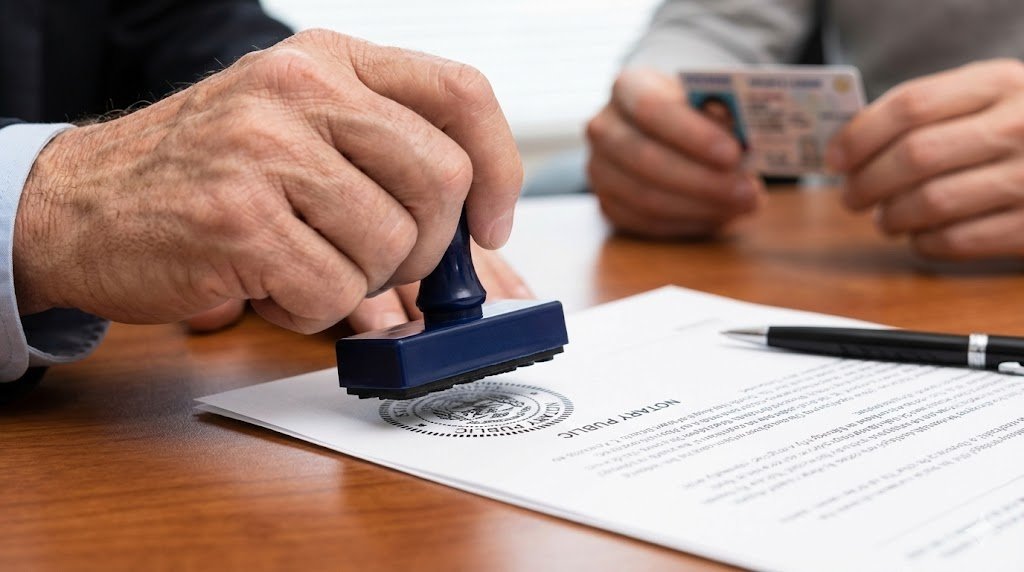
The "Rejected" Stamp
There is a specific kind of sinking feeling that happens at a bank counter or a clerk’s office. You’ve waited in line, handed over your documents, and the person behind the glass pushes them back to you and says, "We can’t accept this."
A notarization isn't just a stamp; it’s a strict legal procedure. If one step is missed, the document becomes void. This can delay real estate closings, freeze bank accounts, or stall court proceedings.
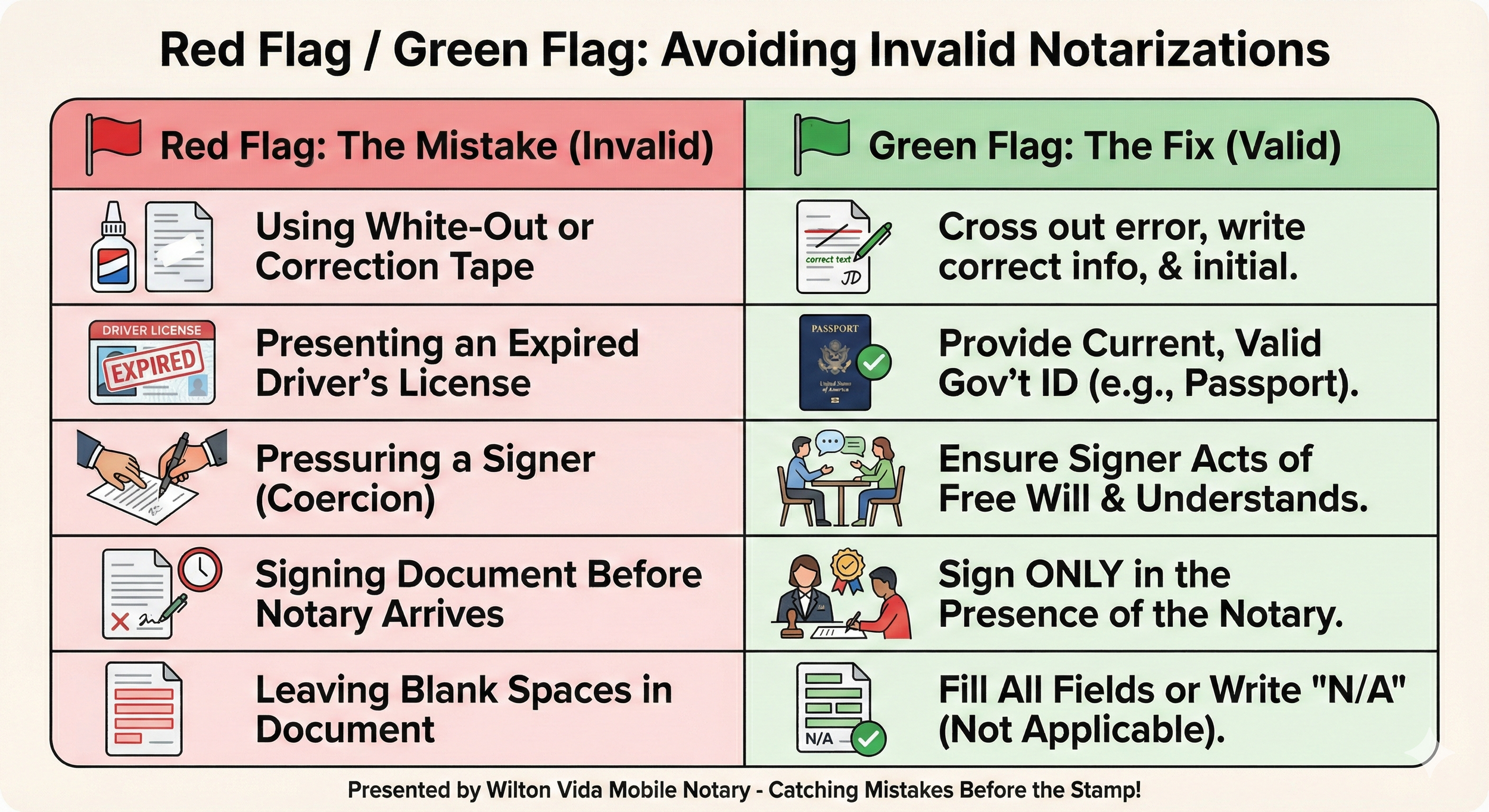
At Wilton Vida Mobile Notary, we see these mistakes every day. Our job is to catch them before the stamp hits the paper so you don't face rejection later. Here are the top 5 reasons notarizations fail—and how to avoid them.
1. The "White-Out" Disaster
The Mistake: You made a typo on the document (wrote the wrong year, misspelled a name) and used liquid correction fluid or correction tape to fix it. Why it fails: In the legal world, white-out is a major red flag. It suggests that someone might have altered the terms of the contract after it was signed. The Fix: Never use correction tape on a legal document. If you make a mistake, simply cross it out with a single line, write the correct information next to it, and initial the change. Better yet, print a fresh copy if possible.
2. The Expired ID
The Mistake: You arrive at the appointment with a driver’s license that expired last week. "It’s still me," you think. "Whatever." Why it fails: Notaries are bound by strict state laws. An expired ID is no longer a valid form of identification for notarization purposes in Florida (and most states). If we cannot legally verify who you are, we cannot proceed. The Fix: Check your wallet before you book the appointment. If your license is expired, do you have a valid Passport? A military ID? We need current, government-issued identification to proceed.
3. The "Just Sign It For Me" (Coercion)
The Mistake: An elderly parent needs to sign a Power of Attorney, but their adult child is doing all the talking, holding the pen, or answering questions for them. Why it fails: A notary’s most important job is to prevent fraud and elder abuse. We must verify that the signer is acting of their own free will. If a signer appears confused, pressured, or afraid, we are legally required to stop the notarization immediately. The Fix: If you are helping a loved one, give them space. Allow the notary to speak with them directly to confirm they understand the document and want to sign it.
4. Signing Before We Arrive
The Mistake: Trying to be helpful, you sign all the documents while you wait for the notary to arrive. Why it fails: A notary is a witness. If we didn't see you sign it, we can't notarize it. The Fix: Fill out the rest of the form, but leave the signature line blank. Wait until we are standing next to you to pick up the pen. (Note: If you already signed it, don't panic—we may just ask you to sign it again or sign an affidavit, depending on the document type).
5. Blank Spaces
The Mistake: Leaving parts of the document empty to "fill in later." Why it fails: A notary cannot place their seal on an incomplete document. This prevents bad actors from adding extra terms or dollar amounts after the notarization is complete. The Fix: Review your document thoroughly. Every field must be filled—even if you just write "N/A" (Not Applicable) in the blanks.
The Value of a Pro
When you hire a cheap or inexperienced notary, they might miss these details, leaving you with a useless piece of paper.
When you hire Wilton Vida Mobile Notary, you are paying for the expertise that ensures your documents are executed perfectly the first time. We know the laws, we check the details, and we protect your interests.
Don't risk a rejection. Schedule your mobile notary HERE, or call us directly at (954) 546-3639