Disclaimer: Wilton Vida offers Notary services; we are not attorneys. This post is for educational purposes only and does not constitute legal advice. Please consult with a legal professional for advice specific to your situation.
The "Just in Case" Documents
No one likes to think about emergencies. But if 2020 taught us anything, it’s that life is unpredictable. When families are faced with a sudden medical crisis or an aging parent’s decline, the last thing they need is confusion over legal paperwork.
Two terms often get thrown around in these moments: Power of Attorney and Living Will.
While they often go hand-in-hand, they serve two very different purposes. Confusing them can lead to serious headaches—or worse, a lack of authority—when it matters most. Let’s break down the differences and why getting them notarized correctly is non-negotiable.
1. The Power of Attorney (POA)
Think of a Power of Attorney as handing someone the keys to your "business" life.
A Durable Power of Attorney is a legal document where you (the Principal) grant someone else (the Agent) the authority to make decisions on your behalf. This usually covers financial and legal matters, such as:
Paying bills and managing bank accounts.
Selling or buying real estate.
Managing investments or filing taxes.
The keyword here is "Durable." A standard POA might stop working if you become incapacitated (i.e., in a coma or suffering from dementia). A Durable POA remains in effect even if you can no longer speak for yourself, ensuring your bills get paid and your affairs are managed without court intervention.
2. The Living Will
If a POA is about your assets, a Living Will is about your body.
A Living Will (often part of an "Advance Directive") is a written statement detailing your desires regarding medical treatment in circumstances where you are no longer able to express informed consent. It answers the hard questions so your family doesn't have to guess:
Do you want to be on a ventilator?
Do you want artificial feeding/hydration?
Do you want resuscitation (DNR)?
It is essentially your voice when you cannot speak. It relieves your loved ones of the burden of making impossible choices during emotional times.
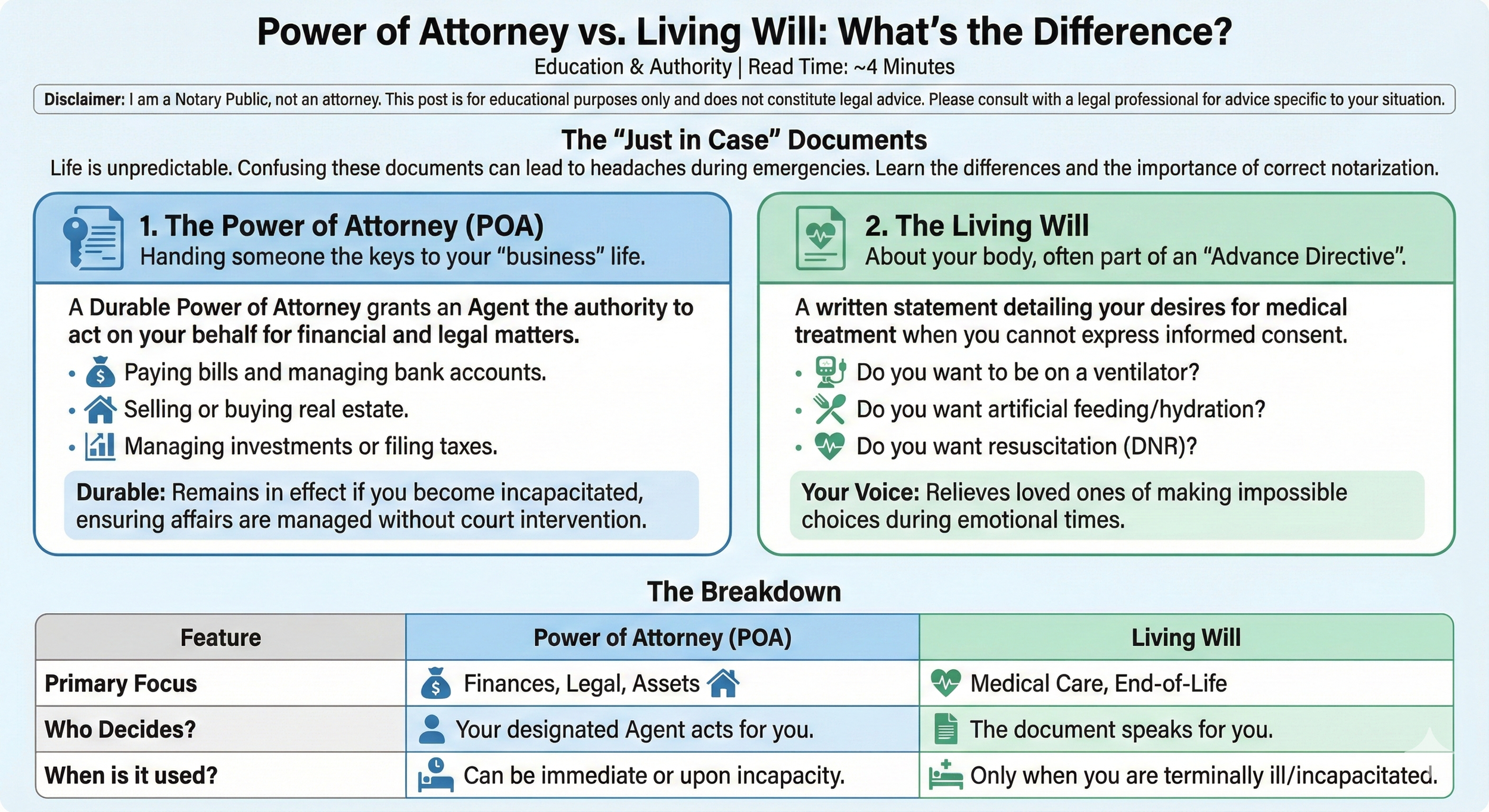
The Breakdown
Why "Correct" Notarization Matters
You might download a template online, but if it isn't executed perfectly, it’s just a piece of paper.
In Florida (and many other states), these documents have strict witnessing and notarization requirements.
Fraud Prevention: Because a POA gives someone immense power over your money, banks and courts scrutinize these documents heavily. If the notary seal is sloppy, or the witnesses weren't present, the bank will reject it.
Witness Requirements: A Living Will or POA often requires two witnesses in addition to the notary. In many cases, these witnesses cannot be related to you. A professional mobile notary knows these rules and ensures the signing table is set up legally.
Mental Capacity: A notary is the first line of defense against elder abuse. We ensure the signer is aware, willing, and not being coerced.
Peace of Mind, Delivered
These documents are often signed in sensitive environments—hospitals, nursing homes, or hospices.
At Wilton Vida Mobile Notary, we specialize in handling these delicate appointments with patience and professionalism. We travel to the hospital room or the bedside, ensuring that the notarization is handled correctly so you can focus on what matters: your family.
Do you have your documents ready?
Don't wait for a crisis. Ensure your wishes are legally sealed today.
Contact Us for a Compassionate Mobile Appointment. Click HERE, or call us directly at (954) 546-3639