Duty of Care 2.0: Managing the "Red Line" in a Poly-Crisis Era of Corporate Travel
In 2026, the global corporate travel landscape has reached a "turnaround" point, with travel budgets projected to rise by 5% globally. However, this growth comes during a "Poly-Crisis Era"—a time when geopolitical tensions, extreme weather events, and health risks are no longer occasional disruptions but constant factors in business mobility. For the modern organization, fulfilling the "Duty of Care" has evolved from a legal checkbox into a critical "People Risk Management" (PRM) framework.
Beyond the Basics: Defining the "Red Line"
The "Red Line" in 2026 represents the boundary between manageable risk and unacceptable danger. Historically, duty of care focused on physical safety and secure lodging. Today, that scope has expanded to include digital security, mental health support, and real-time response to "fragile and vulnerable" nation-states.
Nine out of ten travelers now state they would decline a trip if they felt unsafe, making duty of care a primary driver for employee retention and talent acquisition. It is no longer enough to have a policy on a shelf; organizations must provide actionable intelligence and 24/7 human-centric support.
The Role of "Agentic AI" and the Strategic EA
For Executive Assistants (EAs) and travel managers, the role has shifted from scheduling to "strategic orchestration". In 2026, EAs are utilizing Agentic AI—intelligent tools that don't just alert you to a problem, but proactively solve it.
Imagine a scenario where a sudden transport strike is detected by predictive AI. Before the executive even receives a cancellation notice, the "Agentic" system has already analyzed alternative routes, rebooked a higher-tier hotel under a "Hushpitality" protocol, and updated the logistics timeline for the EA to approve. This partnership between human intuition and machine speed is what defines the "glow-up" of the modern EA role.
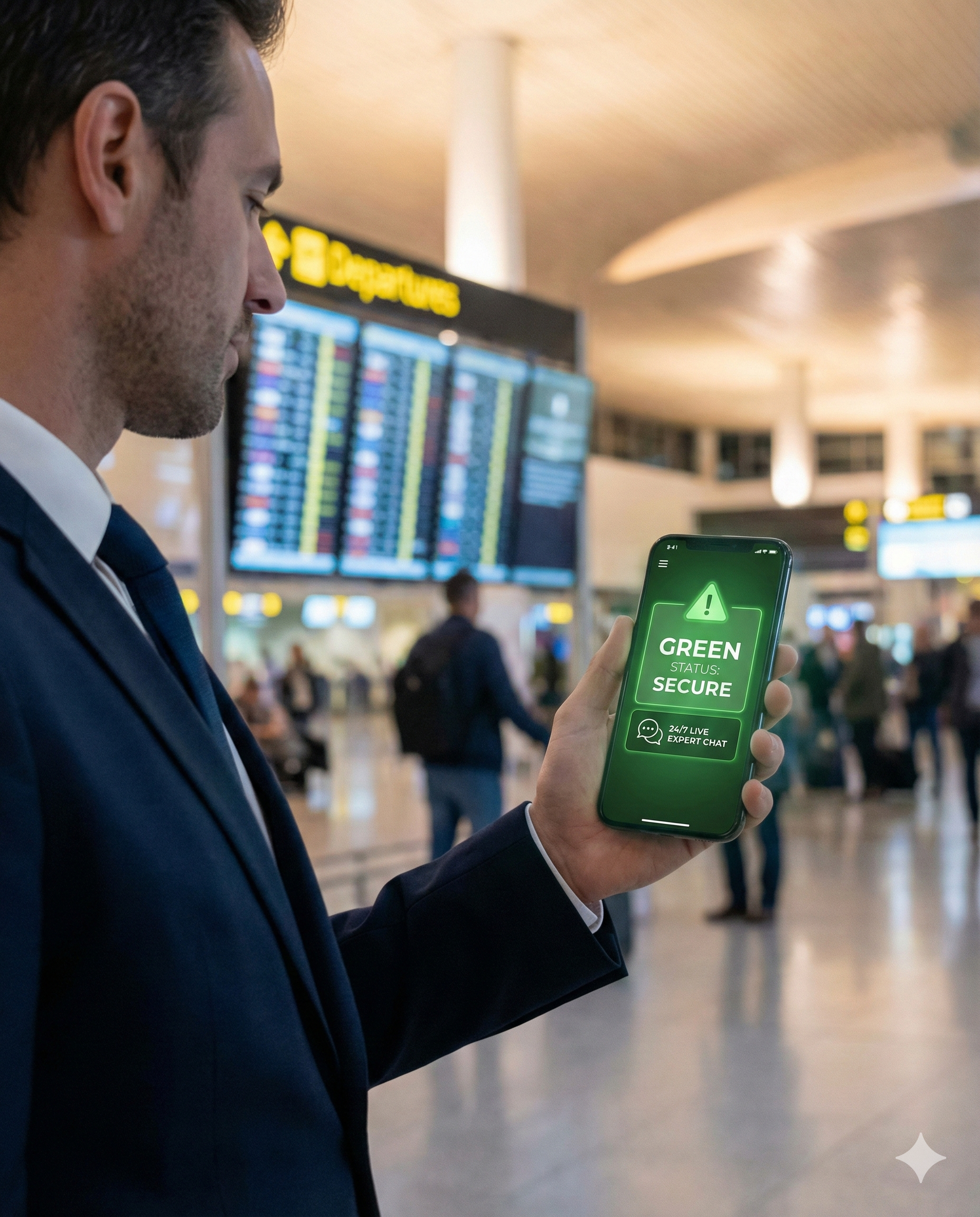
Wilton Vida Insight:
In 2026, your "Duty of Care" extends to the digital environment. When sending executives into high-risk regions, ensure their "Logistics Timeline" includes a mandatory pre-trip cybersecurity briefing and the use of managed VPNs. A breach of sensitive data is now considered a failure of employee protection.
The Human Firewall: 24/7 Human Expertise
Despite the rise of AI, the core of 2026 travel safety remains human judgment. Automated systems can flag a risk, but only a human expert can navigate the nuance of a local security situation or provide the "White-Glove" empathy required during a crisis. Leading organizations are moving toward "multi-department risk ecosystems," linking HR, security, and travel teams for a centralized, 24/7 response.