The Great Lakes Cruise You've Never Considered — And Why You Should
The Caribbean will always be there. Europe isn't going anywhere. But right now, in 2026, one of the most quietly spectacular cruise experiences in North America is sailing through the heartland — across all five Great Lakes, from the skyline of Chicago to the waterfront of Toronto — and most luxury travelers have no idea it exists.
That's about to change.
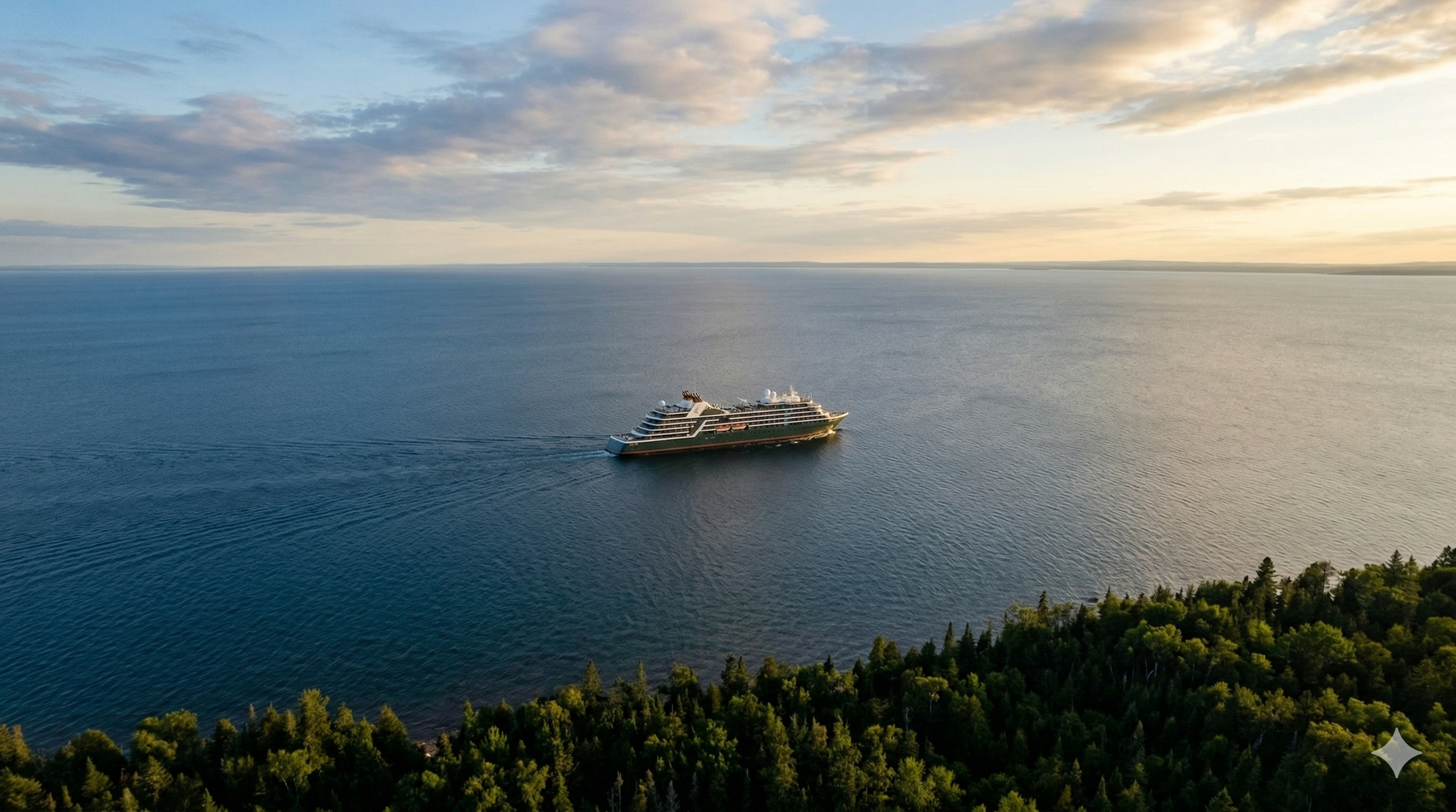
Why the Great Lakes Deserve a Place on Your Bucket List
Forget everything you think you know about the Midwest. The Great Lakes region holds nearly 20% of the world's fresh surface water — an inland sea system so vast that standing at the shoreline of Lake Superior, you cannot see the other side. The scale is genuinely humbling.
What makes a Great Lakes cruise distinct from any other voyage is the texture of the journey itself. You're not hopping between resort islands — you're sailing into living cities, UNESCO-protected wilderness, historic ports, and working waterfronts that most travelers only ever see from an airplane window. It's discovery in the truest sense: terrain that feels both deeply American and entirely unfamiliar.
The Route: Chicago to Toronto Across All Five Lakes
The marquee itinerary — Chicago to Toronto — is typically a 10- to 15-night voyage depending on the operator, threading through all five Great Lakes: Michigan, Huron, Superior, Erie, and Ontario. Each lake has its own character, its own shoreline, its own ports of call.
Departing from Chicago, you move north through Lake Michigan toward ports like Mackinac Island — a car-free, horse-drawn carriage town that has been hosting well-heeled visitors since the 1800s, and still does it with a certain unhurried charm. From there, vessels transit the Straits of Mackinac and enter Lake Huron, often stopping in the Georgian Bay region of Ontario, where the landscape shifts into Canadian Shield granite, clear turquoise water, and the kind of silence that genuinely resets something in you.
The passage through Lake Superior — the largest freshwater lake in the world by surface area — is the emotional centerpiece of the route. Ports like Duluth, Minnesota and Marquette, Michigan offer real Midwest grit alongside excellent local dining and craft culture that has quietly matured over the past decade. The lake itself, on a clear day, reads more like an ocean than anything freshwater has a right to be.
Moving east through Lake Erie and into Lake Ontario, you approach the Canadian side through ports like Niagara-on-the-Lake — wine country, heritage architecture, and the roar of the falls just a short excursion away — before arriving in Toronto, one of the most genuinely cosmopolitan cities in North America.
Who Is This For? (More People Than You'd Expect)
The Great Lakes cruise is not a budget product. The small-ship operators who run these routes — vessels carrying 100 to 200 passengers — are delivering an expedition-style luxury experience: expert naturalists and historians on board, curated shore excursions, and the kind of intimate service that larger ships structurally cannot provide.
This is the right voyage for the traveler who has done the Caribbean multiple times and wants something that actually surprises them. For the couple who wants a milestone anniversary experience that doesn't look like anyone else's Instagram. For the multi-generational family that wants shared discovery — not a beach chair competition. And for the LGBTQ+ traveler seeking a welcoming, well-curated journey through destinations that increasingly reflect the full breadth of American and Canadian culture.
There's also a practical appeal for travelers who are not comfortable with ocean crossings — the Great Lakes, while large, offer a calmer, more navigable experience than open-sea itineraries, with ports of call close enough that no one ever feels far from land.
Insider Notes Before You Book
Small-ship Great Lakes cruises book out early — often 12 to 18 months in advance for the most desirable departures, particularly the Chicago-to-Toronto full-route voyages in the peak summer and early fall windows. September is exceptional: the light is golden, the shoreline foliage begins to turn, and the summer crowds have largely thinned from the port towns.
Packing is a genuine consideration. Great Lakes weather is famously variable — layers, a quality windproof shell, and comfortable walking shoes for excursions are non-negotiables. The vessels are small, so luggage management matters more than on a large ocean ship.
Finally, the Canadian port crossings require valid travel documentation. U.S. passport (not just a passport card) is the safest choice. NEXUS card holders will move through smoothly as well.
Let Wilton Vida Plan It the Right Way
This is exactly the kind of itinerary that looks straightforward on paper and becomes genuinely complicated in execution. Operator selection alone — there are a handful of reputable small-ship lines running these routes, and meaningful differences between them — is worth a dedicated conversation with an advisor who knows the product.
At Wilton Vida Group, we work through the Signature Travel Network, which gives our clients access to amenity programs, preferred partner rates, and advisor support that simply isn't available booking direct or through a general online agency. We've done the research on which departures deliver, which port excursions are worth your time, and how to build the pre- and post-cruise land experience in Chicago or Toronto that elevates the whole journey.
This is a once-in-a-while trip. It should be planned that way.
Ready to start the conversation? Reach out at wiltonvida.com or connect with us directly on WhatsApp — we're here: https://wa.me/message/YUIL7UEHTZDAM1