Kibble is the "Fast Food" of 2026: The ROI of Your Pet’s Longevity
Make it stand out
We call them family. Let’s invite them to a healthy meal.
Kibble is the "Fast Food" of 2026: The ROI of Your Pet’s Longevity
We need to have a serious conversation about your dog's grocery bill. For decades, we’ve been conditioned to view pet food as a low-cost, shelf-stable commodity. You buy the 40-pound bag, dump a scoop into a bowl, and move on with your day. It’s convenient, it’s cheap, and it’s socially acceptable.
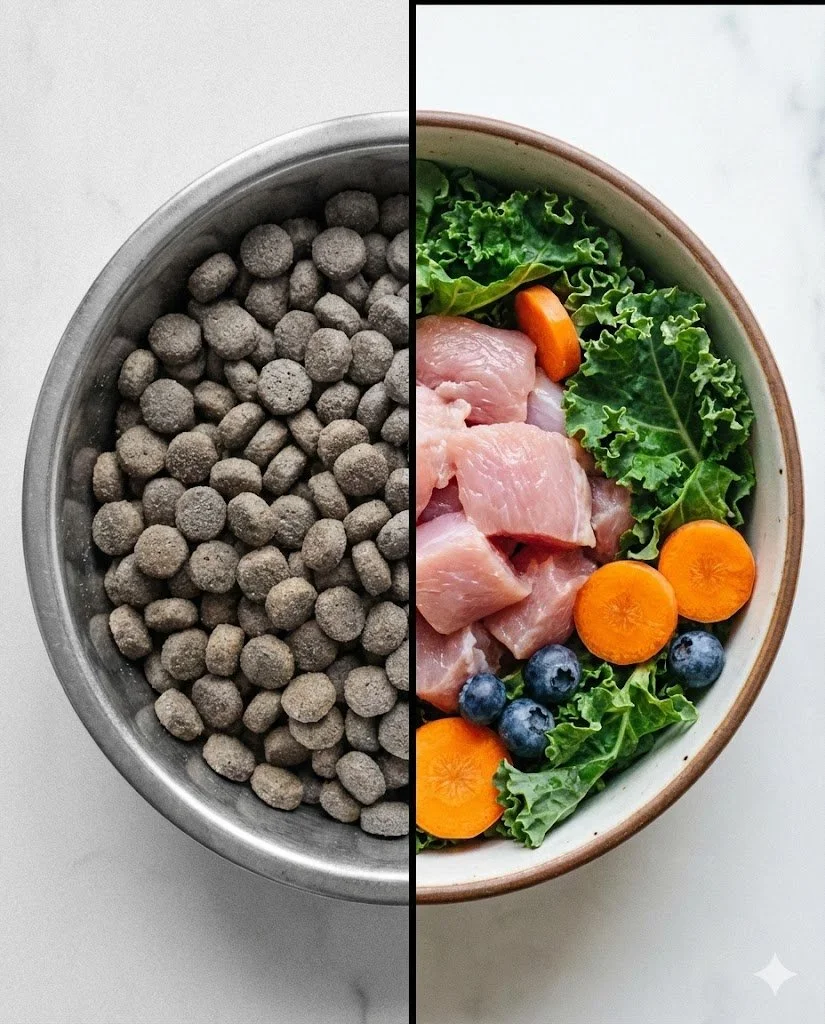
But in 2026, it is time to stop kidding ourselves. Feeding your dog highly-processed, high-heat extruded kibble for every single meal is the nutritional equivalent of you eating fast food for breakfast, lunch, and dinner. You might survive on it, but you certainly won’t thrive.
It’s time for some financial tough love: we have to stop looking at fresh, biologically appropriate food as an "expense" and start seeing it for what it truly is: a pre-payment on lower vet bills.
The "Humanization" Trend isn't About Pampering; It's About Science
You hear it in the media all the time—the "humanization of pets." Critics dismiss it as people treating their dogs like surrogate children, buying them unnecessary luxuries. But that’s a shallow interpretation. The real shift driving this trend is an awakening to the science of nutrition.
We now know that chronic inflammation is the root cause of nearly all modern diseases—in humans and canines. And what fuels inflammation? Highly processed carbohydrates, low-quality proteins, and rancid fats—the very foundation of most commercial kibble. By feeding our dogs "human-grade" fresh food, we aren't pampering them; we are providing them with the baseline anti-inflammatory diet their biology demands. We are treating them with the same nutritional respect we treat ourselves.
The Financial Reality Check: The ROI of Health
Let’s do the math. Yes, a bag of premium freeze-dried raw or a subscription to gently-cooked fresh meals costs significantly more upfront than a bag of standard brown pellets. It’s a sticker shock that turns many pet parents away.
But this is short-term thinking. The true cost of kibble isn't the price on the bag; it's the "delayed billing" you receive years later.
The Allergy Bill: The endless cycle of vet visits, steroid shots, and prescription shampoos to treat itchy skin and chronic ear infections caused by common kibble fillers like corn, wheat, and soy.
The Dental Bill: The myth that kibble cleans teeth has been debunked. The high-starch content actually sticks to teeth, fueling plaque and leading to expensive professional cleanings and extractions under anesthesia.
The Chronic Disease Bill: The most devastating cost of all. The thousands of dollars spent managing diabetes, kidney disease, and cancer—conditions increasingly linked to a lifetime of consuming pro-inflammatory, highly processed foods.
When you invest in fresh food now, you are effectively buying back those future vet bills. You are investing in a stronger immune system, better gut health, healthier skin, and more manageable weight. The ROI isn't just a shinier coat; it's a dog that is still vibrant, mobile, and happy at age 12, 13, and beyond.
Stop Subsidizing Sickness
In 2026, the "generic bowl" of brown cereal is a relic of the past. It’s a false economy that subsidizes sickness on the backend.
Your dog doesn't have a choice in what they eat. You do. Make the decision to invest in their health today, so you aren't paying for their sickness tomorrow. It’s not just food; it’s a financial strategy for longevity.
Prompt for blog photo: A high-end, conceptual split-screen photograph. On the left side, a pile of dry, dusty, uniform brown kibble in a metal bowl, shot in desaturated, cool tones. On the right side, a vibrant, colorful bowl overflowing with fresh, whole ingredients: chunks of raw turkey, vibrant green kale, blueberries, and orange carrot slices, shot in warm, natural light. A clear dividing line runs down the middle. 4:5 aspect ratio, Instagram optimized.