The Truth About Travel Safety: What the Headlines Get Wrong — And What to Do Instead
Fear Is a Business Model. Travel Doesn't Have to Be Its Victim.
Every time a flight makes the news, a travel advisory gets issued, or a viral social media post declares a destination "dangerous," a percentage of would-be travelers quietly cancel their plans — or never make them in the first place. The fear is real. The underlying data, however, often tells a radically different story. If your travel decisions are being shaped more by headlines than by facts, this post is for you.
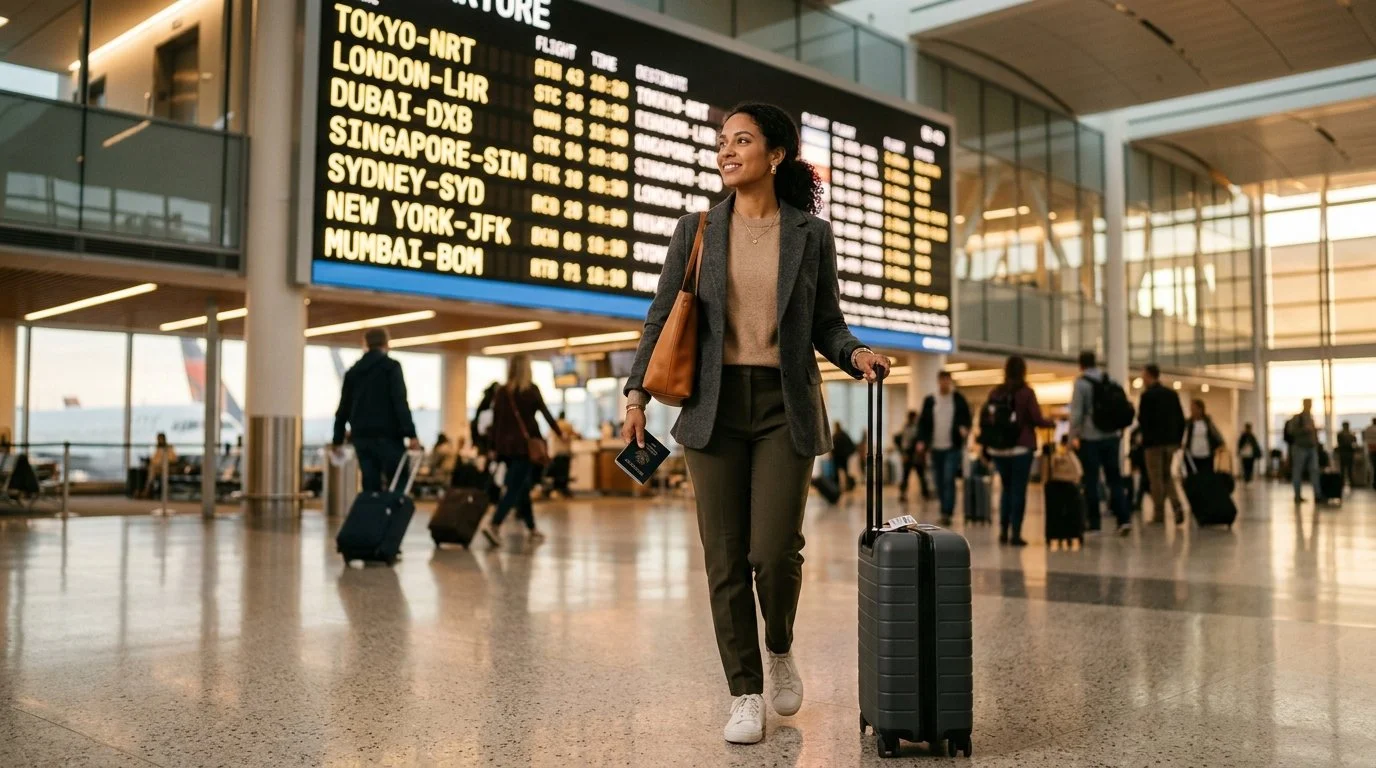
The Aviation Safety Picture in 2026
Commercial aviation remains one of the safest forms of transportation ever engineered by human beings. The numbers are not close. Your odds of dying in a car accident in a given year are orders of magnitude higher than your odds of dying on a commercial flight — and yet most people walk through airport security feeling like they're taking a risk, then drive home on a highway without a second thought.
The global aviation safety record has improved continuously across decades, and modern commercial aircraft are subject to maintenance regimens, redundancy systems, and regulatory oversight that would be unrecognizable to the industry of even thirty years ago. When an incident does occur, it receives enormous media attention precisely because of how rare it is. Rarity makes news. Safety is invisible.
For travelers, the practical takeaway is straightforward: book your flight, choose established carriers, and spend your mental energy on the things you can actually control.
Crime Statistics vs. the Perception of Crime Abroad
International destinations frequently carry reputations that are wildly disconnected from the lived experience of travelers on the ground. Mexico, for example, is one of the most-visited countries in the world — tens of millions of international arrivals annually — with the vast majority of visitors completing their trips without incident. The crime that does occur is largely concentrated in specific regions and contexts that most leisure travelers never encounter.
This is not to minimize genuine risk. It is to contextualize it. The U.S. State Department issues travel advisories that are worth reading carefully — and worth reading completely, because the advisory for an entire country often applies to a specific region or activity type, not the resort corridor or city center where most travelers spend their time.
The more useful question is never "Is this country safe?" It's "Is this specific destination, at this time of year, in this context, appropriate for my travel profile?" That's a question with a real answer — and it requires research, not reflexes.
What "Preparation" Actually Looks Like
Preparation is not paranoia. The most experienced travelers in the world are not the most fearful — they're the most informed. There's a meaningful difference.
Practical preparation for international travel in 2026 looks like this: enrolling in the Smart Traveler Enrollment Program (STEP) through the U.S. Department of State so your embassy knows you're in-country; carrying digital copies of your passport and travel documents in a secure cloud location; purchasing travel insurance that includes medical evacuation coverage; knowing the local emergency number for your destination; and sharing your itinerary with someone at home.
None of this is anxiety-inducing if you approach it as standard operating procedure — the same way you'd lock your car or buckle your seatbelt. Competent preparation produces confidence, not fear.
Health preparedness is equally practical. Destination-specific vaccination recommendations from the CDC, a travel medicine consultation for more remote itineraries, and a basic understanding of what your domestic health insurance does — and doesn't — cover internationally are all worthwhile steps that take less than an hour to address.
The Hidden Cost of Not Traveling
Here's what rarely makes the headline: the cost of not going. The experiences deferred indefinitely. The anniversaries uncelebrated. The corners of the world never seen because a news cycle made them feel unreachable. Fear, when it operates as the default travel advisor, is extraordinarily expensive — not in dollars, but in life.
The data on travel and wellbeing is consistent. Travel reduces stress, expands perspective, strengthens relationships, and — for many people — produces some of their most significant memories. The people who travel regularly are not reckless. They are, in most cases, simply better informed about the actual risk calculus than those who are not.
Where Wilton Vida Fits Into This Picture
When clients come to Wilton Vida with concerns about a destination — whether they've read something alarming or heard from a friend who heard from a friend — we don't dismiss the question. We answer it. As members of Signature Travel Network, we have access to on-the-ground intelligence, preferred partner contacts at destination resorts, and a professional network that gives us real-time visibility into what's actually happening in the places we send people.
We help clients understand risk in context, not in headlines. We build itineraries that account for safety without sacrificing the experience. And when something unexpected does happen — a storm, a health advisory, an airline disruption — we're the call our clients make first.
Travel should feel like freedom. Part of our job at Wilton Vida is making sure it does.
Ready to plan your 2026 trip with confidence and clarity? Start at wiltonvida.com or reach us directly on WhatsApp at https://wa.me/message/YUIL7UEHTZDAM1. We'll handle the research. You handle the packing.