Antarctica & Galápagos: When Limited Cabins Actually Matter
“Limited availability” is the most abused phrase in travel. It appears on landing pages for products that are not remotely limited, and most travelers have correctly learned to ignore it.
Then there are the two itineraries where it is not a marketing line at all. It is arithmetic. When a vessel carries two hundred guests instead of four thousand, a sold-out sailing is a fact about the number of beds, not a device to move you toward a deposit. Antarctica and the Galápagos are where that math bites hardest — and where booking early is not urgency theater. It is the entire strategy.
The Arithmetic Nobody Explains
Both destinations are capacity-controlled by regulation, not by the operators, and the numbers are small on purpose.
In the Galápagos, Ecuadorian park rules cap vessels at roughly a hundred passengers, itineraries are assigned rather than chosen, and licensed naturalist guides are required. Two ships are not permitted to work the same site at the same time. That is why the islands still feel the way they do — and it is also why the total number of berths available in any given week is a genuinely fixed, comparatively tiny number.
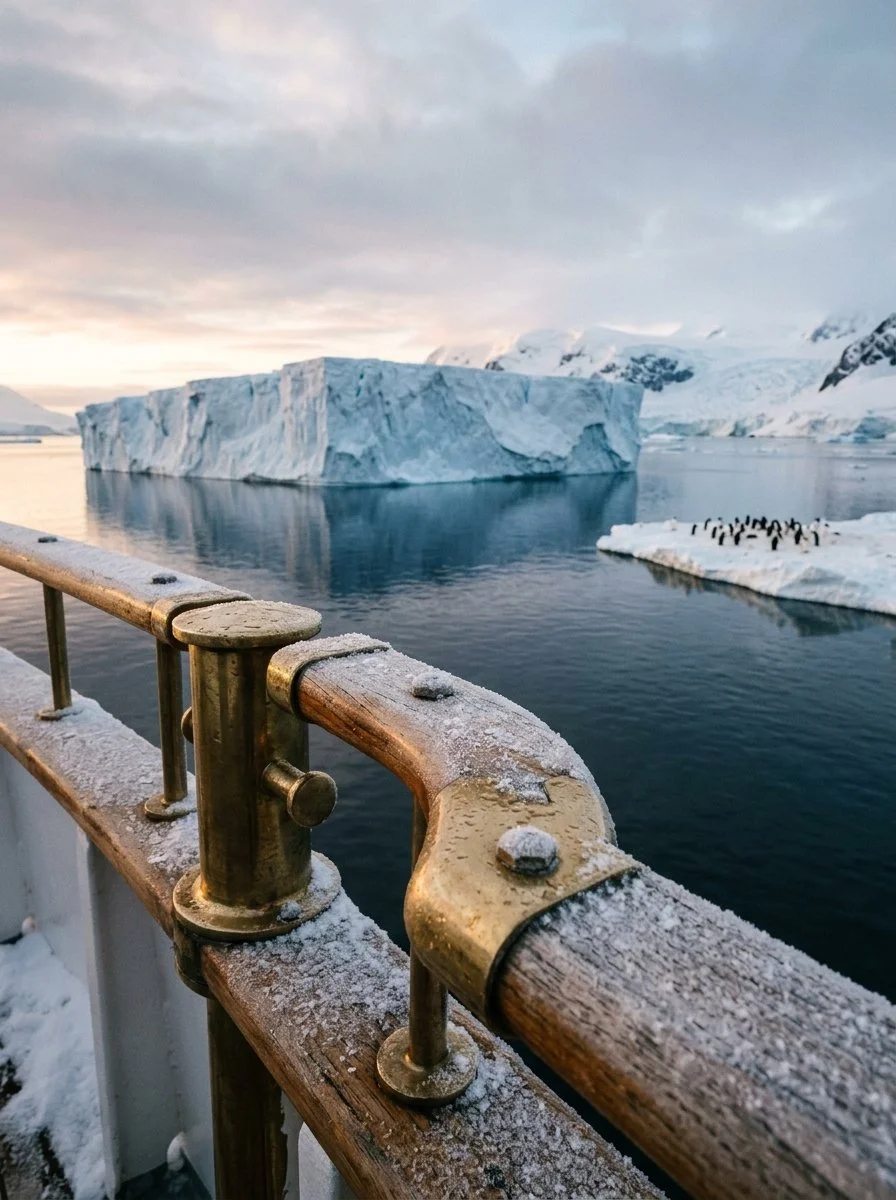
Antarctica works on the same principle through industry regulation. Vessels carrying more than a few hundred passengers do not land guests at all, and shore parties are limited to around a hundred people at a site at once with required guide ratios. Every operator running actual landings is therefore running a small ship, and every small ship has a small number of cabins, and the season is only a few months long.
Put those together and you get the defining feature of both: demand is global and continuous, inventory is fixed and seasonal, and there is no mechanism to add more.
Antarctica Is a Season, Not a Year
The window runs roughly November through March, and where you sit inside it changes the trip substantially.
Early season brings the most pristine ice and dramatic landscapes, penguins courting and nesting, and snow that has not yet been walked on. Midsummer is peak light and peak activity — the chicks hatch, the colonies are loud, and the days barely end. Late season shifts toward whales, which by February and March are abundant and often extraordinarily close, at the cost of scruffier ice and muddier landing sites.
There is also the Drake Passage question, which deserves an honest answer rather than a brave one. The crossing takes roughly two days each way and can be genuinely rough. Fly-the-Drake itineraries trade those four days for a charter flight to the peninsula, which suits travelers who are short on time or short on patience for open ocean — and costs more, adds a weather-delay variable, and skips the seabird days that some travelers consider the best part of the voyage. Neither answer is correct. But it is a decision to make deliberately rather than discover.
The Galápagos Is a Boat Decision, Not a Destination Decision
Almost everyone researches the islands. Almost nobody researches the vessel, and the vessel is the trip.
Because routes are assigned, two ships sailing the same week may visit substantially different islands, and the difference between an eastern and a western itinerary is the difference between two distinct sets of wildlife. Ship size changes the experience just as much: the smallest yachts get into places larger vessels cannot and feel intimate to the point of being a house party, while the larger expedition ships offer more space, more stability, and more separation when you want it.
Seasonally, the warm and wetter months bring calmer water, better snorkeling, and green landscapes. The cooler, drier stretch brings choppier seas, richer nutrient upwelling, and consequently the best marine life of the year. If you are going for what is under the water rather than on the rocks, that tradeoff is worth making on purpose.
What “Book Early” Actually Means Here
Twelve to eighteen months is normal for both. Not aspirational — normal.
The categories that vanish first are predictable: the mid-tier cabins where most travelers land, anything configured for a single traveler without a punishing supplement, and triples for families. Suites go early too, but the real squeeze is in the middle. Once those are gone the choice becomes a significant step up in price or a windowless cabin low in the ship.
The flights compound it. Antarctica requires positioning into Ushuaia or Punta Arenas, usually with a night on either side to absorb delays, and those seats and hotel rooms are finite in a small city during a short season. The Galápagos requires connecting through mainland Ecuador to Baltra or San Cristóbal on a controlled schedule. Booking the cabin is the beginning of the problem, not the end of it.
Where We Come In
Wilton Vida Group is a Travel Leaders Network affiliate, which on expedition product means visibility into inventory and holds that do not surface on public booking paths, plus real relationships with the operators who actually run these ships well. On sailings this constrained, being positioned before inventory opens is worth considerably more than any discount that appears after it does not sell.
It also means someone is holding the whole file — the voyage, the positioning flights, the buffer nights, the travel protection that these itineraries genuinely require, the gear list, and the contingency plan for the day the charter does not fly. Expedition travel is the category where the advisor stops being a convenience and becomes infrastructure.
If Antarctica or the Galápagos is on the list for the next two seasons, the right time to start is well before it feels urgent. Reach our team at wiltonvida.com or message us on WhatsApp at https://wa.me/message/YUIL7UEHTZDAM1.
Hablamos español, y con gusto los acompañamos en cada etapa del viaje.