Arts at Sea: The Case for the Slow Transatlantic Crossing
In an age of four-hour flights, choosing seven nights at sea feels almost radical. A plane treats the Atlantic as an inconvenience to be survived. A crossing treats it as the point. Somewhere in that difference lives one of the last genuinely unhurried luxuries left to the modern traveler — and once you've felt it, the pressurized cabin at 38,000 feet never looks quite the same again.
A Crossing Is Not a Cruise
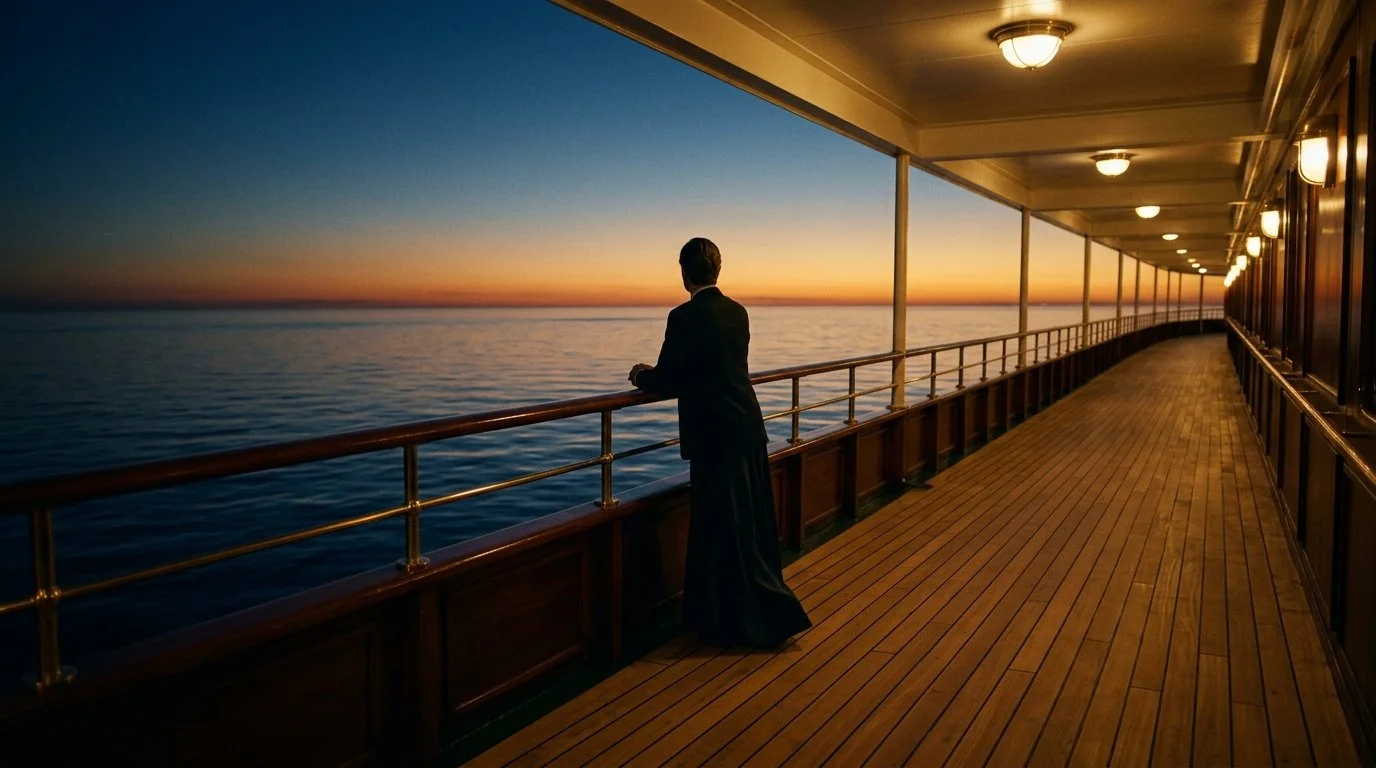
The distinction matters more than the marketing suggests. A cruise hops from port to port, the ship a hotel that happens to float between the day's excursions. A crossing has no ports to hop to. For the better part of a week, there is only the ship, the horizon, and time — an expanse of open ocean traversed by a genuine ocean liner, a vessel built with the deep hull and stabilized bearing to take the North Atlantic in stride rather than tiptoe around it. That is a rarer thing than most travelers realize. Scheduled transatlantic crossings are today the province of a single true liner, which is precisely what gives the experience its sense of occasion. You are not booking a vacation. You are booking a passage — the same westward route that carried generations before the jet engine made it optional.
The Rhythm of a Sea Day
Here is the fear everyone voices and no one needs to: What will I do out there for seven days? The answer is the whole seduction. A sea day has architecture. Mornings might open with an acting workshop led by conservatory-trained instructors, the kind of program that brings the discipline of a great drama academy onto the water. Afternoons drift toward lectures from historians, authors, and the occasional astronaut; a planetarium dome — a genuine rarity at sea — running shows on the stars presently wheeling overhead; a library of several thousand volumes where the only sound is the turn of a page. There is fencing for the restless, watercolor for the contemplative, and afternoon tea served by white-gloved staff for everyone in between. This is the "arts at sea" ethos in practice: enrichment as the main event, not the consolation prize for a rainy port day. You arrive on the far shore not merely rested but somehow expanded — as though the week gave you back something the calendar usually takes.
Black-Tie and the Return of Ritual
Somewhere around the second evening, a quiet transformation happens. Guests begin to dress. Gala nights on a crossing are not costume — they are ceremony, a collective agreement to meet the occasion at its own level. Dinner becomes an event with a beginning, a middle, and a reason to linger over the last glass. There is dancing in a proper ballroom, a cocktail taken slowly in a wood-paneled lounge, a sense that the evening is being savored rather than scrolled. In a culture that has quietly surrendered nearly every dress code it once held, the persistence of black-tie at sea reads less like formality and more like relief. You remember, somewhere between the amuse-bouche and the orchestra, that occasions used to feel like this.
The Clock That Moves With You
Now the insider's detail — the one seasoned advisors mention and first-timers never forget. Sail westbound, from England toward New York, and the ship's clocks move back one hour on most nights of the crossing. You gain that hour while you sleep, night after night, so your body adjusts to the five-hour time change gradually instead of absorbing it in one brutal shove. There is no red-eye, no arrival fog, no lost first day rebuilding yourself in a hotel room. You step onto the pier in Manhattan genuinely rested — the antithesis of every transatlantic flight you've ever endured. For travelers who value how they arrive as much as where they arrive, this alone can justify the seven nights. It is jet lag engineered out of existence, one gentle hour at a time.
Where Wilton Vida Comes In
A crossing rewards good counsel more than almost any journey we arrange. Stateroom placement matters on a liner in ways it never does on a mass-market ship — the right deck and location shape everything from motion to light to how close you sit to the rhythm of the day. Dining arrangements, the cadence of enrichment programming, whether a themed sailing suits your temperament or overwhelms it, how to pair the passage with a London or continental land program on either end: these are the decisions that separate a good crossing from an unforgettable one. As a Travel Leaders Network advisory, Wilton Vida brings the access and the discernment to place you precisely where the experience is richest — and to handle the logistics on both shores so your only responsibility is to arrive at the gangway. We plan the passage. You become whoever the ocean makes of you.
Ready to Cross?
If the idea of slowing down at exactly the speed of the sea appeals to you, let's talk. Reach our team at wiltonvida.com or connect with us directly on WhatsApp at https://wa.me/message/YUIL7UEHTZDAM1, and we'll craft a crossing built entirely around how you want to travel.
Buen viaje — que el mar te devuelva más de lo que te lleva. 🌊