Why Autumn Is the Best Time to Cruise Europe's Rivers
The river-cruise brochures almost always shoot in summer — sun decks, spritzes, high blue skies. But ask the people who sail these waters for a living when they would go, and a surprising number say autumn. When the summer crowds thin and the vineyards turn gold, Europe's great rivers slip into their most cinematic season — and the Rhine, in particular, becomes something close to a moving painting.
The Case for the Shoulder Season
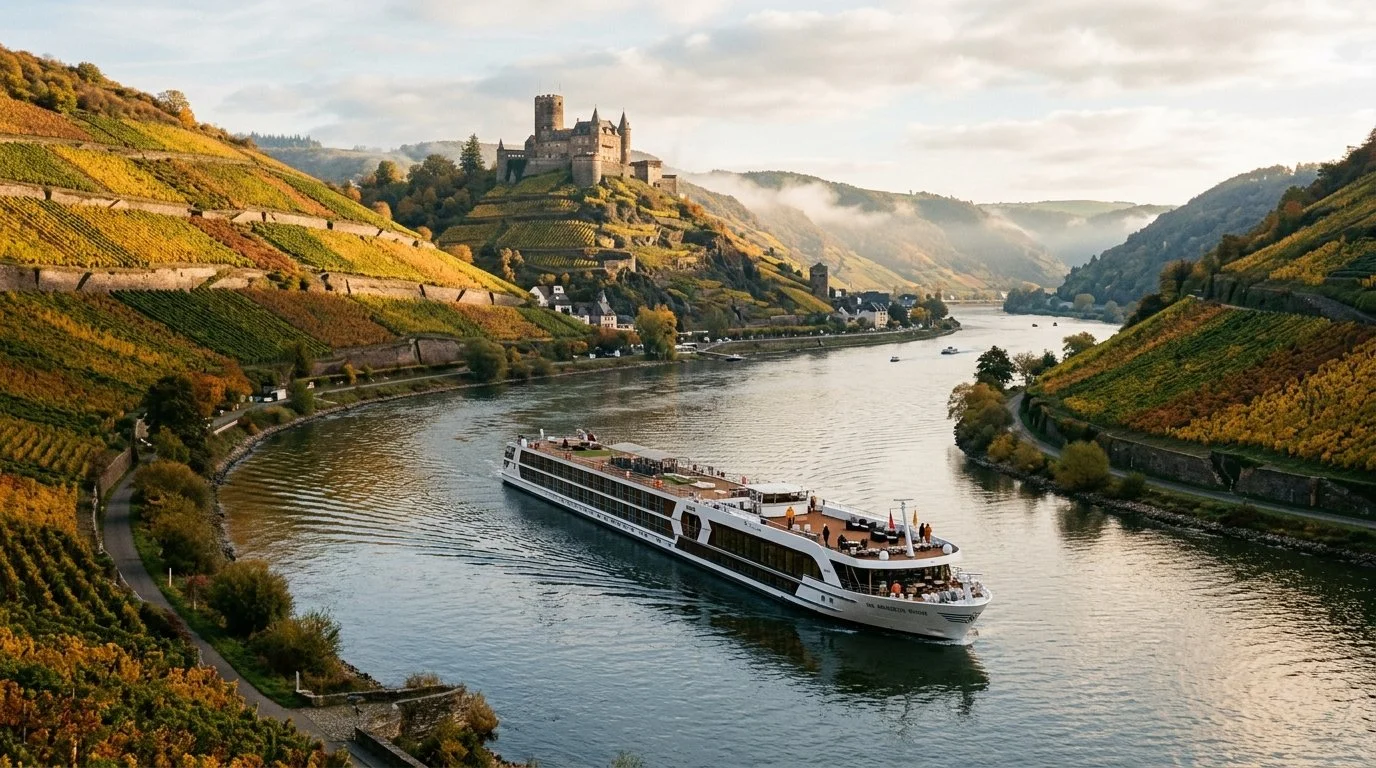
Autumn is the river cruiser's insider secret, and the reasons compound. The heat of high summer breaks into crisp, comfortable days made for standing on deck with a coffee as the banks slide by. The tour-bus armies of July are gone, so the medieval old towns you stop in feel like discoveries rather than crush. The light turns long and low, the kind photographers chase, gilding the water at breakfast and again at the cocktail hour. And along the wine-growing stretches, this is harvest — the vineyards blazing amber and rust, the cellars busy, the year's new vintages beginning to appear on the table. You are not fighting the season. You are traveling with it.
Four Countries From Your Window
Part of the Rhine's magic is how much ground it quietly covers. A classic voyage runs between Amsterdam and Basel, and over the course of a week your window frames four countries without you ever repacking a bag. You begin among the canals and gabled houses of the Netherlands, thread through the castle country and cathedral cities of Germany, brush the storybook wine villages of Alsace in France, and arrive in Switzerland, where the river runs clear toward the Alps. Few journeys deliver that much variety with so little friction. The ship becomes your hotel, your restaurant, and your unpacking-once luxury, while the continent rearranges itself outside the glass. This is slow travel in the truest sense — not travel that lacks for anything, but travel that refuses to rush.
The Middle Rhine, Where the Castles Are
If there is a single stretch that justifies the entire trip, it is the Middle Rhine — the roughly UNESCO-listed gorge where the river narrows and the hills crowd in, each crowned with a castle or a ruin. You'll pass more fortresses in an afternoon here than most travelers see in a lifetime, from cliff-top keeps to the legendary Lorelei rock where, as the story goes, a siren once lured boatmen to distraction. Time this passage for daylight and keep the camera close; a good ship will narrate the castles as they appear. The riverside towns along here — the half-timbered wine village of Rüdesheim chief among them — are at their most atmospheric in fall, when the surrounding Riesling slopes turn color and the pace of the harvest gives the whole valley a sense of quiet purpose. It is, quite simply, one of the most beautiful few hours in European travel.
What "All-Inclusive" Really Buys You
River cruising earns its luxury reputation not through excess but through the disappearance of friction. Fares typically fold in your shore excursions in each port, your onboard dining, and wine or beer with lunch and dinner — so the daily negotiation of where to eat, what to book, and how to get there simply evaporates. The ships themselves are intimate by design, carrying a fraction of an ocean liner's guests, which means no lines, no crowds, and a crew that learns your name by the second morning. You dock in the heart of each town rather than a container port miles away, so the cathedral or the castle is often a short stroll from the gangway. For travelers who want the richness of Europe without the logistics of Europe, few formats deliver more.
The One Thing to Know Before You Book
Here is the honest counsel most brochures leave out: every river cruise is subject to the river itself. Water levels fluctuate with the weather, and in unusually dry or wet spells, itineraries can shift — a ship swap here, a coach transfer there. The reassuring part for autumn travelers is that the highest low-water risk falls in the heat of late summer, and fall tends to run more stable. The larger point is that this is precisely the kind of variable that rewards booking through an advisor rather than a website. The right guidance means choosing lower-risk sailings from the outset, setting expectations honestly, and — if conditions ever do change — having someone reworking your transfers, hotels, and flights on your behalf instead of leaving you to solve it at a foreign dock. The cruise line will handle the ship. Everything around the ship is where a professional earns their keep.
Planning Your Autumn Rhine With Wilton Vida
This is a journey that rewards experience on both sides of the booking. As a Travel Leaders Network advisory, Wilton Vida brings the access to secure the right cabin on the right ship, the judgment to sequence your sailing for the best light and the lowest risk, and the white-glove logistics to handle your air, your pre- and post-cruise nights, and every handoff in between. We monitor the details you shouldn't have to think about, so your only job is to stand on deck as the castles drift past. La vida es un viaje — and few chapters of it are as quietly perfect as an autumn on the Rhine.
Ready to Sail?
If a golden-hour voyage through four countries sounds like your kind of autumn, let's talk. Reach our team at wiltonvida.com or connect with us on WhatsApp at https://wa.me/message/YUIL7UEHTZDAM1, and we'll build your Rhine voyage around exactly the experience you're after.
Buen viaje — que el otoño te reciba con los viñedos dorados. 🍂