The Galápagos Through a National Geographic Lens: What Adventure Travel Looks Like When Done Right
Few places on Earth have changed how humans understand life itself. The Galápagos is one of them. A young naturalist named Charles Darwin spent five weeks wandering these volcanic islands in 1835 and left carrying the seed of an idea that would reorder all of biology. Nearly two centuries later, the archipelago still does something to the people who visit — but only if you experience it the right way. And in the Galápagos, "the right way" is everything.
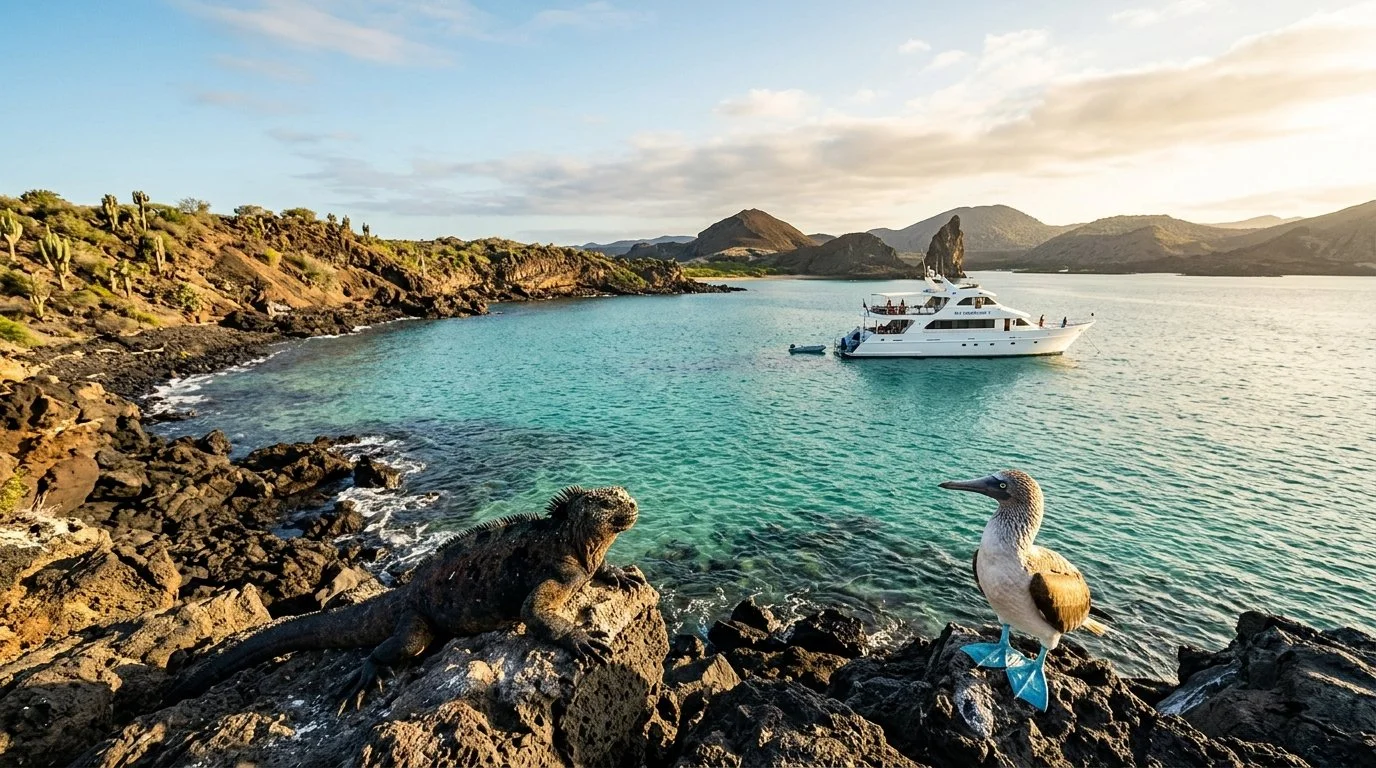
A Destination That Punishes Shortcuts
Most destinations forgive a lazy itinerary. The Galápagos does not. These are protected islands governed by some of the strictest visitor rules in the world, and that's precisely why they remain pristine. Every visitor pays a national park entry fee that funds conservation and research. Wildlife must be observed from a respectful distance — though the famously fearless boobies, sea lions, and marine iguanas rarely return the courtesy and often wander right up to you. And no one explores the landing sites without a naturalist guide certified by the Galápagos National Park.
That last point matters more than travelers realize. The gap between a forgettable Galápagos trip and a transformative one has almost nothing to do with luxury and almost everything to do with how the trip is run — who is guiding you, how small your group is, and how deeply the operator understands the islands. This is a place where the experience is the product, and the product is only as good as the people delivering it.
What "Done Right" Actually Means Here
When travel is done right in the Galápagos, the itinerary breathes. Wildlife moves on its own schedule, the park reroutes vessels to protect sensitive sites, and seas shift with the season — so the best operators treat a published itinerary as a guide, not a guarantee, and adjust in real time to put you where the magic is. Done right also means the people leading you are genuine naturalists who can read animal behavior, explain the geology under your feet, and turn a beach walk into a graduate seminar you didn't know you wanted.
This is the standard worth holding any Galápagos trip to. It's also the standard that the most credible names in adventure travel have built their reputations on.
Why the Right Partnership Is a Quality Signal
When an operator earns a lasting association with National Geographic, it tells you something before you've read a single itinerary detail. It signals expert-led storytelling, a conservation conscience, and travel built around purpose rather than postcards. The collaboration between G Adventures and National Geographic — a partnership substantial enough that the two recently committed to another full decade together — channels real support to the nonprofit National Geographic Society and puts expedition experts and seasoned leaders into the field. That is the model discerning travelers should look for, in the Galápagos and anywhere else: small groups, expert guides, and a business that leaves the places it visits better than it found them.
The lesson isn't to chase a logo. It's to recognize what that kind of partnership represents — and to insist on it.
Two Ways to Meet the Islands
There are essentially two ways to experience the Galápagos, and choosing well is half the trip. A small-ship or yacht expedition lets you sleep aboard and wake at a new island each morning, reaching the remote outer sites — Genovesa, Fernandina, Española — where waved albatross nest and flightless cormorants dry their useless wings. A land-based, island-hopping trip keeps you in hotels on Santa Cruz or San Cristóbal with day boats to nearby sites, trading some range for town life, flexibility, and a gentler budget.
Here's the insider tip most first-timers miss: the outermost islands hold some of the most extraordinary wildlife, and they're realistically reachable only by the live-aboard expedition vessels. If a specific species is on your dream list, that single fact should shape your entire booking. Timing matters too — the warm, wetter months from roughly December through May bring calmer seas, courtship displays, and the best snorkeling, while the cooler, drier stretch from June through November delivers choppier water but richer marine life for divers.
Where Wilton Vida Comes In
This is exactly where an advisor earns their place. The single most valuable thing we do for a Galápagos traveler is match you to the right vessel and the right operator — not the one with the largest marketing budget, but the one whose ship size, route, guides, and ethos fit the trip you actually want. As members of Travel Leaders Network, Wilton Vida brings advisor-level access and a white-glove, inclusive approach to every booking, for every traveler and every couple who trusts us with a once-in-a-lifetime journey. You should be deciding which islands to dream about. Let us handle which ship gets you there.
The Galápagos has been changing the way people see the world since 1835. When you're ready to see it the right way, we'd love to plan it with you.
Ready to start planning? Reach out to our team at wiltonvida.com or connect with us on WhatsApp at https://wa.me/message/YUIL7UEHTZDAM1.
Un mundo. Un amor. Déjanos llevarte allí.