Iceland Beyond the Golden Circle: A Slower Reykjavik
The Golden Circle earns its reputation. Þingvellir, Geysir, and Gullfoss in a single loop is a remarkable piece of geographic luck, and no first visit to Iceland should skip it. But it is also the most compressed version of the country available — three landmarks, a bus schedule, and a return to Reykjavik by dinner. Travelers who leave Iceland describing it as smaller than they expected have usually seen exactly that loop and very little else.
The better trip is not a longer list. It is a slower one.
Give Reykjavik More Than a Night
Most itineraries treat Reykjavik as an airport with hotels attached. That is a mistake, and it is the easiest one to fix.
The city rewards unstructured time in a way that surprises people. It is small enough to cross on foot in an afternoon, dense enough that the walk is interesting, and it has quietly become one of the more serious food cities in the North Atlantic. The reason is straightforward: the raw material is exceptional. Cod and langoustine landed hours earlier. Lamb that grazed on wild herbs and mountain grass. Skyr, rye bread baked in geothermal ground, sea greens, and root vegetables grown under glass in greenhouses heated by the earth.
What has changed over the last decade is confidence. A generation of Icelandic chefs stopped apologizing for the pantry and started building around it. The result is a food scene that is genuinely of its place rather than borrowed from Copenhagen.
Give the city two nights at the front of your trip and one at the end. The bookend structure gives you a soft landing after the flight and a comfortable buffer before departure, and it means the middle of the trip can be spent where the landscape is.
The South Coast Deserves an Overnight, Not a Day Trip
The single most common structural error in an Iceland itinerary is running the south coast as a long day trip out of Reykjavik. It is possible. It is also ten hours in a vehicle for a handful of stops, arriving at each one at the exact moment every other day tour arrives.
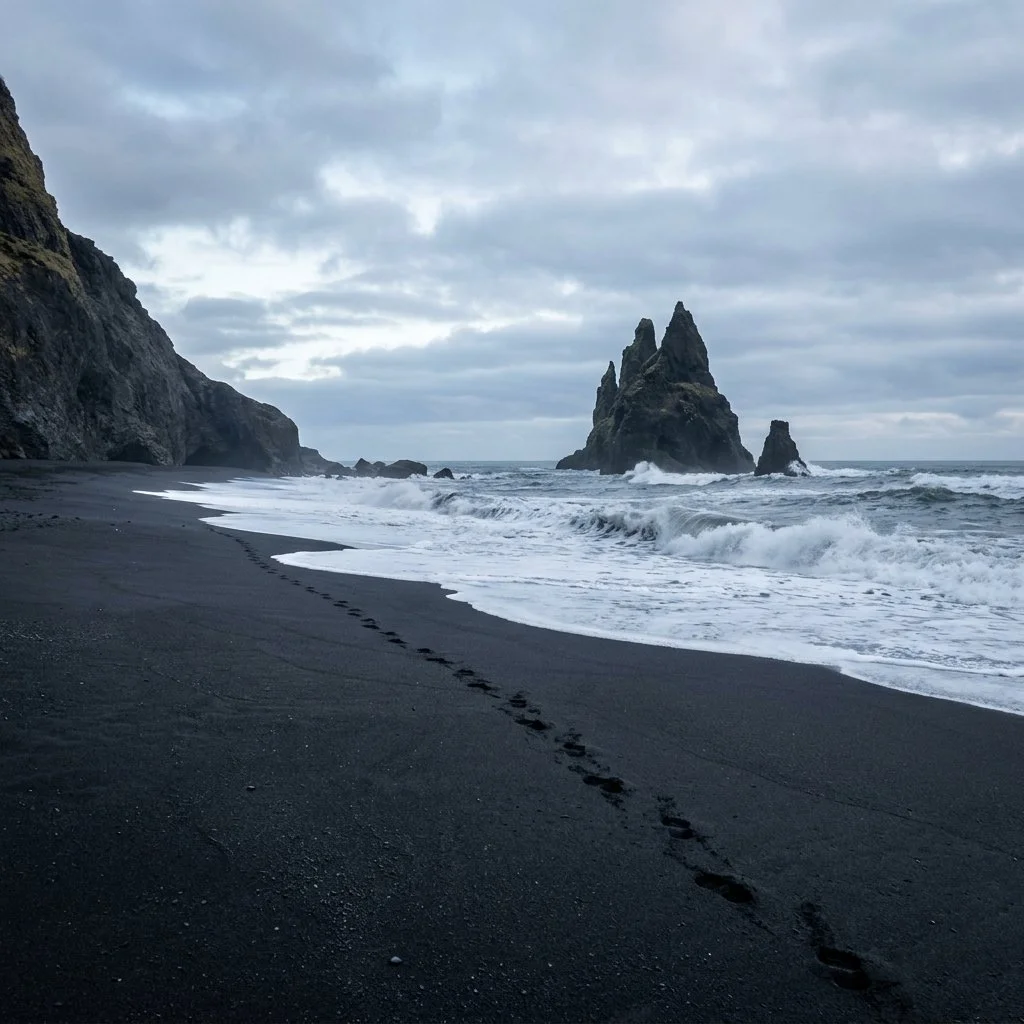
Base yourself out there instead — one or two nights around Vík or Hvolsvöllur — and the whole thing changes. You reach the black sand beaches and the basalt columns in early morning light with nobody else there. You have time for the glacier lagoon rather than a rushed forty minutes. And in the right season, you are away from city light when the sky decides to perform.
A word on that beach, because it is genuinely important: the surf on Iceland’s south coast is dangerous. Sneaker waves arrive without warning, run far higher up the sand than the previous twenty did, and the water is cold enough to end the discussion quickly. Stay well back from the waterline. Local guides are emphatic about this for a reason.
Viking Heritage as Something Still Living
Iceland’s Norse history is not confined to museums, though the museums are excellent. It is in the language — modern Icelandic remains close enough to Old Norse that schoolchildren read the medieval sagas without translation. It is in the place names, which are frequently descriptions rather than labels. It is in the persistence of the naming convention, where a surname records a parent rather than a lineage.
The sagas themselves are the most rewarding preparation you can do for this trip. They are family dramas — feuds, lawsuits, inconvenient marriages, long grudges — set in the exact valleys you will be driving through. Reading even one before you go converts a scenic landscape into a landscape with a story attached.
A good guide is what unlocks this. The difference between someone reciting dates and someone who can stand in a field and tell you what happened there, and why the descendants of both families still live nearby, is the difference between seeing Iceland and understanding it.
Season Changes the Trip Entirely
Iceland is not one destination across the year, and choosing the wrong season for what you want is the second most common planning error.
Summer brings near-endless daylight, full access to the highland interior, puffins on the sea cliffs, and the most reliable driving conditions. It also brings the crowds and the highest rates. The light is extraordinary — a golden hour that lasts most of the evening — and there is no aurora, because it never gets dark enough.
Winter reverses everything. Short days, restricted roads, real weather. In exchange: ice caves that only exist in the cold months, a genuine chance at the northern lights, and a country that feels like it belongs to whoever is willing to be there.
The shoulder months — roughly September and October, then March and April — are the underrated answer for most travelers. Enough darkness for aurora, enough daylight to see the landscape, most roads open, and noticeably fewer people at every stop.
Where Wilton Vida Comes In
Iceland is a destination people assume they can self-assemble, and many do. What an advisor adds is the difference between an itinerary that works and one that merely fits on paper.
We build Iceland around pace rather than coverage — which nights go where, which stretches are worth a private guide and which are better driven yourself, and where the accommodation is genuinely good rather than simply the only thing available. Through Travel Leaders Network we hold preferred relationships with Iceland’s leading properties and ground operators, which matters most in a country where the good rooms in the good locations are a finite and quickly-taken set.
We also handle the parts that are easy to underestimate: the vehicle class that is actually appropriate for the season you are traveling, the weather-contingency planning that Iceland routinely demands, and the guiding arrangements for glacier and ice cave access, which are not activities to book from a roadside sign.
And when a road closes or a storm reroutes a day — which happens, and is part of the deal — you have someone to call rather than a booking confirmation and a phone number that goes to a queue.
If Iceland is on your list, the conversation worth having is which season, and how slowly. Reach out to our team at wiltonvida.com or connect with us on WhatsApp at https://wa.me/message/YUIL7UEHTZDAM1
Un mundo. Un amor. Déjanos llevarte allí.