Remote Notarization in 2026: What You Can and Cannot Sign Online in Florida
There's a costly assumption hiding inside the phrase "online notary." Some people hear it and assume anything can now be signed from a laptop. Others hear it and assume nothing serious can. In Florida, in 2026, the truth sits in between — and knowing exactly where the line falls is the difference between a document that holds up and one that gets challenged later.
What Florida RON Actually Is
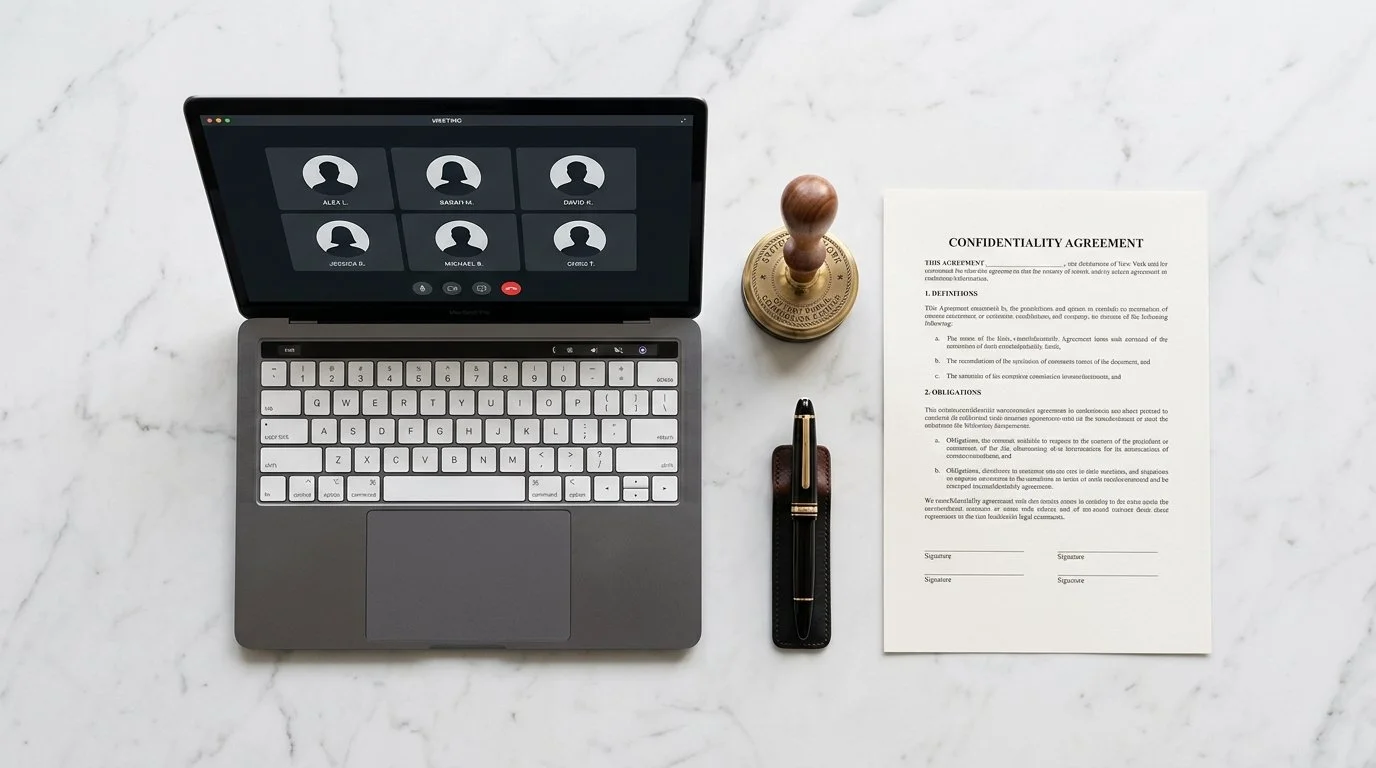
Florida has authorized Remote Online Notarization, or RON, since January 1, 2020. In a RON session, a Florida-commissioned online notary connects with you over secure audio-video technology, confirms your identity, and notarizes your document — all without anyone sitting in the same room. The notary must be physically located in Florida, but you, the signer, can be virtually anywhere in the world; the law explicitly allows it. Your identity is verified through a layered process: you present a government-issued photo ID on camera, the platform runs credential analysis on it, and you answer knowledge-based questions pulled from public records. The fee for the online notarial act itself is capped by statute at twenty-five dollars, though the technology platform may charge its own separate fee. For most documents, the whole session takes ten to fifteen minutes.
What You Can Notarize Online
This is the part most people underestimate. The large majority of everyday documents can be notarized remotely in Florida — affidavits, sworn statements, acknowledgments and jurats, business and corporate filings, vehicle paperwork, and most powers of attorney all fall comfortably within RON's reach. If you've been putting off a notarization because you couldn't get to an office during business hours, RON likely solves the problem outright, from wherever you happen to be.
The Documents That Carry Extra Rules
Here is where the common misconception lives, and it's worth stating plainly because it gets repeated incorrectly all the time: wills and codicils are not banned from remote notarization in Florida. Since mid-2020, the state has permitted electronic wills executed through a properly supervised RON session. What's true is that wills — along with a specific short list of other sensitive instruments such as trusts with testamentary aspects, health-care advance directives, waivers of spousal rights, and certain powers of attorney — carry heightened safeguards that routine documents do not.
For these instruments, Florida law requires the signer to answer a set of screening questions before witnessing can proceed, and to receive a formal warning. The pivotal rule is this: if the signer qualifies as a "vulnerable adult" under Florida's definition, a document witnessed by audio-video technology is not valid. That definition is deliberately broad — it can reach anyone whose capacity is impaired by illness, disability, or simply the infirmities of age — and the burden of proving vulnerability later falls on whoever challenges the document. For high-stakes estate planning, that breadth is exactly why many individuals, and many attorneys, still choose traditional in-person witnessing even when RON is technically available. The tool exists. Whether it's the right tool depends on the signer and the stakes.
The Lender Question
Real estate is the other place where "allowed" and "accepted" quietly diverge. Florida law permits remote online closings, and RON-based e-closings happen across the state every day. But a given transaction also has to satisfy the lender, the title underwriter, and the county where the deed will be recorded — and not all of them accept RON for every transaction type. This isn't a legal exclusion; it's a market-acceptance reality. The practical takeaway is simple: before you schedule a remote closing, the parties receiving the document need to confirm they'll honor it. Finding that out after the session is the expensive way to learn it.
Where Wilton Vida Comes In
This is precisely the kind of detail that should be handled before you sign, not discovered afterward. At Wilton Vida, our notary practice begins by confirming two things: that your specific document is eligible for RON, and that whoever is receiving it will accept a remotely notarized version. When RON is the right fit, we run the session cleanly and on your schedule. When it isn't — a sensitive estate document, a lender that wants wet ink — our mobile notary service comes to you instead, so you're never forced to choose between convenience and validity. And because South Florida is bilingual by nature, we conduct sessions comfortably in English or Spanish.
Before You Schedule
One honest note: this article explains how Florida's notarization rules generally work, but it isn't legal advice, and the specifics of your situation matter. For anything involving an estate plan or a significant transaction, confirm the details with your attorney and with the party receiving the document. Then, when you're ready to get it notarized — remotely or in person — reach our team at wiltonvida.com or connect with us directly on WhatsApp at https://wa.me/message/YUIL7UEHTZDAM1.
Lo hacemos fácil, lo hacemos bien. Wilton Vida — white-glove notary services across South Florida.