Three brochures land on the table. All three show a well-dressed couple at a railing with a glass of something cold, and all three promise the trip of a lifetime. What none of them tell you is that they are describing three fundamentally different vacations that happen to share a word. Choosing wrong is not a small error — it is the difference between the trip you tell people about for years and eight days of feeling faintly out of place.
The good news is that the three styles sort cleanly once you know what actually separates them.
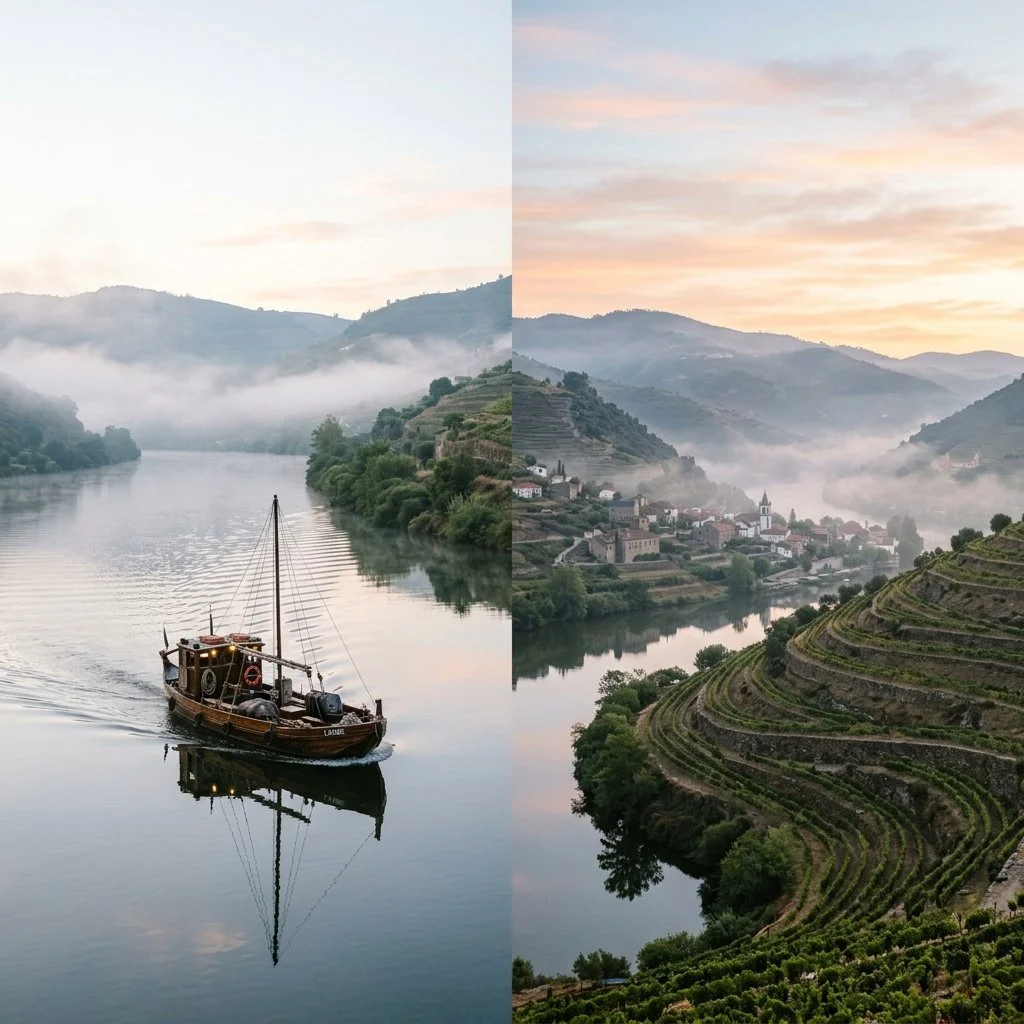
River: The Destination Is Continuous
A river ship is small — typically carrying somewhere between one hundred and two hundred guests — because it has to fit through locks and under bridges. That physical constraint shapes everything about the experience.
You are never far from land. The banks are close enough to see people on them. The ship usually docks in the center of town rather than at an industrial port twenty minutes out, which means you walk off into the destination rather than boarding a coach to reach it. Many itineraries dock overnight, so an evening in the town is genuinely available rather than theoretically available.
The trade-off is that a river ship cannot offer scale. There is one main dining room, a lounge, a sun deck, and usually a small wellness area. There is no theater, no casino, no water slide, and no second dinner venue if you did not like the first one. Entertainment tends toward a local ensemble coming aboard for the evening.
River suits travelers whose priority is the places rather than the vessel — people who want to see a great deal of Europe or Southeast Asia at close range, unpack once, and never think about logistics. It suits travelers who are comfortable in a small, largely adult, fairly social environment. It does not suit anyone who wants variety onboard, a range of dining choices, or a ship their grandchildren would enjoy.
Ocean: The Ship Is Part of the Trip
Ocean cruising spans an enormous range, and generalizing about it is where most comparisons fail. A luxury ocean ship carrying six hundred guests and a mainstream ship carrying five thousand are not the same product in different sizes — they are different industries.
What ocean sailing offers structurally is scale and choice. Multiple dining venues, real theater production, spa and fitness facilities that justify the name, and the sea days that many travelers eventually decide are their favorite part. Cabins are larger than river equivalents at comparable tiers, and the ship is stable enough that most people forget they are at sea.
The trade-off is distance from the destination. Larger ships call at ports built to receive them, which are not always the ports you would have chosen. Time ashore is finite and shared with everyone else who arrived that morning. And on the largest ships, the sheer number of people is itself part of the experience — for some travelers that is energy, for others it is the reason they will not go back.
Ocean suits travelers who want the vessel to be a destination in its own right, who value variety and choice, and who are traveling with a group spanning several ages and interests. The key decision is not ocean versus river — it is which ocean tier, and that decision is worth taking seriously.
Expedition: The Itinerary Is a Hypothesis
Expedition is the least understood of the three, and the one most often booked for the wrong reasons.
An expedition vessel is small, ice-capable where relevant, and built around getting people off the ship rather than entertaining them on it. It carries inflatable landing craft, sometimes kayaks or submersibles, and — most importantly — a team of naturalists, marine biologists, historians, and photographers who lecture, guide the landings, and are available all day.
The defining characteristic is that the itinerary is provisional. Weather, ice, and wildlife determine the day. A printed schedule is an intention, not a promise, and the captain will change it without hesitation if there is something better twenty miles away. Travelers who find that thrilling are the right customers. Travelers who need certainty are not.
Onboard, expect comfort rather than opulence at most tiers, though the premium end of the category is now genuinely luxurious. Expect early mornings, real physical activity, and a wardrobe that involves waterproof layers rather than formal wear.
Expedition suits the curious and the reasonably fit — travelers going for Antarctica, the Arctic, the Galápagos, or remote Pacific island groups, who want to learn as much as they want to see, and who are comfortable when the plan changes at breakfast.
The Four Questions That Actually Decide It
Strip away the marketing and the choice comes down to four honest answers.
How much do you want the ship itself to matter? If the answer is a great deal, ocean. If the answer is barely at all, river or expedition.
How much time do you want ashore, and how independently? River gives you the most time in the most walkable places. Expedition gives you the most immersive time in the least accessible ones. Ocean gives you the least of both and compensates elsewhere.
How do you feel about uncertainty? Expedition requires genuine comfort with a changing plan. River and ocean run to schedule.
Who is traveling? Multigenerational groups are usually an ocean decision. Two adults who want depth are usually a river or expedition decision.
Getting This Right the First Time
This is the single most valuable conversation we have with new cruise clients, and it happens before any ship is named. Booking the wrong style is an expensive way to conclude that cruising is not for you — and we have met a lot of people who reached exactly that conclusion from a single poorly-matched sailing.
Wilton Vida approaches it as a fit question. We ask about pace, about how you travel on land, about how much structure you want, about what your last great trip was and what made it great. The recommendation follows from that, and sometimes it is the style you were not considering.
Through Travel Leaders Network we work across all three categories rather than being tied to one, which means the recommendation is not shaped by what we happen to sell. We also know which specific ships within each style suit which travelers — a distinction that matters more than the category label, and one that is nearly impossible to research from the outside.
If you are trying to choose between three brochures, send them over and let’s talk it through. Reach out to our team at wiltonvida.com or connect with us on WhatsApp at https://wa.me/message/YUIL7UEHTZDAM1
Un mundo. Un amor. Déjanos llevarte allí.