Solo, Not Alone: Expedition Cruising Without the Single Supplement
The single supplement — that quiet surcharge for daring to travel alone — has kept too many solo adventurers from the trips they most want. It's the fine print that turns a dream into a "maybe next year": pay nearly double to occupy a cabin built for two, or don't go at all. But here's what seasoned solo travelers know that the brochures bury: on select expedition departures, that supplement is waived or dramatically reduced. And the moment it is, the whole calculation changes — Antarctica's silence, the Galápagos' wild intimacy, suddenly within reach, on your own terms.
Because solo isn't settling. Done right, it's the most freeing way to travel there is.
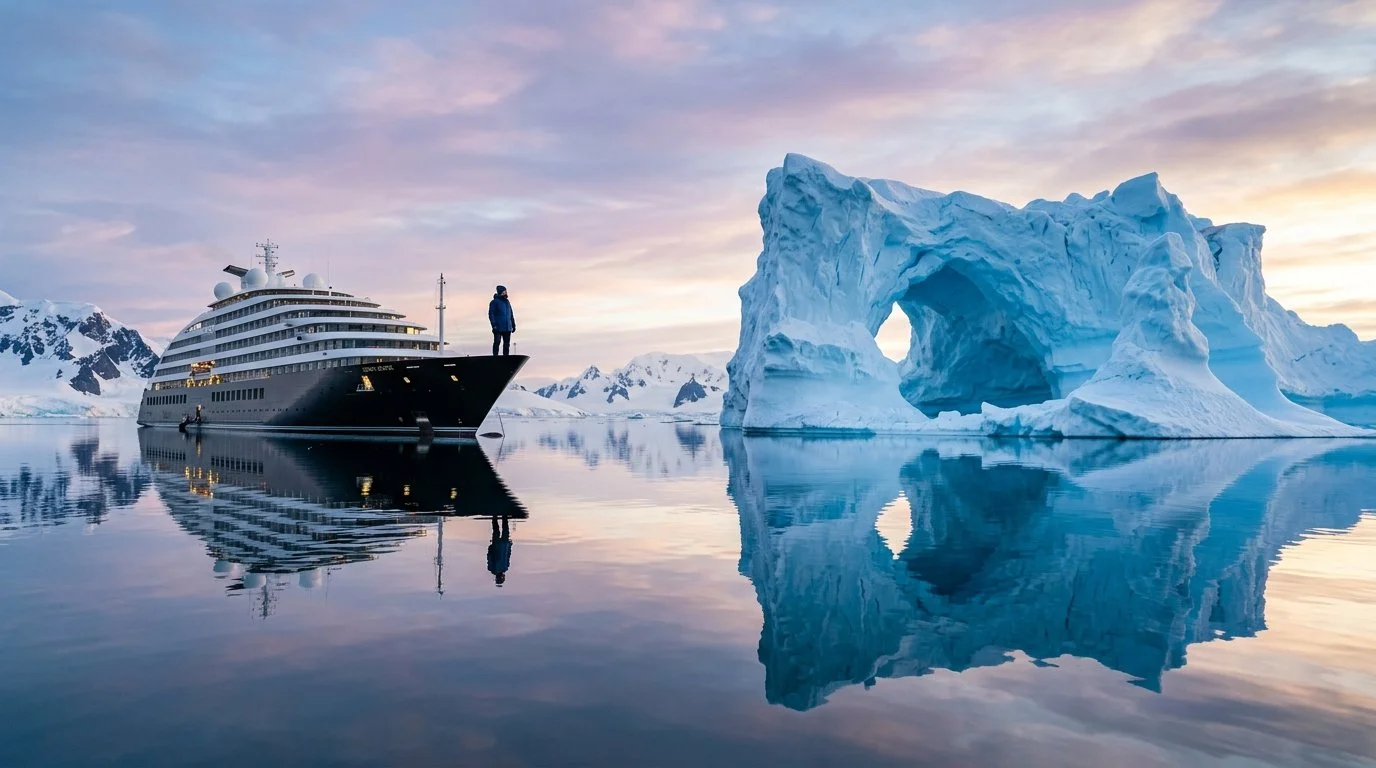
Why Expedition Cruising Suits Solo Travelers
If you've ever hesitated to travel alone for fear of feeling alone, expedition cruising is the antidote you didn't know existed. Small ships build community fast — far faster than a big resort or a sprawling ocean liner ever could. With only a few dozen to a couple hundred guests aboard, you see the same faces at breakfast, on the Zodiac, and at the evening briefing, and by day three the ship feels less like a hotel and more like a small, temporary village of curious people.
The rhythm of expedition travel does the rest. Shared Zodiac landings, expert-led briefings, naturalists pointing out a breaching whale, long horizon-watching days on deck — these are experiences that bond people naturally, without the forced small talk of a singles mixer. You're never short of company. And just as importantly, you're never obligated to have it. Want to join the dinner table where the conversation's flowing? Pull up a chair. Want to stand alone at the bow in total silence while the ice slides past? That's yours too. The freedom to choose your own level of solitude, moment to moment, is the quiet luxury of traveling this way.
The Single Supplement — and Why the Waiver Matters
For the uninitiated: the single supplement is the premium a solo traveler pays to occupy a double-occupancy cabin. Because cruise pricing assumes two fares per room, going alone can mean paying anywhere from 25% to a full 100% on top of the per-person rate. On an expedition voyage — already a once-in-a-lifetime investment — that surcharge is often the dealbreaker.
Which is why the waiver is such a game-changer. On select departures, expedition lines set aside a limited number of cabins with the single supplement reduced or removed entirely, pricing the solo traveler at or near the shared rate. The catch is simple: there are only ever a few of these, and they're claimed quickly by travelers who know to look for them. When you find one, the math that kept you home for years quietly dissolves.
Antarctica or the Galápagos — Two Edges of the World
Both reward the solo traveler magnificently, and they could hardly be more different.
Antarctica is raw scale and silence. It's a continent that recalibrates you — cathedral-blue icebergs, the exhale of a humpback in still water, penguin colonies stretching across black volcanic shore, and a quiet so complete it has texture. There's something profound about meeting the most remote place on Earth on your own, with no one's itinerary to negotiate but your own. Insider tip: the Antarctic season runs the austral summer, roughly late October through March, and the scarce no-supplement solo cabins on the best small ships are often gone twelve or more months out. This is a trip to plan early, not impulsively.
The Galápagos is the opposite kind of magic: intimacy with the wild. Here the animals never learned to fear people, so a sea lion pup may flipper right up to you on the sand, a blue-footed booby performs its comic courtship dance an arm's length away, and marine iguanas sun themselves across the rocks like tiny dragons. The islands are warm, active, and endlessly social — snorkeling, kayaking, and daily landings that keep a solo traveler engaged from sunrise on. Two very different edges of the world, both extraordinary alone.
Booking the Right Departure
This is where going solo gets genuinely strategic. The no-supplement cabins are limited and move fast, the best expedition ships sell out their prime departures far ahead, and the difference between catching the right sailing and just missing it often comes down to who's watching the calendar. Knowing which departures carry the solo offer, which ships suit a first-time expedition cruiser versus a seasoned one, and when to commit — that's not information you'll find cleanly on a booking site. It's exactly the kind of detail worth handing to someone who does this for a living.
Where Wilton Vida Comes In
At Wilton Vida, we love planning solo expeditions, because we get to turn a "someday" into a confirmed cabin. We know where the no-single-supplement departures hide, we watch them so you don't have to, and we move quickly to lock the right one before it's gone. As a member of Travel Leaders Network, we bring access and relationships with the world's leading expedition lines that you can't replicate booking direct — and we make sure a solo traveler is looked after at every step, with one point of contact who knows your trip and has your back from the first question to the final iceberg.
You bring the sense of adventure. We'll handle everything else — including the part where you don't pay extra for the privilege of going alone.
Ready to find your departure? Reach out to our team at wiltonvida.com or connect with us on WhatsApp at https://wa.me/message/YUIL7UEHTZDAM1, and let's get you to the edge of the world — solo, and entirely on your terms.
Viajar sola o solo no es conformarse: es la forma más libre de descubrir el mundo. Cuando estés listo, encontramos tu travesía.