There's a particular kind of confidence that develops in a person who has navigated a foreign city alone — who has made a wrong turn in a market, ordered something unrecognizable from a menu, sat at a bar with a glass of wine and no one to talk to but the view, and decided that all of it was exactly right. Solo travel doesn't just take you somewhere. It shows you who you are when no one else is setting the itinerary.
For a growing number of travelers — many of them women, many of them LGBTQ+, many of them simply done with waiting for someone else's schedule to align with theirs — solo travel isn't a compromise. It's the preference.
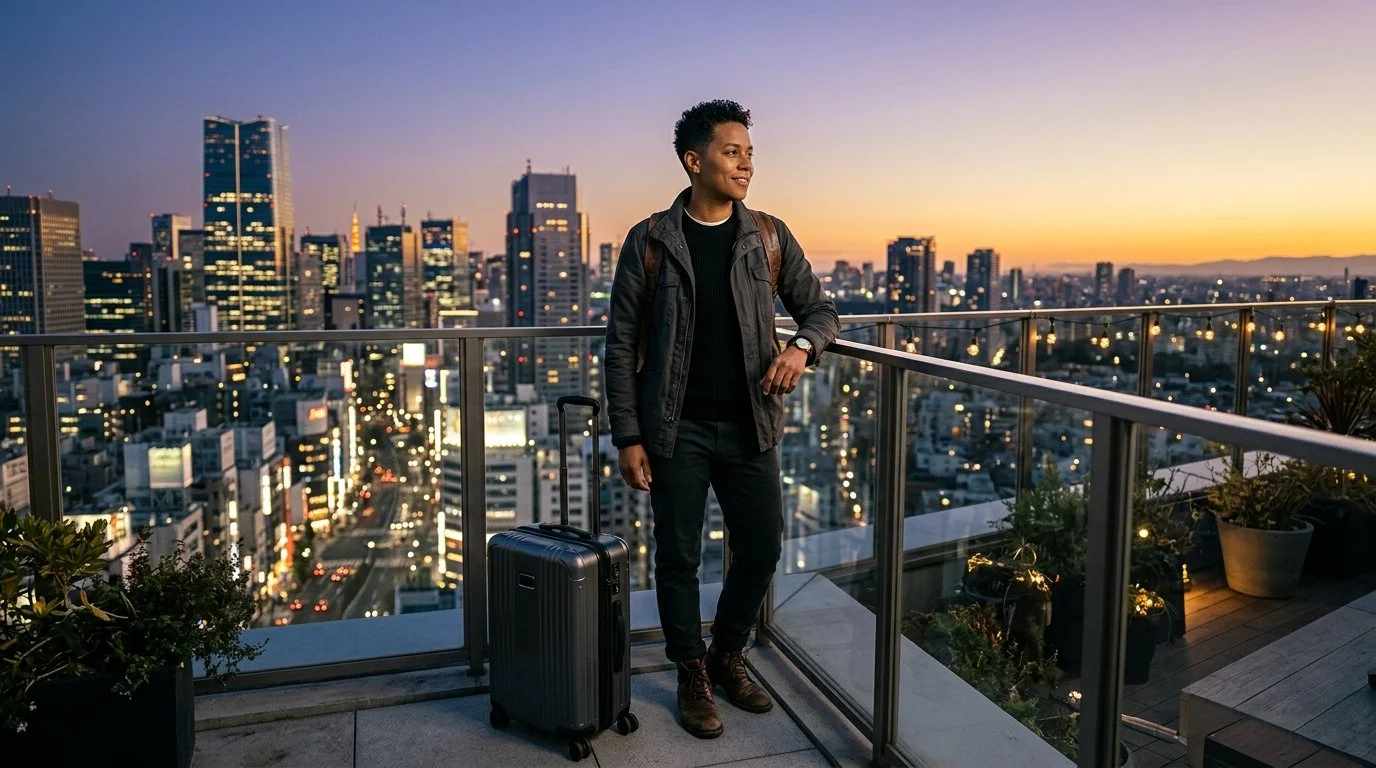
Why Solo Travel Has Shifted from Trend to Standard
The numbers have moved decisively. Solo travel bookings have grown steadily for over a decade, and the pandemic accelerated a reckoning that was already underway: life is finite, good travel windows are not guaranteed, and the right travel companion is sometimes just yourself.
What's changed alongside the demand is the infrastructure. Hotels that once penalized solo guests with single supplements are increasingly designing for them — solo-friendly room categories, communal dining concepts, curated programming for independent travelers. Expedition cruise lines have introduced single cabins without surcharge. Tour operators have restructured group departures around the solo experience rather than treating it as an exception.
The world, in other words, has gotten better at receiving solo travelers. The question now is less whether to go alone and more how to do it well.
Choosing the Right Destination for Your First — or Next — Solo Trip
Not all destinations are created equal for solo travel, and the variables that matter most aren't always the obvious ones. Safety is a factor, but so is social infrastructure — the ease with which a solo traveler can connect, eat alone without discomfort, move independently without logistical friction.
Cities tend to be more naturally solo-friendly than resort destinations. Lisbon, Mexico City, Tokyo, Buenos Aires, Barcelona — these are places built around street life, neighborhood culture, and the kind of ambient social energy that makes eating at a counter or wandering a market feel complete rather than solitary. The solo traveler in a city is never actually alone; they're surrounded by the city itself.
Resort and nature destinations require more intentional structuring. A solo week at an all-inclusive can feel isolating without programming that draws independent guests into shared experience. A solo expedition cruise, by contrast — Antarctica, the Galápagos, Alaska's Inside Passage — tends to produce an almost immediate sense of community among passengers united by the landscape they're moving through together. The destination itself becomes the social architecture.
For LGBTQ+ solo travelers specifically, destination selection carries an additional layer of consideration. Cities with established queer neighborhoods and visible community infrastructure — Amsterdam, Montevideo, New Orleans, Cape Town, Puerto Vallarta — offer not just safety but belonging, which is a different and more meaningful thing.
How to Structure a Solo Trip That Actually Delivers
The most common mistake in solo travel planning is under-structuring the experience out of a desire to stay "flexible." Flexibility is an asset, but it requires a foundation. Without anchor points — a hotel you're genuinely excited to return to, two or three experiences you've booked in advance, a neighborhood you've identified as your base — flexibility tips quickly into drift, and drift in an unfamiliar city can feel less like freedom and more like aimlessness.
The framework that works: book your accommodations with intention, pre-book one meaningful experience per day, and leave the rest open. That ratio — one anchor per day — gives the trip shape without rigidity. The unplanned hours fill themselves differently when you're not managing the anxiety of a completely blank itinerary.
Accommodation choice matters more for solo travelers than for couples or groups. A well-located boutique hotel with a strong bar program and attentive staff can become a genuine base of operations — somewhere to debrief the day, get a local recommendation, and feel genuinely welcomed rather than processed. Wilton Vida's Marriott Platinum Elite status opens access to exactly that tier of property across an enormous global footprint, along with suite upgrades, late checkout, and lounge access that meaningfully improve the solo experience.
The Safety Conversation — Honest and Practical
Safety is real and it deserves a direct conversation rather than a dismissive "just be smart out there." The variables are destination-specific, traveler-specific, and context-specific — and the best preparation is information, not anxiety.
A few practices that matter: share your itinerary with someone at home before you depart. Use a VPN on public networks. Keep digital and physical copies of your documents in separate locations. Research the specific neighborhoods you'll be moving through, not just the destination at a country level. Know the emergency contacts for your destination — the equivalent of 911, the nearest hospital, the address of your country's consulate.
For LGBTQ+ solo travelers, IGLTA-affiliated hotels and destinations offer a meaningful baseline of vetted safety and welcome. Your travel advisor should know which properties have that designation and be able to route your itinerary accordingly.
Travel insurance for solo trips is non-negotiable. When you're traveling alone, there's no one else to manage a delay, a medical situation, or a lost bag. The policy that covers trip interruption, emergency evacuation, and medical expenses isn't an upsell — it's the foundation of traveling confidently alone.
What a Travel Advisor Actually Does for the Solo Traveler
Solo travel is the category where a great travel advisor earns the relationship most clearly. The logistics that a travel partner would normally absorb — the research, the contingency planning, the local intelligence — fall entirely on the solo traveler without support. A skilled advisor lifts that weight entirely.
Wilton Vida plans solo itineraries with the same white-glove precision we bring to honeymoons and group departures. That means hotel selection informed by solo-traveler criteria, not just star ratings. It means knowing which tour operators run genuinely solo-friendly small-group experiences. It means building in the right buffer time, the right neighborhoods, the right property amenities for someone traveling independently. And it means being available when the trip is in motion — not just before departure.
As a member of Signature Travel Network, we access amenities, room upgrades, and supplier relationships that independent booking simply can't replicate. For solo travelers especially, those advantages compound: a suite upgrade matters more when there's no one to share a standard room with, and a hotel that knows your name before you arrive matters more when you're arriving alone.
Ready to plan your solo trip? Start the conversation at wiltonvida.com or reach us on WhatsApp at https://wa.me/message/YUIL7UEHTZDAM1. Your itinerary. Your pace. Your world.