When a Storm Closes the Airport: Duty of Care for SMB Travel
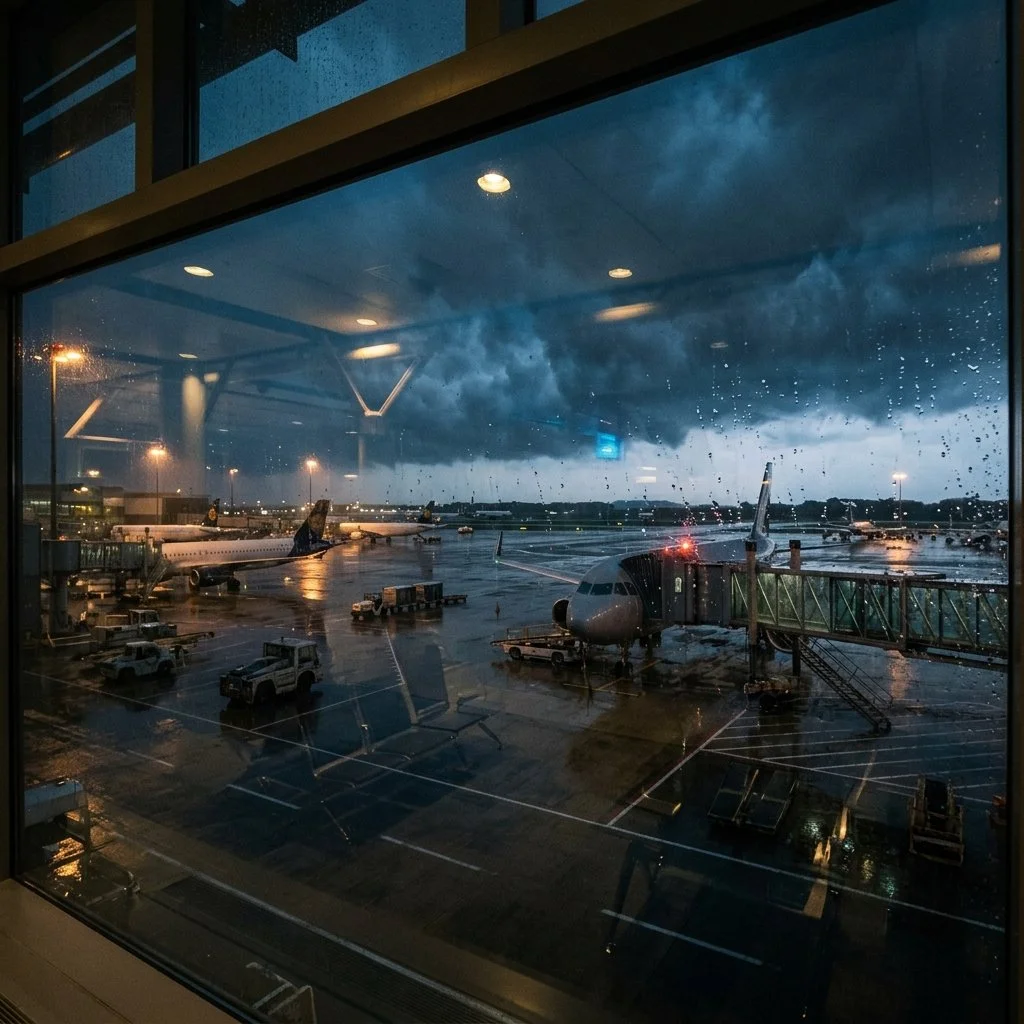
A storm system develops in the Atlantic on a Tuesday. By Thursday afternoon, three of your people are in cities they were supposed to have left, one of them cannot reach anyone at the office, and your operations lead is on hold with an airline that has already rebooked her onto a flight four days out. Nobody planned badly. There simply was no plan.
For companies headquartered in Florida, this is not a hypothetical risk profile. It is a recurring operating condition roughly half the year. And the gap between organizations that handle it well and organizations that scramble is almost never budget — it is whether a small number of decisions were made in advance.
Duty of Care Is Not a Large-Company Concept
The phrase sounds like something that belongs to organizations with a global security function and a twenty-four-hour operations center. In practice, duty of care is simply the obligation an employer carries to take reasonable steps to protect employees it sends into foreseeable risk.
Foreseeable is the operative word, and it is where smaller companies underestimate their exposure. A named storm tracking toward a region five days out is not an unforeseeable event. Neither is hurricane season itself. If an organization knowingly sends people into a period of elevated disruption without any framework for locating them, reaching them, or moving them, the difficulty of defending that decision does not scale with headcount.
The practical case is stronger than the legal one. A traveler stranded without support does not simply lose days — they lose confidence in the employer that sent them. That cost is real, and it shows up in retention long before it shows up anywhere else.
Know Where Your People Actually Are
The foundational capability is traveler visibility, and most small and mid-sized companies do not have it.
If travel is booked across personal accounts, consumer booking sites, and whatever loyalty program each employee prefers, the organization has no consolidated view of who is where. When something happens, the first hour is spent reconstructing the answer from calendars and text messages — and the first hour is the one that matters.
Consolidating travel through a managed program solves this structurally rather than procedurally. Bookings flow into one record. A named contact can produce, in minutes, a list of every traveler in an affected region with their itineraries and contact details. That is the entire capability, and it is unglamorous, and it is the thing every organization wishes it had at the moment it needs it.
Decide the Rebooking Hierarchy Before You Need It
When a major disruption hits, airline capacity is allocated to whoever reaches it first and whoever holds the most leverage. An individual traveler in a call queue is at the bottom of both.
Build the hierarchy in advance. Which travelers move first — those with medical needs, those traveling alone, those furthest from home? What is the standing authorization on cost: is a traveler empowered to book a hotel and a one-way fare on a company card without waiting for approval at eleven at night? Who has authority to make that call if the usual approver is unreachable?
Written answers to those three questions convert a chaotic evening into a sequence of decisions someone can execute. And a managed travel program gives your people an agent working the rebooking on their behalf while they are still at the gate, rather than a hold queue and a dwindling phone battery.
Build the Communication Tree Now
Traveler visibility is useless without a way to reach people. Establish a primary and secondary contact method for every traveler, confirm both before departure, and make sure travelers know who to contact and in what order.
Two details are consistently overlooked. International roaming — confirm it is active before the traveler leaves, not after they land somewhere without service. And a check-in protocol during an active event: a simple expectation that travelers confirm status at agreed intervals, so that silence means something rather than nothing.
Keep the emergency contact list somewhere reachable without corporate network access. A tree that lives only on an intranet is a tree that fails during a power outage.
Read Your Insurance Before the Season, Not During It
Most companies discover the boundaries of their travel coverage at the worst possible moment.
Check specifically what applies to trip interruption caused by weather, what the policy says about additional accommodation and meals during a delay, and whether evacuation coverage exists and what triggers it. Understand the distinction between a delay and a cancellation in the policy’s language, because they are frequently treated very differently.
Then check the exclusion that catches people out most often: many policies limit or exclude coverage for a named storm once it has been named. Buying coverage after the system has a name is usually too late. This is a pre-season task, not an in-season one.
Where Wilton Vida Fits
We build travel programs for small and mid-sized Florida companies — organizations with real travel volume and no dedicated travel manager, which describes most of the businesses in this market.
That means consolidated booking so you have one view of your travelers, a named contact rather than a call center, and defined escalation paths for disruption. Through Travel Leaders Network we have supplier relationships and rebooking access that an individual traveler on a consumer site simply does not have — which is the difference between being reaccommodated and being placed on a waitlist.
We also do the unglamorous pre-season work: reviewing your travel policy against the season you are about to enter, confirming your traveler data is current, and making sure the rebooking hierarchy and communication tree exist in writing before anyone needs them.
None of this requires a large program or a long implementation. It requires deciding a handful of things in advance and putting a competent contact behind them.
If your company sends people out of South Florida during storm season, this is a conversation worth having now rather than in September. Reach out to our team at wiltonvida.com or connect with us on WhatsApp at https://wa.me/message/YUIL7UEHTZDAM1
Atendemos a equipos bilingües en todo el sur de Florida — en inglés y en español.