The biggest ships in the world promise you everything — pools, theaters, a dozen restaurants, a whole floating city. It’s an impressive trick. It’s also, increasingly, not what a growing number of luxury travelers actually want. The alternative has been quietly gaining ground for years: small ships, yachts, and expedition vessels that trade the floating city for something closer to a private harbor.
What “Small Ship” Actually Means
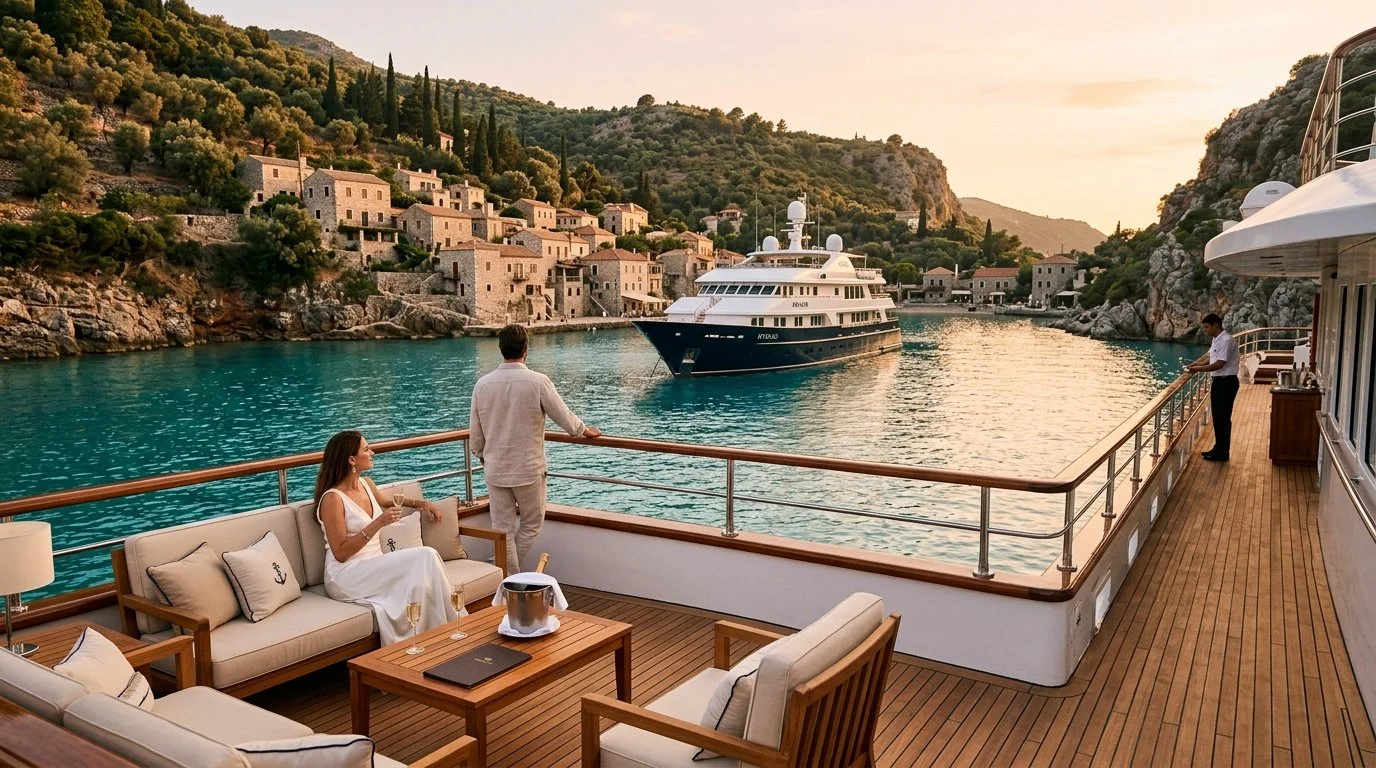
There’s no single cutoff, but small-ship luxury generally means vessels carrying anywhere from under a hundred guests to a few hundred, rather than the several thousand a megaship carries. The difference isn’t just size — it’s what size enables. A ship carrying 200 guests can dock in harbors a 4,000-passenger ship simply can’t fit into, reach ports that larger ships bypass entirely, and move through a destination at a pace that feels like visiting rather than processing through a checkpoint.
The Crowd Math Nobody Talks About
A megaship arriving in a small Mediterranean harbor or Caribbean port doesn’t just bring its passengers — it brings all of them, at once, disembarking into the same narrow streets and the same handful of landmark sites within the same two-hour window. Small ships spread that impact out. Fewer people means shorter lines, more room at the landmarks that matter, and a version of the destination that still feels like a place rather than a stage set. For travelers who’ve already done the big-ship version of a bucket-list destination, this is often the detail that finally sells them on going smaller.
What You Get Onboard Instead
Small ships trade scale for attention. Service ratios run higher, dining tends toward a handful of excellent options rather than a dozen mediocre ones, and it’s common for guests to be recognized by name within a day or two — something that simply isn’t possible at megaship scale. Excursions run in smaller groups, which means more actual interaction with a guide and less standing at the back of a crowd straining to hear. The onboard experience isn’t a scaled-down megaship; it’s a different category of trip built around a different set of priorities.
Where Small Ships Actually Shine
Expedition vessels built for polar and remote-region travel are the clearest example — places like Antarctica, the Norwegian fjords, and the Galápagos simply aren’t accessible to megaships at all, which makes small-ship expedition travel the only way to see them properly. But the same logic applies closer to home: small Mediterranean and Caribbean itineraries reach harbor towns that larger ships anchor miles offshore from, tendering guests in by the boatload. The smaller the ship, the closer it usually gets you to the place you actually came to see.
Making the Switch
Travelers moving from megaships to small ships for the first time sometimes worry about giving something up — fewer restaurants, less onboard entertainment, a smaller gym. In practice, most find they don’t miss it once they experience what replaces it: itineraries built around destinations rather than onboard amenities, and a pace that treats the trip as the point rather than something to endure between activities.
Wilton Vida works through fit before recommending a specific ship or line — small-ship luxury isn’t one-size-fits-all, and the right vessel depends heavily on where you’re going and what kind of experience you’re actually after.
Curious whether small-ship travel is the right fit for your next trip? Reach out to our team at wiltonvida.com or connect with us on WhatsApp at https://wa.me/message/YUIL7UEHTZDAM1.
Para nuestros clientes de habla hispana: podemos ayudarle a planificar su próximo viaje en un barco pequeño de lujo en español, con la misma atención personalizada.