Why Cruise Lines Are Adding So Many Japan Sailings
For most of the last two decades, Japan was a cruise destination in the way Iceland was a cruise destination — a handful of ships, a short season, and an itinerary that treated the country as a series of stops on the way somewhere else. That is no longer what the deployment charts look like. Multiple lines have moved from a single seasonal ship to two, extended the season at both ends, and begun basing ships in Tokyo for the entire run rather than repositioning through.
Capacity expansions of that size are never sentimental. They happen because several separate things line up at once, and understanding what those things are tells you a great deal about how to plan a Japan trip — and when.
The Demand Side Moved First
Japan has been near the top of the “someday” list for an enormous number of travelers for years, and a combination of favorable exchange rates and a wide-open post-pandemic reopening turned a lot of somedays into bookings. Land travel to Japan surged first. The hotels in Kyoto and Tokyo felt it immediately, and anyone who has tried to book a well-located ryokan in cherry blossom season lately knows exactly how that turned out.
Cruise deployment follows land demand, but slowly, because ships have to be repositioned across an ocean and a season committed to eighteen months or more in advance. What we are seeing in Japan sailings now is the delayed response to a demand curve that started climbing several years ago.
Ships Built for Japan, Now Based in Japan
There is a practical reason certain vessels keep showing up in these announcements. Several of the ships now homeporting in Tokyo were built in Japanese shipyards, which matters for reasons that go beyond a nice origin story — cabin proportions, bathing facilities, galley design, and crew familiarity all reflect the market. Lines running these ships in Japan are not adapting a Caribbean product to a new coastline. They are putting a ship back where it fits.
The second structural change is homeporting rather than repositioning. When a ship is based in Tokyo for a full season, it can run round-trip itineraries all season instead of one long one-way voyage bookended by transpacific crossings. That multiplies the number of departures available, shortens the minimum trip length, and makes Japan reachable for someone with ten days rather than only for someone with twenty-eight.
What Actually Changed About the Itineraries
The itineraries themselves have gotten far more specific, and this is the part worth paying attention to.
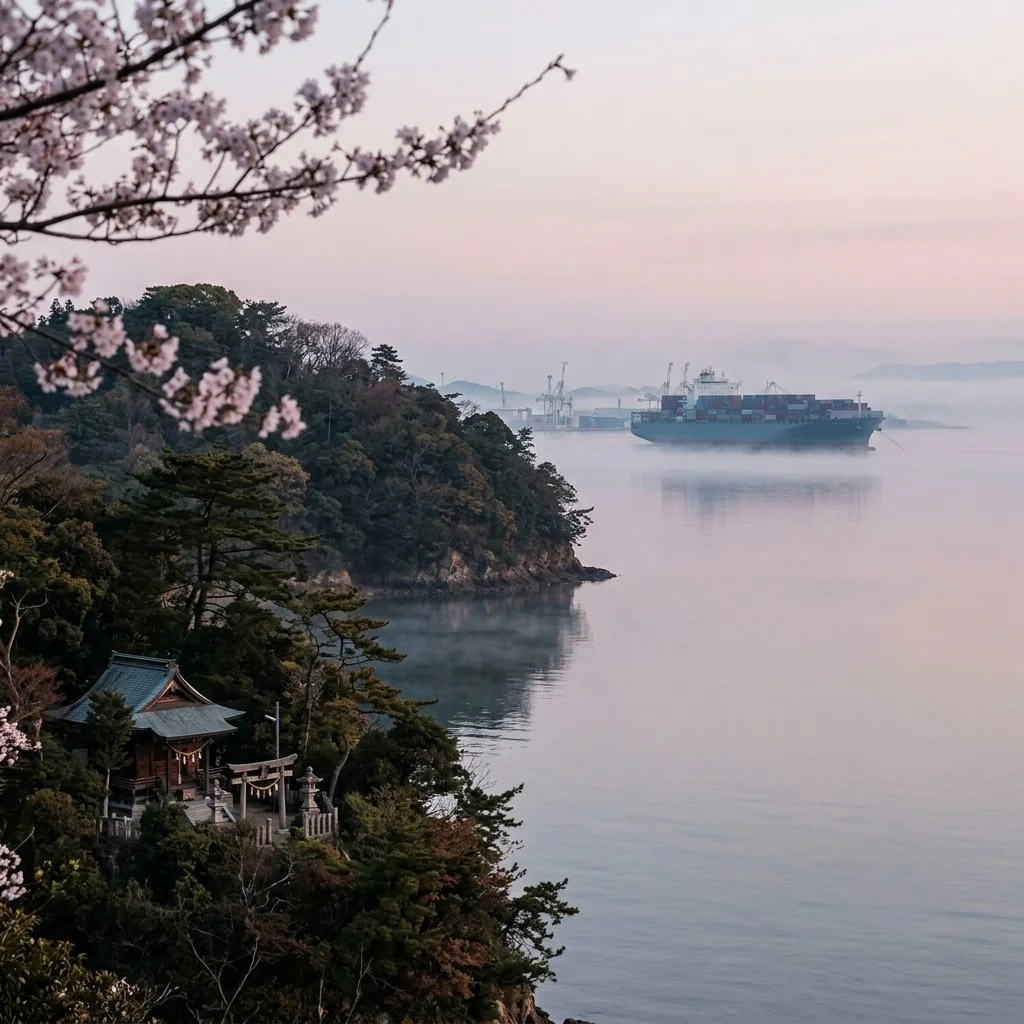
Cherry blossom voyages now chase the bloom rather than gambling on it — sailing south to north across the main islands so the ship is moving at roughly the same speed as the front. Festival sailings are timed to specific summer events with late-night port stays built in, because the point of the Nebuta floats or an Awa Odori evening is that they happen after dark and a ship that leaves at six has wasted the call. Circle Japan and grand voyages circumnavigate the country. Shorter Japan Explorer runs hit Shimizu for Mount Fuji, Kobe for Kyoto, Kagoshima for the volcano. Extensions south pick up Okinawa and Taiwan.
Scenic cruising has been built in deliberately as well — the Kanmon Straits, the Inland Sea, Kagoshima Bay. These are sea days that are not sea days, which changes the arithmetic of a longer itinerary considerably.
The Booking Window Is Not Where You Think It Is
Here is the part that catches travelers out. Japan seasons routinely open for sale roughly eighteen to twenty-four months before the first departure, and the inventory that matters goes early.
“Inventory that matters” means specific things. Cherry blossom dates are the narrowest window in the calendar and the least forgiving — the bloom is a two-week phenomenon and there are only so many sailings that intersect it. Festival departures are single dates, not date ranges. Balcony cabins on the port or starboard side that faces the scenic cruising route are a real distinction on Inland Sea itineraries. And the pre- and post-cruise land nights in Tokyo and Kyoto, which is where most of the actual Japan happens, compete directly with the land-travel surge described above.
So the booking window closes earlier for Japan than for almost any other cruise region, and it closes unevenly — a Circle Japan sailing in October may have wide availability while the blossom voyage two weeks apart has been gone for a year.
What This Means If Japan Is On Your List
Three practical implications for a South Florida traveler.
Plan the air first, not last. Fort Lauderdale and Miami to Tokyo is a long-haul with limited direct options and a connection almost every way you build it. Award space, premium cabin availability, and the decision about whether to arrive two days early to reset are all constraints on the cruise choice, not consequences of it.
Decide what you are actually going for before you look at dates. Blossoms, festivals, autumn color, and Okinawa are four different trips wearing the same country’s name, and they sit in four different parts of the calendar.
And build the land nights in deliberately. A Japan sailing that begins the morning you land is a Japan sailing where you never see Japan. Two or three nights in Tokyo before boarding is not an indulgence, it is the difference between a cruise and a trip.
Where Wilton Vida Comes In
We plan Japan as one continuous itinerary rather than a cruise with some hotels attached — air, arrival buffer, land nights, sailing, and the return. Our Travel Leaders Network affiliation gives us access to hotel inventory and amenity programs in Tokyo and Kyoto during exactly the weeks those cities are hardest to book, which is the constraint that most often decides whether a Japan trip works.
We will also tell you when a particular sailing is not the right one, or when a given season is already too far gone to plan well. That is a more useful conversation than a booking.
Ready to look at Japan seriously? Reach out at wiltonvida.com or connect with us on WhatsApp at https://wa.me/message/YUIL7UEHTZDAM1.
Y si prefieres planificar en español, con gusto te atendemos.