Most couples write vows the way they write a toast — late, anxious, and aiming for something that sounds like a wedding. Then they stand up in front of everyone they love and discover that what reads beautifully on a page is nearly impossible to say out loud with a shaking voice.
We officiate a lot of ceremonies. The vows that land are almost never the most elaborate ones. Here is what actually works.
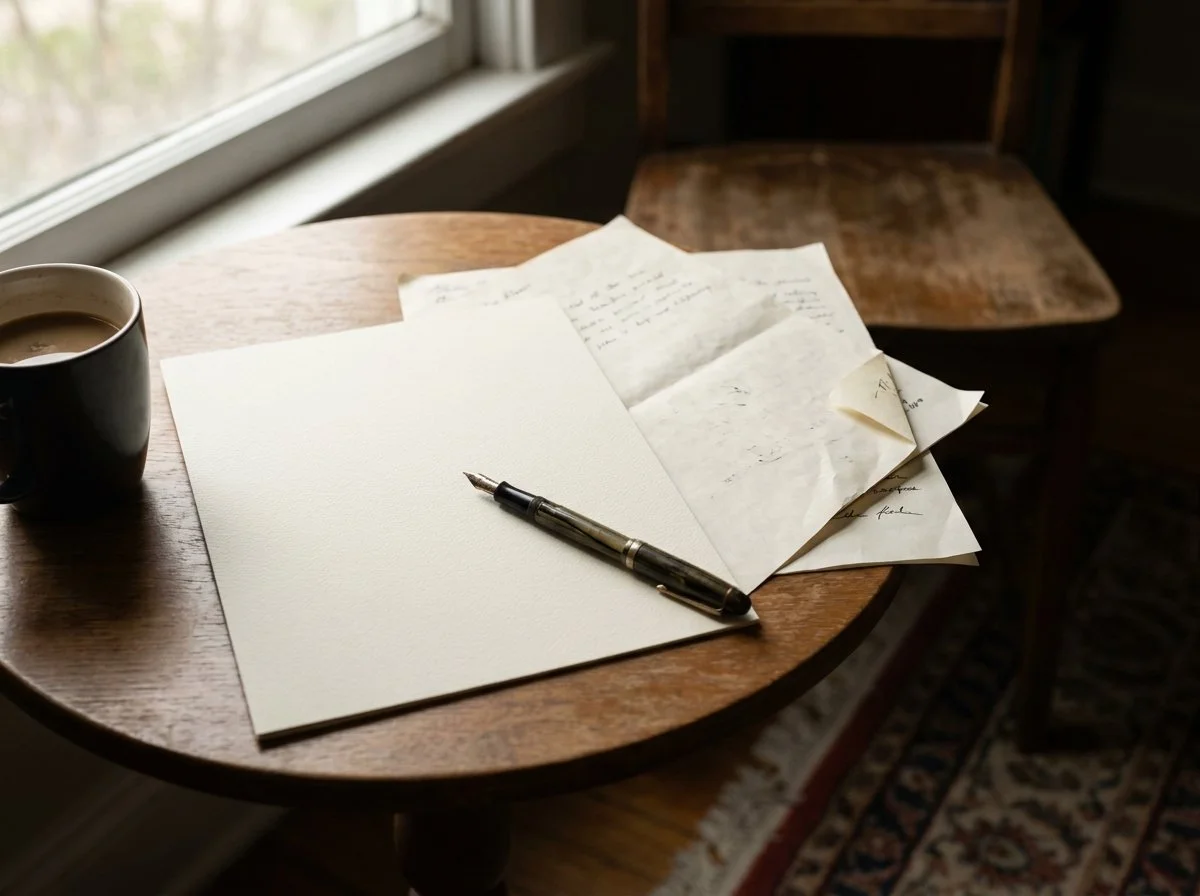
Write for the Mouth, Not the Page
You are not writing an essay. You are speaking, under pressure, possibly crying, in front of an audience, into either wind or a microphone you have never used.
That rules out long sentences with clauses stacked inside them. It rules out words you would not say in conversation. It rules out anything requiring a running start. Short sentences survive emotion. Long ones collapse halfway through and leave you hunting for where you were.
The test is simple and nobody does it: read your draft aloud, standing up, at full volume. Not muttered at your desk. Out loud, on your feet. Every passage you stumble over gets cut or simplified, because the stumble will be worse on the day, not better.
Specific Beats Beautiful
"You are my best friend and my soulmate" is true and it is also what everyone says. It tells the room nothing it did not already assume.
"You learned to make my grandmother's arroz con pollo because I mentioned once that I missed it" tells the room everything. It is specific, it is yours, and nobody else could have said it.
Go looking for those details. The thing they do that nobody else notices. The moment you knew. The argument that changed how you saw them. The ordinary Tuesday that somehow stuck with you. Two or three concrete details will do more than a page of adjectives.
And be careful with inside jokes. One, explained lightly, is charming. Three is a private conversation held in front of a hundred people who feel like they are waiting for you to finish.
Keep It Under Two Minutes
Roughly two hundred and fifty words, spoken slowly, is about a minute and a half. That is the sweet spot.
Couples consistently overestimate how long vows should be and underestimate how long their own feel. At the three-minute mark the room's attention begins to drift no matter how moving the content, and you will feel it happening while you are still speaking, which is its own small misery.
Agree on a length with each other in advance. The most common vow disaster is not a bad vow, it is one person speaking for ninety seconds and the other for six minutes. Whoever went first ends up feeling like they underdid it, which is a strange thing to carry out of your own wedding.
Make Them Promises
They are called vows because they are supposed to contain some. A tribute describes who someone is; a vow commits to what you will do.
The best ones are small and real rather than grand and abstract. "I promise to keep asking what you think, even when I am sure I am right." "I promise to make the coffee." "I promise to tell you the hard thing instead of waiting until it is worse." Those are keepable, and keepable is the point.
Grand promises — never to fight, always to be happy — are lovely and unkeepable, and in ten years nobody remembers them fondly.
If One of You Is Not a Writer
Plenty of people freeze at a blank page and then speak beautifully once there is something to react to. If that is you, do not start from nothing.
Answer four questions in plain prose instead. When did you know. What do they do that nobody else would notice. What have they made easier. What are you promising. Then cut the question marks and stitch the answers together. The structure comes free and the writing stops being a performance.
The other option, and there is no shame in it, is to use traditional vows and add one personal line each. A couple repeating words that have been said for generations, with a single sentence of their own inside them, is not a lesser ceremony. It is often a steadier one.
Practical Matters Nobody Mentions
Print your vows in a large font on good card stock and hand them to someone to hold. Phones die, screens glare in Florida sun, and a folded sheet of printer paper shakes visibly in a way that card stock does not.
Decide in advance whether you are reading or reciting. Reading is completely acceptable and no guest has ever thought less of anyone for it. Attempting to recite and then blanking is the thing to avoid.
If you are outdoors, know that wind eats consonants and the ocean is louder than it sounds in photographs. Talk to your officiant about amplification before the day. A beach ceremony where half the guests cannot hear the vows is the single most common regret we hear about afterward.
Give your officiant a copy. Not to read for you — as a backup, so that if you freeze, someone can quietly feed you your own next line and the moment passes in four seconds instead of forty.
Write Them Early, Then Leave Them Alone
Draft them a month out, when you are not exhausted. Put them away. Read them again a week before with fresh eyes and cut a third. Almost every draft improves by getting shorter.
Wilton Vida officiates ceremonies across South Florida in English, Spanish, or both, and we welcome every couple without exception. We will read your draft and tell you honestly what will land and what will not, because an officiant who only tells you it is lovely is not doing much for you.
If your ceremony is coming up and the vows are still a blank document, send us what you have, even if it is three sentences.
Estamos aquí para acompañarte en cada paso del camino.
Planning a ceremony? Reach our team at wiltonvida.com or message us on WhatsApp at https://wa.me/message/YUIL7UEHTZDAM1.