Some couples do not want a marriage license. They want the ceremony, the people, the vows, and the day, without the legal instrument underneath it. That is a commitment ceremony, and it is a real thing couples choose for considered reasons.
It is also the ceremony most often done badly, because everyone involved treats it as a wedding with something missing instead of its own event with its own logic.
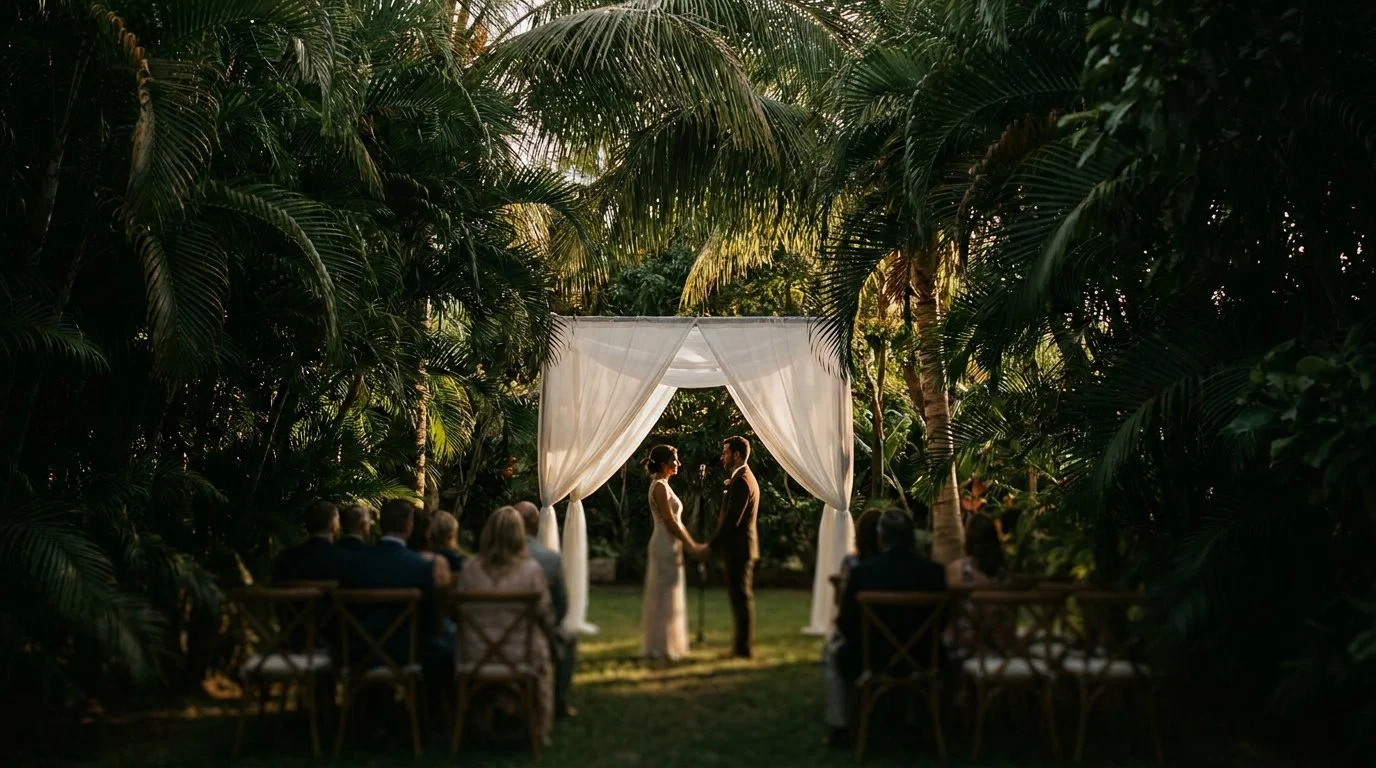
What it is, precisely
A commitment ceremony is a ceremony with no legal effect. There is no license, nothing is filed with a clerk, no certificate is returned under section 741.08, and the state's records are unchanged by it.
Everything else can be identical. An officiant, vows, readings, rings, witnesses, a venue, a reception. What is absent is the legal apparatus, and what remains is the part most couples would say mattered to them anyway.
Be clear-eyed about the consequence. No legal marriage means none of the legal effects: no spousal status for taxes, inheritance, health care decisions, immigration, or benefits. Couples who want those protections without a marriage have to build them separately through documents — powers of attorney, health care surrogates, wills, beneficiary designations. That is a conversation with an attorney, and it should happen alongside the ceremony planning rather than years later.
Why couples choose it
The reasons are more varied than people assume.
Some couples are already legally married — at a courthouse, quietly, months or years earlier for practical reasons — and want a real ceremony later with the people they love. The legal act is done; the ceremony is the event that was skipped.
Some couples would lose something by marrying. A pension that ends on remarriage, a benefit tied to marital status, an estate arrangement built around existing children. Blended families in second relationships run into this regularly, and choosing not to marry is often a decision made in the interest of the people they are responsible for.
Some couples have a partner whose immigration situation makes a marriage filing a question of timing rather than desire. Some want to mark a relationship that does not fit the marriage frame at all. And some simply do not want the state involved in what they consider theirs.
None of these need defending. An officiant who treats a commitment ceremony as a lesser booking is the wrong officiant.
Writing one that stands on its own
The design problem is specific. A wedding ceremony leans on a structure everyone recognizes, and part of its weight comes from the legal act happening inside it. Remove that and the ceremony has to carry itself.
In practice this means being explicit about what is being promised, because the usual shorthand does not apply. "I now pronounce you" pronounces nothing here. Strong commitment ceremonies replace that moment with something the couple has actually defined — a declaration they wrote, a promise named out loud, an act the two of them perform in front of witnesses.
It also means handling the question in the room. Guests will wonder whether this is legally binding, and the kind thing is to answer it rather than let it sit. A single clear line early in the ceremony, said without apology, settles it and lets everyone be present for what follows.
Language matters throughout. Decide in advance whether you are using "marriage," "wedding," "spouse," "partner," or something else, and brief the officiant. Couples have strong and specific feelings here and they are not interchangeable terms.
Who should officiate it
Since there is no legal requirement, anyone can stand up and do it. Which means the only qualification that matters is whether they can write and deliver a ceremony that holds a room.
Ask for a sample script. Ask how they have handled commitment ceremonies before and what they did differently. Ask how they would phrase the moment of commitment in the absence of a pronouncement. The answers will tell you quickly whether you are hiring someone who has thought about this form or someone who will deliver a wedding with a word crossed out.
Telling people what it is
The invitation and the conversations around it do more work here than they do for a wedding, because guests arrive with an assumption you may be about to correct.
Decide early how you are describing the event, and describe it the same way everywhere. Couples who are vague about it in the invitation spend the reception answering the same question twenty times, and the question gradually reframes the day as something that needs explaining.
You do not owe anyone your reasons. "We are having a commitment ceremony" is a complete sentence, and the people who love you will take it at that. The ones who push can be answered with the same sentence again.
Wilton Vida officiates commitment ceremonies across South Florida and builds each one from the couple's own language rather than from a template with the legal parts removed. We are an LGBTQ+-affirming practice and we work in English and Spanish.
If you are planning a ceremony that is yours rather than the state's, reach out at wiltonvida.com or message us on WhatsApp at https://wa.me/message/YUIL7UEHTZDAM1.
Estamos aquí para acompañarte en cada paso del camino.