The holiday gift problem is always the same. You need something for a dozen people you like but do not know intimately — the neighbor, the closing attorney, the woman who has cut your hair for nine years, the team at the office. It has to be good, it cannot be personal enough to be awkward, and it has to arrive on time.
Coffee solves this better than almost anything, provided you avoid the two mistakes that make a coffee gift forgettable.
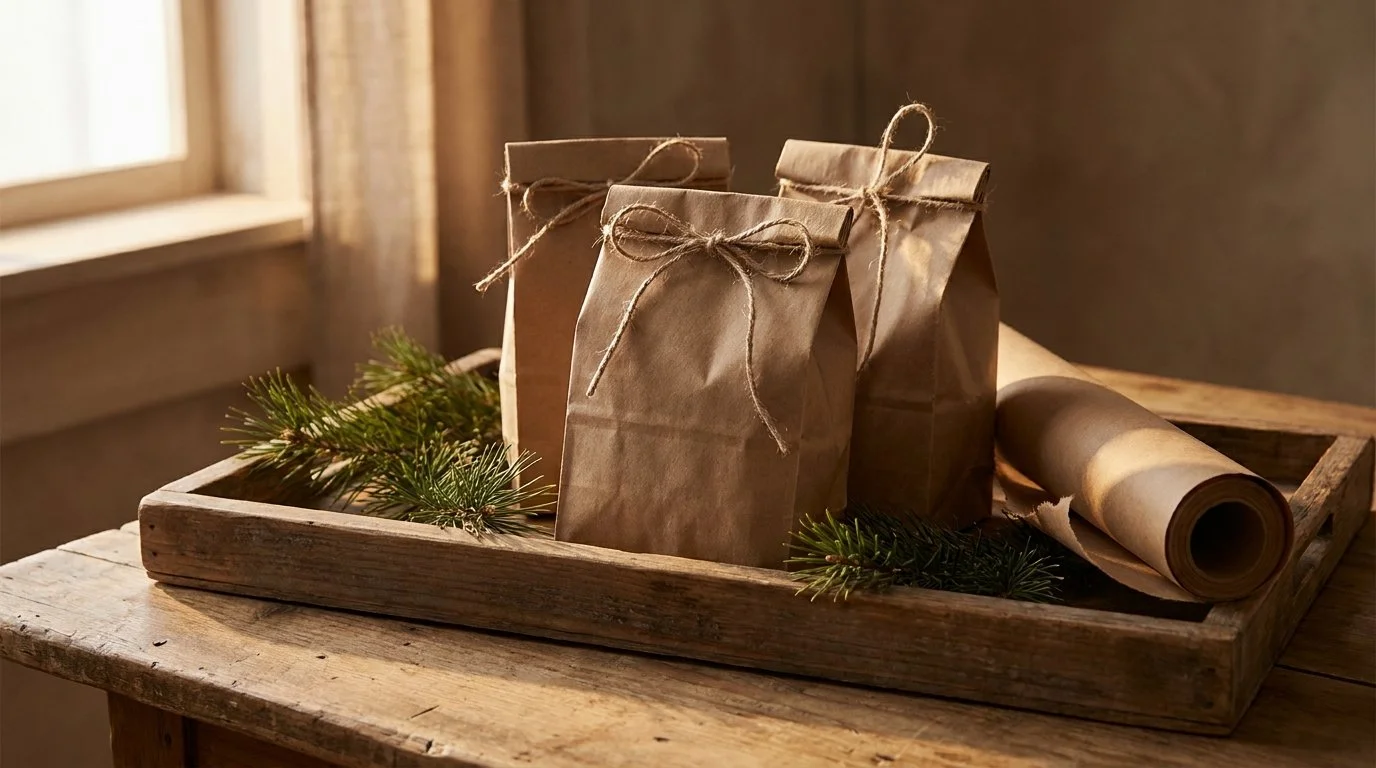
Why it works as a gift
A gift succeeds when it gets used. Most holiday giving fails that test — the candle goes in a drawer, the bottle goes to the next party, the gift card expires in a wallet.
Coffee gets used in about eleven hours. The person opens it the following morning because they were going to make coffee anyway, and now they are making yours. That is the whole mechanism, and nothing else in the under-thirty-dollar gift category matches it.
It also scales without becoming insulting. The same bag is appropriate for a neighbor and for a client. A gift that reads as thoughtful at one tier and cheap at another is a gift you have to think hard about; coffee holds its register across the whole list.
Mistake one: buying coffee that has been sitting
The gift version of this failure is worse than the personal version, because you are not there to see it land.
A bag bought off a shelf in early December was roasted somewhere well before that, and by the time it is unwrapped and opened it may be months past its best. The recipient drinks flat coffee, concludes they do not much care about coffee, and the gift does nothing.
Buy something roasted close to when it will be opened. This is the single decision that determines whether the gift works, and it is the reason we roast after the order rather than before. Ours does not exist until you buy it, which for gifting means the bag under the tree is weeks fresher than the one from the shelf.
Practically: order with enough lead time for roasting and shipping, but do not order in October to be organized. Two to three weeks out is the window.
Mistake two: giving something with no story
A generic bag of good coffee is a nice, anonymous object. A bag named for the park at the end of someone's street is a different kind of gift entirely.
Every coffee we make is named for a street, a park, or a waterway here — The Manors, Five Points, Sailboat Bend, Victoria Park, Flagler Village, Colohatchee. Twenty of them. Which means you can match the coffee to the person rather than just handing over a commodity.
Give someone the neighborhood they live in. Give the friend who moved to Charlotte the one named for the street they left. Give the colleague who walks their dog at Colohatchee the one named after it. The gift stops being coffee and becomes a small piece of recognition, which is what people actually remember.
For a recipient you do not know well, pick by how they drink rather than by guesswork. Flagler Village is the dark one — cocoa and toasted nut, enough body for milk, the safe choice for someone who takes it with cream. Brazil Cerrado is a medium with roasted peanut and honey and milk chocolate that works for almost everyone. Colohatchee is a medium blended with Lion's Mane and Chaga, for the recipient who is already into that.
Giving at volume without it looking like volume
If you are buying for a team or a client list, resist the instinct to send everyone the identical bag. Varying the coffee across the list — matched to neighborhoods where you know them, varied by roast where you do not — costs you nothing extra and completely changes how the gesture reads.
What to write on the card
The last mistake is handing over a good bag with nothing attached to it.
One line is enough, and the line that works is the one that explains the choice. "This one is named for your street." "You said you take it black, so this is the medium." "This is the park where we used to run into each other."
That single sentence is what separates a gift from a delivery. It costs nothing, it takes ten seconds, and it is the part the recipient will mention back to you in January.
Order earlier for a large list than for a small one, and tell us what you are doing. A twenty-bag order roasted to order is a different production conversation than a single bag, and we would rather plan it with you than surprise a roaster.
Wilton Vida Coffee roasts in small batches in South Florida and screens every lot for mold, yeast, mycotoxins, and heavy metals before it is roasted. The full range, and the names, are at wiltonvidacoffee.com.
Pick the streets your people live on. Order before the middle of the month.