Your document needs two witnesses. One of them is your sister in Orlando, the other is your neighbor who is currently in Denver for work. Everyone assumes this means rescheduling until the three of you are in the same room.
In Florida, it does not. Witnesses can appear remotely on the same video session as the signer, and the rules governing them are specific enough to be worth reading before you build your plan around them.
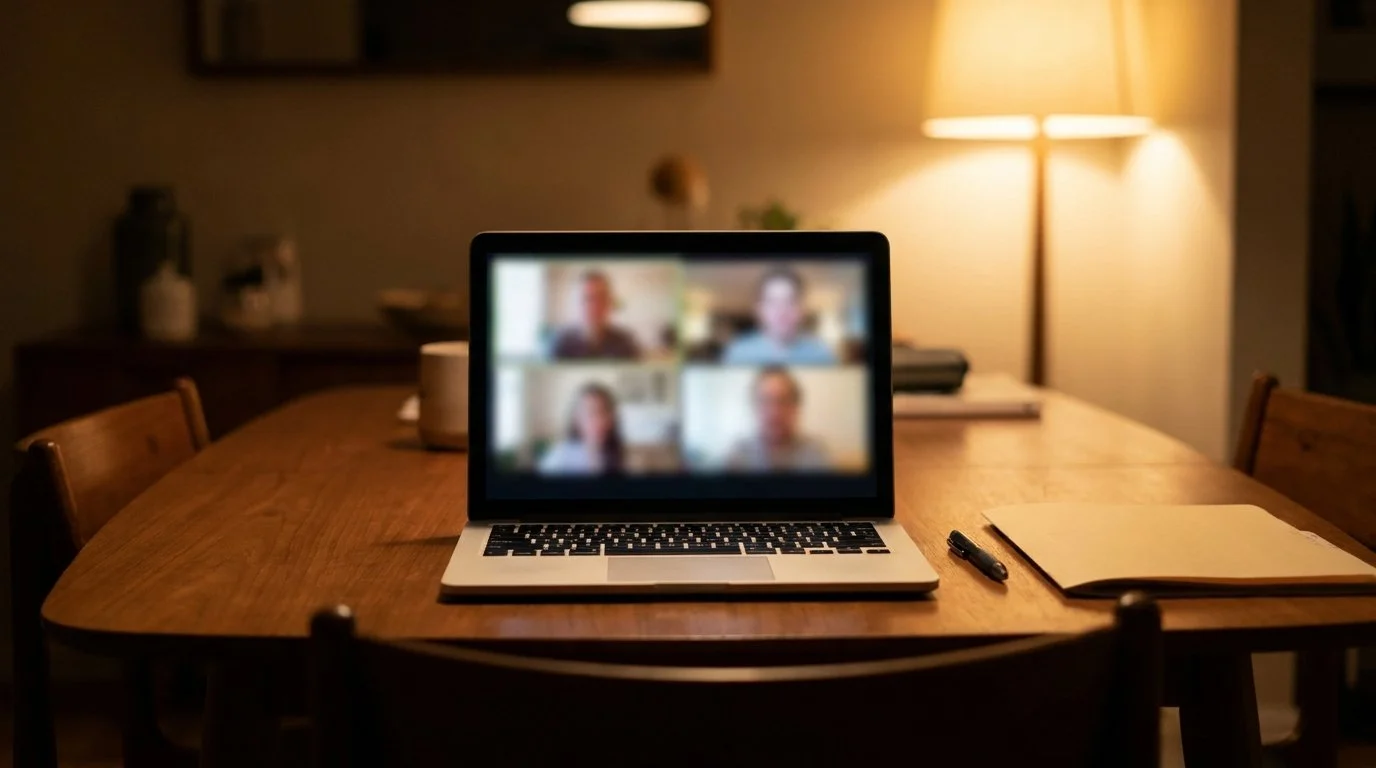
Remote or in the room, both work
Florida Statute 117.285 contemplates both arrangements. A witness can be physically present with the principal, or a witness can appear remotely, provided the session uses audio-video communication technology that lets everyone see and hear each other.
This solves a genuinely common problem. Families are scattered. The people you trust to witness a significant document are rarely the people who happen to live within driving distance. A statute that required physical presence would, in practice, mean choosing witnesses by geography rather than by judgment.
Identities of remote witnesses are verified the same way the signer's identity is verified, under the standards in section 117.265. A witness is not a bystander in the eyes of the law. They are a participant whose identity has to be established.
The United States rule
Here is the constraint that reshapes plans. A remote witness must verbally confirm that he or she is a resident of and physically located within the United States at the time of witnessing.
Both halves matter. Residency is not enough on its own — your brother who lives in Tampa but is currently in Tokyo does not qualify while he is in Tokyo. Location is not enough either, as the statute asks for both.
This produces an asymmetry that surprises people. The person signing the document can be anywhere on earth. The person witnessing it cannot. A family spread across two continents can get the signer's end handled without difficulty and then discover the witness end is the thing that blocks them.
The confirmation is verbal and it happens on the recording. It is not a form someone fills out quietly beforehand. If your witness is not prepared to say it out loud, the session stops.
Wills get extra treatment
Florida applies additional requirements when the document is a will and fewer than two witnesses are physically present with the signer. Section 117.285 layers in further questions and notices for that situation.
This is not a technicality to work around on the day. Electronic wills are their own body of law in Florida, and the gap between a will that was executed correctly and one that was not is the kind of gap that surfaces when the person who signed it is no longer available to clarify anything.
If your document is a will, treat the remote-witness question as something to settle with the drafting attorney before the notary is booked, not as a logistics problem to solve during the session.
How to set your witnesses up to succeed
The failures are almost never legal. They are practical.
Tell your witnesses the session time in their own time zone, not yours. Confirm each of them has a working camera and microphone on a device they have used for video before, because the appointment is a poor moment to discover a driver problem. Make sure each one has the identification they will need in hand rather than in a drawer upstairs. And tell them plainly that they will be asked, on camera, to state that they are in the United States, so the question does not land as a surprise.
Witnessing is not the same as notarizing
A point worth separating, because the two get conflated constantly.
The notary verifies who you are and attests that you signed. A witness observes the signing and can later say they saw it. They are different functions, performed by different people, satisfying different requirements, and a notarization does not substitute for a witness requirement that the document itself imposes.
Whether your document needs witnesses at all is determined by the document and the law governing it, not by the notary. A deed, a will, and a simple affidavit have different answers. This is why the preparation conversation starts with what the document is rather than with how many people can get on a call.
If nobody has told you definitively whether witnesses are required, that question belongs to whoever drafted the document or to the party receiving it. Guessing in either direction costs you.
Wilton Vida handles this coordination as part of the booking rather than leaving it to the signer. We confirm who the witnesses are, where they will be, and whether the document's requirements survive contact with the statute, and we do it before anyone takes time off work for an appointment that cannot proceed.
If you have a document that needs witnesses and a group that is not in one place, reach out at wiltonvida.com or message us on WhatsApp at https://wa.me/message/YUIL7UEHTZDAM1. Tell us where everyone is and we will tell you whether it works.