There is a date printed on most bags of coffee, and for a lot of brands it is the wrong one. It tells you when the coffee stops being sellable. It does not tell you when it was good.
The number that matters is the roast date, and the reason most bags do not lead with it is that the answer would not flatter anyone.
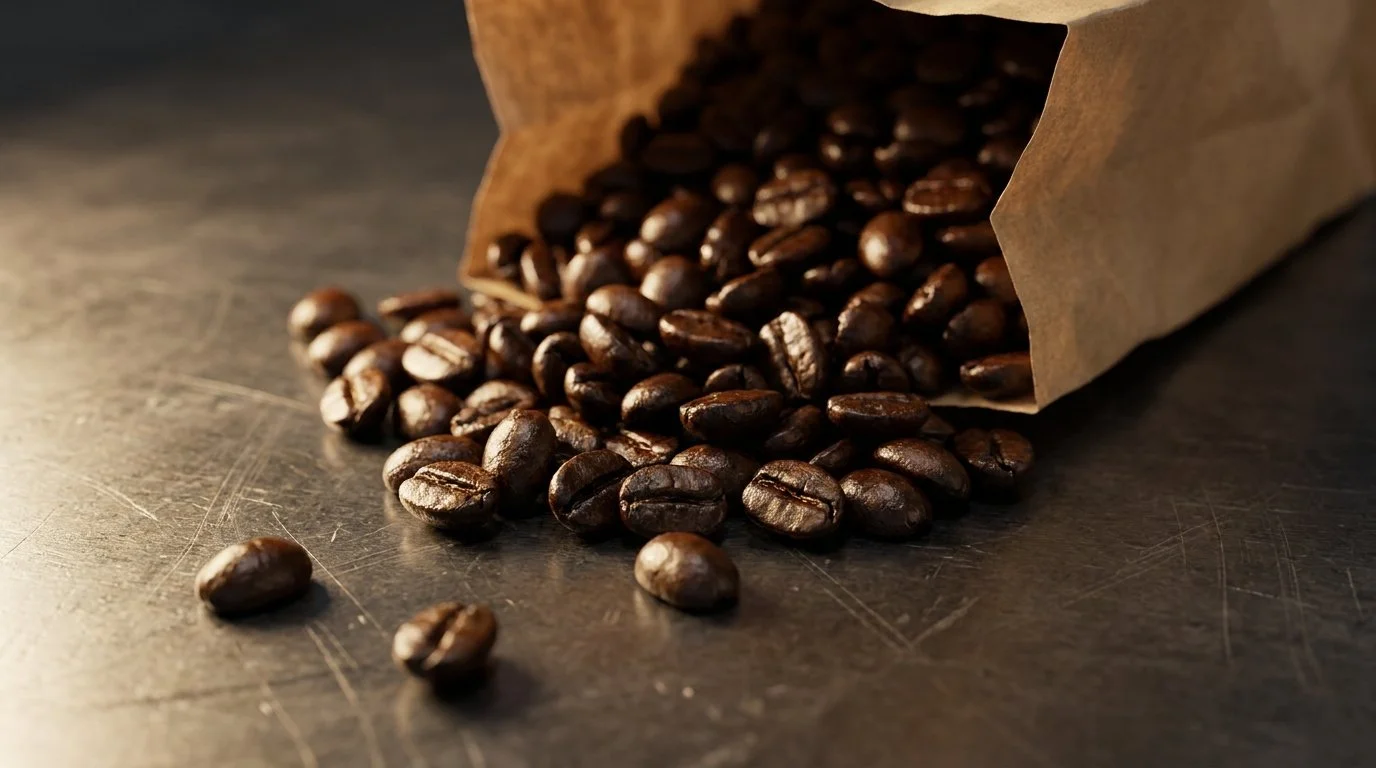
Roasting starts a clock
Green coffee is patient. Stored properly, unroasted beans hold their character for a long stretch, which is why the global trade in coffee works the way it does.
Roasting ends that. Heat drives the chemical reactions that create everything you taste, and it also leaves the bean porous and full of carbon dioxide. From that moment the coffee is doing two things at once. It is releasing gas, which it needs to do before it brews well. And it is oxidizing, which is the part nobody wants.
The first few days are degassing. Most coffees want a short rest after roasting before they are at their best, which is why a bag opened the afternoon it was roasted can taste oddly flat and foamy in the brewer.
After that window the curve goes one direction. The aromatics that make a coffee smell like something go first. Then the acidity that gives it shape. What is left at the end is the flat, generic, vaguely burnt taste that most people think is simply what coffee tastes like.
The shelf is where the problem lives
Consider the standard path. A coffee is roasted in volume because volume is efficient. It is bagged, palletized, and shipped to a distributor. It moves to a retailer. It sits under store lighting until somebody picks it up. Then it sits in a cupboard.
Nobody in that chain did anything wrong. The structure simply requires the coffee to be roasted long before anyone intends to drink it, because the alternative — roasting after the order — does not scale the way wholesale distribution demands.
Which is why the best-by date is the date you get. A roast date would make the arithmetic visible, and the arithmetic is not good.
Roasting after the order
We do it the other way around. Ours does not exist until you buy it — the coffee in your order is roasted because you ordered it, not pulled from a stack that was waiting.
That imposes a constraint we accept deliberately: we do not hold volume we cannot move fresh. It means saying no to quantities that would be profitable, and it means we cannot promise same-hour dispatch the way a warehouse can. What you get instead is coffee whose age is measured in days.
The difference is not subtle and it does not require a trained palate. Open a bag roasted last week next to one that has been in a cupboard since spring. The aroma when you break the seal tells you most of it before you have brewed anything.
Making it last once you have it
Fresh coffee rewards slightly better handling, and the rules are simple.
Buy for two to three weeks, not two to three months. Keep the bag sealed, at room temperature, away from light and away from the stove. Skip the freezer unless you are storing an unopened bag long term, because moving coffee in and out of cold air puts condensation on it.
Whole bean or ground
If the freshness argument lands, the grinder is the next decision, and it is worth being honest about the tradeoff.
Whole bean keeps longer and tastes better, by a margin that is obvious rather than subtle. A modest burr grinder costs less than people assume and will do more for your cup than almost any other purchase.
That said, a fresh bag of good coffee ground to the right setting still beats a stale bag of anything, and a grinder you have to get up and operate at six in the morning is a grinder some households will not use. If ground is what will actually get brewed in your kitchen, buy ground and buy it more often. The worst option is whole bean you grind badly in a blade grinder, which produces dust and boulders at the same time.
Grind immediately before brewing. This is the single largest improvement available to most people, and it is larger than upgrading the brewer. Ground coffee has vastly more surface area exposed to oxygen, and it goes stale in days rather than weeks.
Wilton Vida Coffee roasts in small batches in South Florida, screens every lot for mold, yeast, mycotoxins, and heavy metals, and names each coffee for a street, park, or waterway near where we work. The whole range is at wiltonvidacoffee.com.
Order a bag and check the roast date against whatever is in your cupboard now. That comparison is the argument.