Most coffee is named for a mountain you will never climb or a farm you will never visit. Ours is named for the corner where the bridge meets the water, and the park where people walk their dogs at seven in the morning.
Twenty coffees, each one named for a street, a park, or a waterway in the place we actually live. That is not a marketing device. It is a decision about what a coffee brand is supposed to be from.
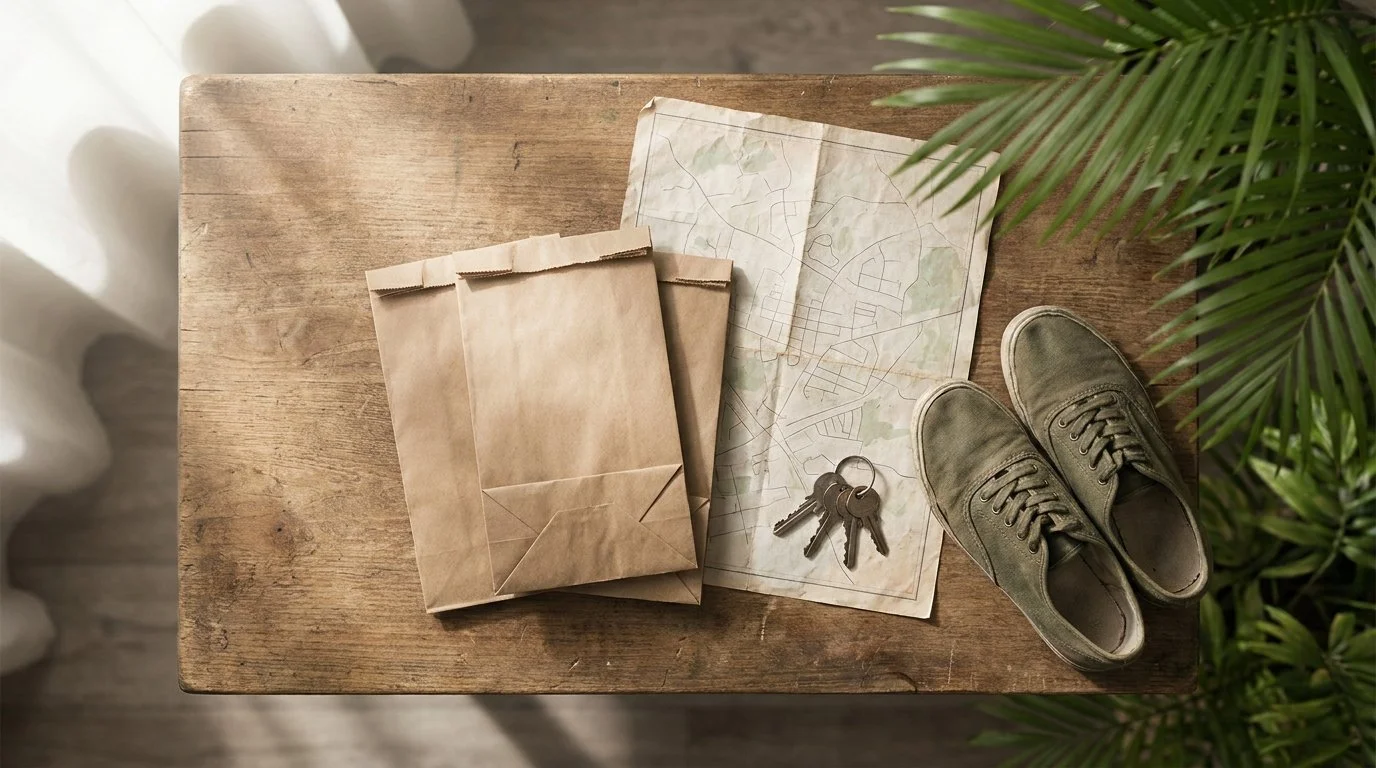
The names are the map
The Manors. Five Points. Sailboat Bend. Victoria Park. Flagler Village. Colohatchee. Read them in a row and you are reading a route through Wilton Manors and Fort Lauderdale rather than a product list.
If you live here, these land differently than origin names do. Five Points is an intersection you have sat at. Sailboat Bend is a neighborhood with a particular quality of light in the late afternoon. Colohatchee is a park on the Middle River where the mangroves start. You have a relationship with these words already, and the coffee gets to borrow it.
If you do not live here, the names do something else. They tell you the company has a location — a real one, with streets in it — rather than a warehouse and a logo. In a category where most brands could be headquartered anywhere, being obviously from somewhere is the differentiator.
Why a South Florida coffee brand is not a contradiction
Nobody grows coffee in Broward County. The joke writes itself, and it misunderstands what a roaster does.
Coffee is grown at altitude in the tropics and roasted close to where it is drunk, because roasting is the step with a clock on it. Green coffee is stable for a long time. Roasted coffee starts declining almost immediately. The whole logic of a local roaster is proximity to the drinker, not to the farm.
So a roaster in South Florida serving South Florida is doing exactly what the supply chain is shaped for. What is strange is the arrangement most people accept without thinking: beans roasted in another state weeks ago, trucked here, and sat on a shelf under warm lights until somebody buys them.
What we actually put in the bags
The selection rule is the part we would defend hardest. Every coffee we offer earned its place against a palate, not a margin target. That sentence is doing real work — it means a lot is rejected, including lots that would have been profitable.
Nothing is roasted until it is ordered. Ours does not exist until you buy it, which sounds like a slogan and is actually an inventory policy. We do not hold volume we cannot move fresh, which is the discipline that makes the first claim possible.
The range covers what people drink. Flagler Village is the dark one, built on cocoa and toasted nut with the body to stand up to milk. Brazil Cerrado sits in the middle with roasted peanut and honey and milk chocolate. Colohatchee is a medium with dark chocolate and nougat and a softer acidity, and it is blended with Lion's Mane and Chaga for drinkers who are looking for that.
Every batch is small, and the beans are screened for mold, yeast, mycotoxins, and heavy metals before they get anywhere near a roaster. That testing is not standard in this industry. It should be.
Buying a bag named after your own street
What the testing is actually for
One more thing sits behind the names, and it is less romantic.
Every lot we bring in is screened for mold, yeast, mycotoxins, and heavy metals before it goes near a roaster. Coffee is an agricultural product that travels through humid ports in jute sacks, and what can grow on it in transit is not hypothetical.
Most roasters do not test, and they are not hiding anything — testing is simply not an industry norm, and at volume it is expensive. We do it because the alternative is trusting a supply chain we cannot see. It is the least visible thing on the list and the one we would defend first.
How the range is built
Twenty coffees sounds like a lot until you see how they divide. There are dark roasts for people who take milk and want the coffee to still be there underneath it. There are mediums that cover the broad middle where most drinkers actually live. There are single origins where the point is the origin, and blends where the point is the balance.
What there is not is filler. Every coffee we offer earned its place against a palate, not a margin target, and a range of twenty is the result of saying no far more often than yes. A roaster who will put anything in a bag can get to twenty in a month. Getting to twenty the other way takes longer and is the only version worth doing.
There is a particular pleasure in handing someone a bag of coffee named for the park at the end of their block. It is a local gift that does not require a trip, and it is the rare thing that works equally well for the neighbor who has lived here thirty years and the friend who moved away and misses it.
Wilton Vida Coffee ships from here, roasted after you order rather than before. You can see the full range and find the one named for wherever you spend your mornings at wiltonvidacoffee.com.
Find the street you live on. Start there.