Alaska Cruisetour or Cruise-Only: How to Actually Decide
The Alaskan coastline and the Alaskan interior are two different countries that happen to share a state line. One is water, ice, and marine wildlife seen from a balcony at seven in the morning. The other is rail, tundra, distance, and a mountain that is visible roughly a third of the days anyone goes looking for it.
Almost every first-time Alaska conversation starts with dates and ends with the wrong question. The right question is not how long you want to go for. It is which Alaska you are actually picturing when you say the word.
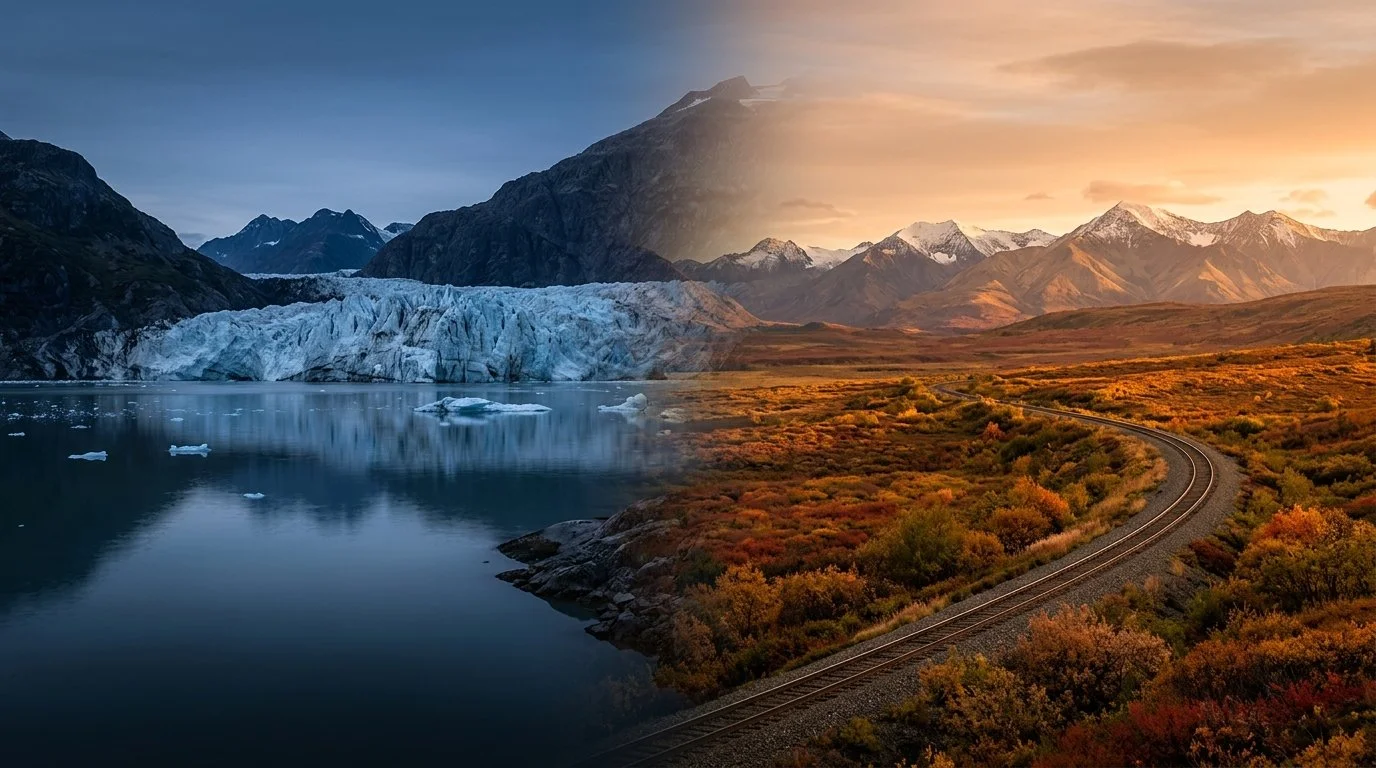
What Cruise-Only Actually Delivers
A cruise-only Alaska trip is seven nights, typically, and it is overwhelmingly a coastal experience. Inside Passage sailings run round-trip from Seattle or Vancouver and stay in protected water almost the entire way, which matters enormously if anyone in your party is unsure about open sea. Gulf of Alaska sailings run one-way between Vancouver and Whittier or Seward, trading a little more open water for a genuinely different route and a glacier day most people rate as the trip highlight.
The days look like this. Mornings arriving into Ketchikan, Juneau, Skagway, Sitka. A scenic day in Glacier Bay or Tracy Arm or Hubbard Glacier where the ship simply sits and rotates, and where the correct move is to stay outside in the cold rather than watch it through glass. Whale watching, floatplane, salmon, the White Pass rail out of Skagway. Then back aboard, and a long light evening on deck.
Cruise-only suits travelers who want Alaska without logistics, who value unpacking once, and who are honest that fourteen days is more trip than they want. It is also the right answer for multi-generational groups, because the ship absorbs a very wide range of energy levels without anyone having to negotiate.
What the Land Portion Adds
A cruisetour bolts three to five land nights onto the front or back of the same sailing, moving you inland by rail and motorcoach through Anchorage, Talkeetna, Denali, and often Fairbanks.
The rail segment is the part that surprises people. Domed cars, an outdoor viewing platform, and a slow crawl through country with no road access. It is not transport, it is an activity that happens to relocate you. Denali itself is the reason the whole thing exists — a park roughly the size of Massachusetts with one road into it, tundra that turns gold in late August, and grizzly, caribou, moose, and Dall sheep in genuine numbers rather than as a lucky sighting.
What the land portion demands in return is honesty about pace. You will change hotels two or three times. There are early departures. There is a bus. Anyone who booked Alaska imagining a single unpacking and a balcony should not be talked into a cruisetour, and we will say so plainly.
The Questions That Actually Decide It
Four questions settle this faster than any comparison chart.
First, how many days do you genuinely have? A cruisetour is a twelve to fourteen day commitment door to door from South Florida, once you account for the flights. If you have nine days, the decision is already made.
Second, is Denali the thing you are picturing? Some people say Alaska and mean glaciers and whales. Some say it and mean the mountain. If it is the mountain, cruise-only will leave you with a nagging sense of having been near Alaska rather than in it.
Third, how does your group handle moving? Not walking — moving. Repacking, transfers, early lobby calls. Cruisetours are not physically strenuous but they are logistically busy.
Fourth, one-way or round-trip? A cruisetour almost always requires the one-way Gulf sailing, which means open-jaw air. From Fort Lauderdale or Miami that is a real cost and scheduling factor, not a footnote.
Timing, Direction, and the Detail Most People Miss
Direction matters more than travelers expect. Doing land first and cruising second means you arrive at the ship already tired and finish relaxed. Cruising first means you hit Denali with energy but end the trip on a travel day. Neither is wrong; both change how the vacation feels in memory, and almost nobody is asked about it before booking.
Season matters too. Early season brings snow still on the passes, longer light, and fewer people. Peak summer brings the most reliable weather and the highest prices. Late August and early September bring fall color on the tundra, better northern lights odds in Fairbanks, and thinner crowds — with a rising chance of rain on the coast. Wildlife activity, salmon runs, and bear viewing all shift across those windows, so “when” and “which trip” are really one decision, not two.
The detail most people miss: the good rooms on the rail cars, the small lodges near the park entrance, and the float plane and flightseeing slots that make Denali worth it are finite and they do not restock. Alaska rarely sells out. The good version of Alaska routinely does, and it does so roughly a year ahead.
Where Wilton Vida Comes In
We plan this for South Florida clients constantly, and the value is almost never in the ship — it is in the sequencing. Which direction, which land nights, which excursions are worth the money and which are a bus ride with a view. Our Travel Leaders Network affiliation gives us access to the land and lodge inventory that disappears first, and to the amenities that make the pre- and post-cruise nights in Anchorage or Vancouver something other than an airport hotel.
We will also tell you when cruise-only is the right call. Talking a client into a cruisetour they did not want is how a good trip becomes a long one.
Ready to work out which Alaska is yours? Reach out at wiltonvida.com or connect with us on WhatsApp at https://wa.me/message/YUIL7UEHTZDAM1.
Y si prefieres planificar en español, con gusto te atendemos.