The $77 Billion Circular Economy: Upcycling Your Corporate Closet
The corporate closet is being disrupted. Sustainability is no longer a checklist for the annual report; it is a $77 billion circular economy, and it's redefining the power dynamics of professional culture.
The days of the disposable branded polo are numbered. We are seeing a profound shift in how successful companies approach their branded apparel, moving away from "cheap and fast" and toward "regenerative and resilient." Forward-thinking brands understand that what they choose to wear, gift, and upcycle is a direct reflection of their values.
How is your brand participating in this paradigm shift?
The Three Pillars of Sustainable Culture
Building sustainability into your corporate culture isn't about one-off gestures; it's a strategic decision rooted in materials and lifecycle:
1. Regenerative & Organic Materials
The foundation of a sustainable closet starts with the raw input. Companies are prioritizing organic cotton, which is grown without toxic synthetic pesticides. These materials are not only softer on the skin and higher quality, but they actively support healthier soil and ecosystems. When your team wears organic, they are wearing a statement about soil health.
2. The Magic of Recycled rPET
The circular economy relies on reuse. "Recycled rPET" (Recycled Polyethylene Terephthalate) is the ultimate circular material for professional wear. It diverts plastic waste (like water bottles) from landfills and oceans and transforms them into performance fibers. When you choose an rPET blend for your corporate polo, you aren't just wearing polyester—you are wearing upcycled resourcefulness.
3. Upcycling & Print-on-Demand Efficiency
The most sustainable item is often the one that already exists. This is where upcycling changes the game. By choosing print-on-demand (POD) models, brands are embracing radically efficient production. We only create what you order, minimizing the excess inventory that defines the traditional fashion model. This means that a standard, high-quality material—like a recycled cotton tote bag—can be upcycled into a high-value branded asset without wasting resources on mass-production.
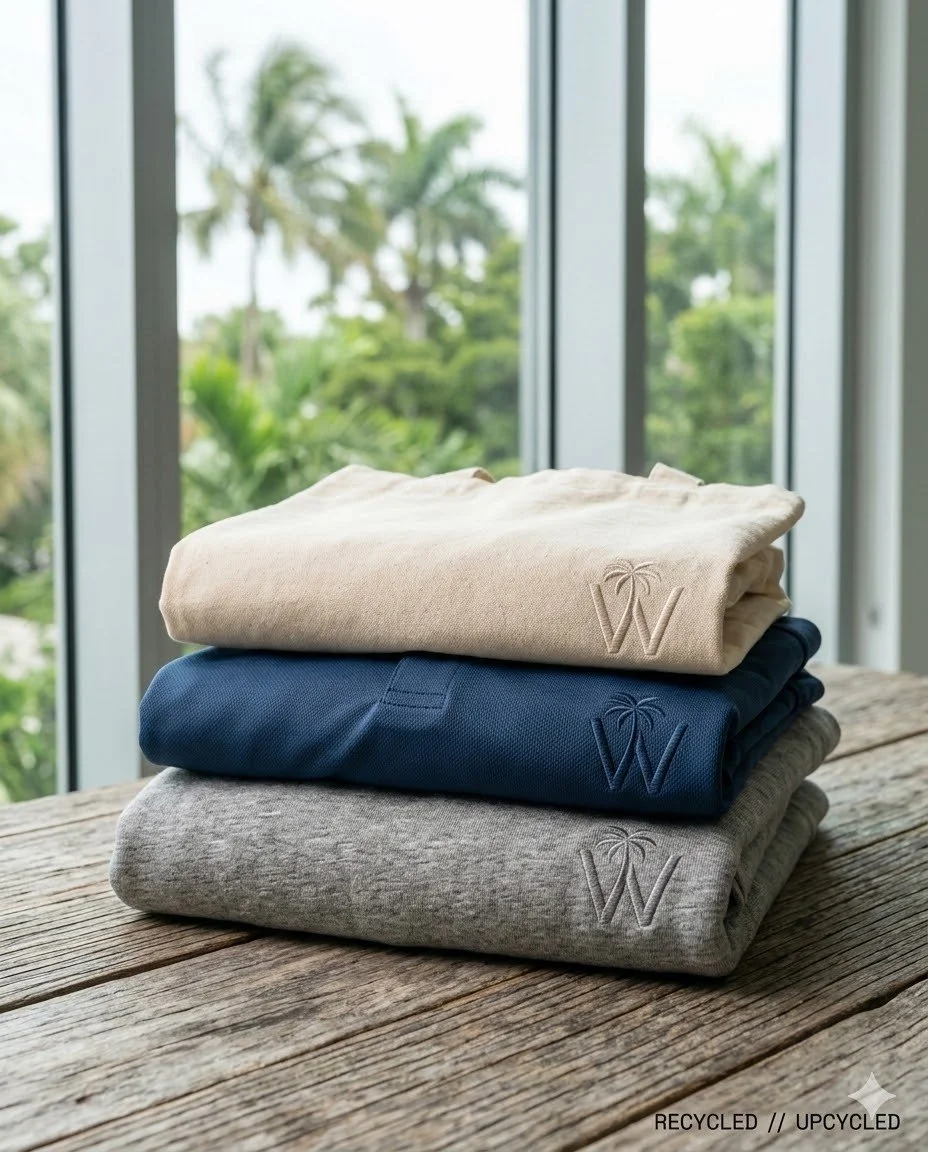
Upcycling & Print-on-Demand Efficiency
The most sustainable item is often the one that already exists.
Wilton Vida: Your Eco-Conscious Apparel Partner
At Wilton Vida, we are committed to providing eco-conscious corporate solutions that strengthen your brand and respect the planet. Our upcoming collection features premium options that meet the highest sustainability standards:
Tote Bags: Perfect for upcycling, our totes are crafted from a durable, recycled cotton and recycled polyester blend (80% / 20%), saving water and textile waste.
Hoodies & Sweats: Look for our incoming line of garments made with recycled fabrics, designed to merge high-comfort style with a responsible footprint.
When you partner with Wilton Vida, you aren't just selecting a vendor; you are choosing a strategy. We help you make sustainability part of your daily corporate uniform.