A Day Aboard Pure Amazon: What Expedition Cruising in Peru Actually Looks Like
The engines cut sometime before five in the morning, and what replaces them is not silence. It is a wall of sound — insects, frogs, and several thousand birds all deciding at once that the day has begun.
This is the part nobody puts in the brochure, and it is the part travelers remember. Expedition river cruising in the Peruvian Amazon shares a category name with the river cruising most people picture when they hear the phrase, and almost nothing else.
The Reserve Is the Itinerary
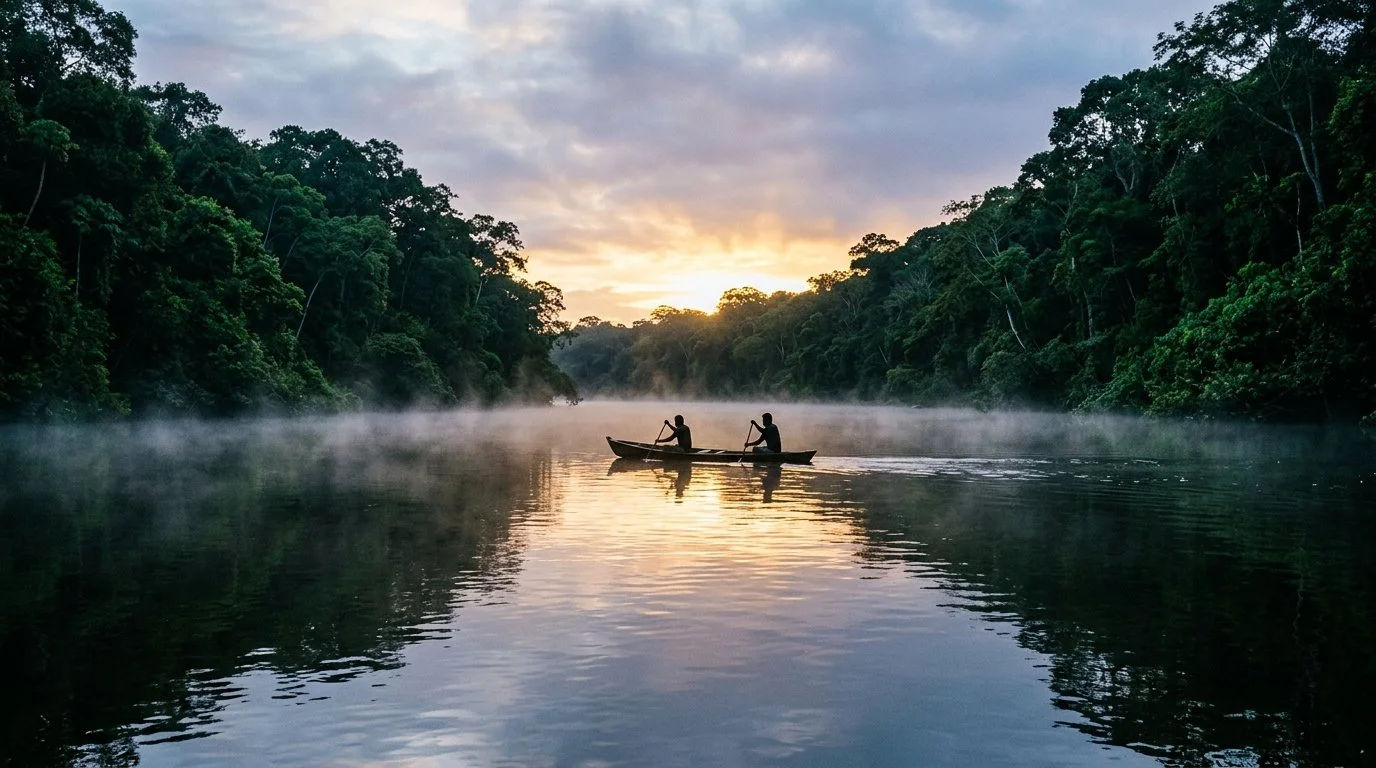
The vessel operates inside Pacaya-Samiria National Reserve, a protected wetland of more than twenty-one thousand square kilometers — roughly eight thousand square miles, or better than five million acres — near the eastern end of the reserve where the Ucayali and Marañón rivers meet to form the Amazon proper. Locals call it the mirror forest, because for much of the year the flooded channels sit so still that the canopy is reproduced perfectly upside down beneath the boat.
That geography changes what a day looks like. There is no dock, no town square, no cathedral at the end of a gangway. The reserve is largely uninhabited and entirely without road access, which means every excursion happens by skiff — small, flat-bottomed, shallow-draft boats that peel off from the mother vessel and thread into tributaries a riverboat could never enter. The ship is not the destination. It is the base camp with good sheets.
Season shapes the experience more than most travelers anticipate. In high water the flooded forest opens up and skiffs glide directly between the trunks at canopy level, putting you eye to eye with sloths and monkeys. In low water, channels retreat, beaches appear, and land emerges for jungle walks and closer wildlife concentration around shrinking lagoons. Neither is better. They are different trips, and choosing between them is one of the first real decisions in planning.
What a Full Day Actually Contains
The rhythm is built around when animals are awake, not when guests would prefer to be.
Coffee is out before dawn. The first skiff leaves around five-thirty for birding, because the hour after first light is when macaws, kingfishers, oriole blackbirds and black-collared hawks are most active and the heat has not yet flattened everything. Pink river dolphins surface most reliably in these early runs. You return to the ship around eight for a proper breakfast.
Mid-morning is either a second excursion or genuine downtime — a spa treatment, the sun deck, the jacuzzi. The middle of the day belongs to the heat and to lunch, and the ship is honest about that rather than pretending otherwise.
Late afternoon brings the second real outing: a guided visit to a ribereño village, a kayak run along a blackwater creek, piranha fishing, or a jungle walk depending on water level. Dinner leans Amazonian and Peruvian, with river fish and tropical produce sourced regionally. And then the day closes with the thing that surprises people most — stargazing, from a deck with no light pollution within hundreds of miles in any direction.
The Numbers That Define the Experience
Twelve suites and cabins. Twenty-two guests at capacity. A one-to-one crew ratio and a guest-to-guide ratio of roughly eight to one on excursions.
Those figures are not luxury decoration; they are what makes the trip function. Skiffs seat a small handful of people, so a ship carrying twenty-two guests can put everyone on the water simultaneously and still keep each boat quiet enough to approach wildlife. A larger vessel in the same reserve would be running excursions in shifts, which means half the guests miss the dawn hour. The naturalist guides are the other half of the equation — regional specialists who spot a three-toed sloth at forty meters through a wall of green that looks, to a visitor, entirely uniform.
Why This Is Not European River Cruising
The comparison is worth making directly, because the two products share a shelf and a customer.
European river cruising is port-to-port travel. The ship is transport between towns, and the value sits in what you walk into each morning — Vienna, Bamberg, Avignon. Days are structured, distances short, and the cultural content is architectural and culinary.
Expedition river cruising in Peru inverts every one of those. There is nothing to walk into. The ship exists to reach places that have no other access, and the content is ecological rather than architectural. The pace is set by wildlife behavior, which means early starts and afternoon gaps. Group size is a fraction. The gear list is different, the physical demand is modestly higher, and the reward is a category of encounter that simply is not available anywhere along the Danube.
Neither is superior. But a traveler booking one while imagining the other is a traveler who will spend eleven nights quietly disappointed, and that misalignment is entirely preventable at the planning stage.
Where Wilton Vida Fits
Expedition itineraries in this part of the world are unforgiving of guesswork. Water season, itinerary length, the Lima and Iquitos connections, the pre- and post-nights that make the flight schedule survivable, and whether a particular departure suits a couple, a family or a solo traveler — these are decisions best made with someone who has placed clients on these rivers before.
That is the work Wilton Vida does. Our Travel Leaders Network affiliation gives us direct supplier relationships and negotiated access on expedition inventory that is genuinely limited — twelve suites means a single sailing is smaller than a floor of most hotels. We handle the sequencing, the air, the contingencies, and the honest conversation about which season matches what you actually want to see.
Ready to Go?
If the Amazon has been sitting on your list for years and you have never been able to work out how to do it properly, this is how. Reach out to Wilton Vida at wiltonvida.com or connect with us on WhatsApp at https://wa.me/message/YUIL7UEHTZDAM1.
El Amazonas se planifica con tiempo — y nosotros lo hacemos con usted, en inglés o en español.
Wilton Vida Group LLC — Licensed Seller of Travel, Florida ST #TI122511