Marriage License + Officiant + Notary: The South Florida Checklist
Florida hands you a marriage license and almost no instructions.
What follows is three separate pieces of paperwork, handled by three separate people, on three timelines that do not naturally line up — and most couples discover the sequence one errand at a time, in the order they happened to think of it. That is how a courthouse visit turns into three, and how a couple ends up learning about a waiting period four days before the ceremony.
Here is the whole thing in order, with the places the steps collapse into one appointment.
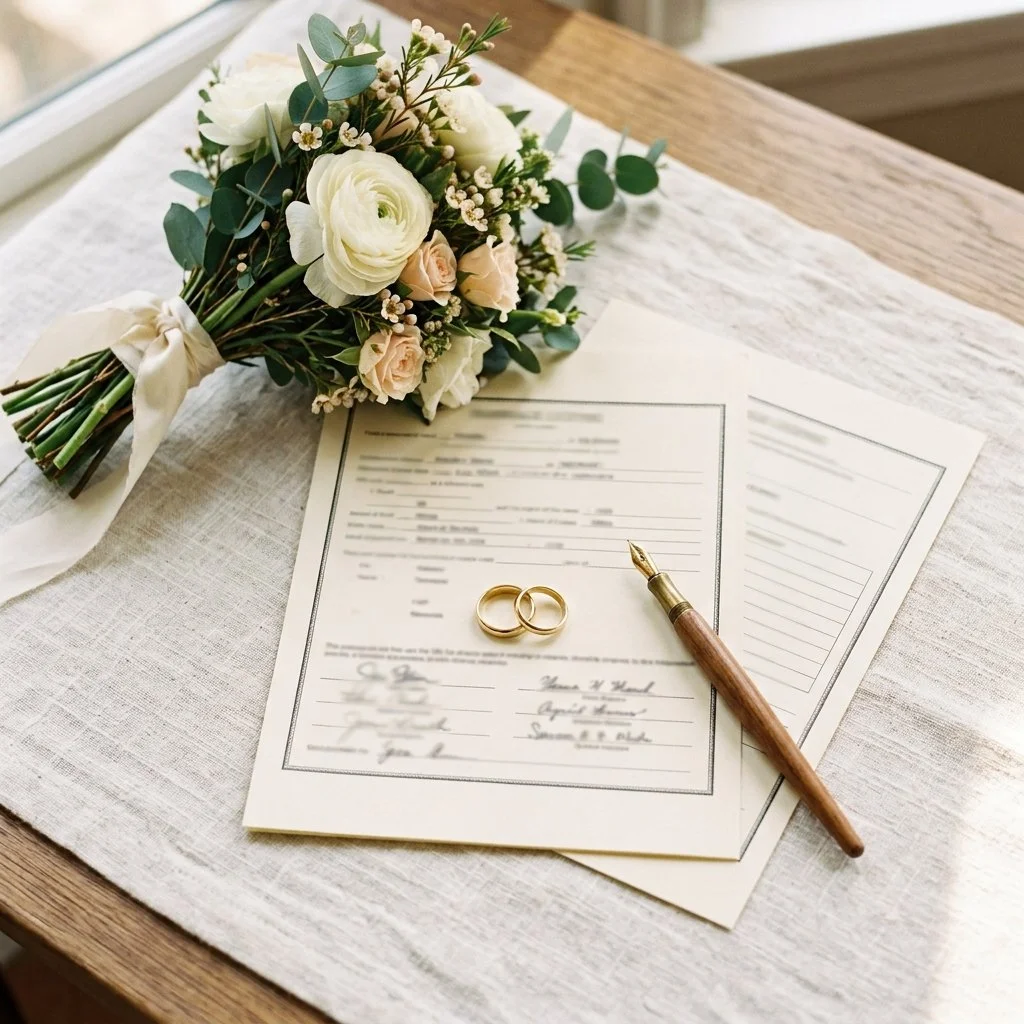
Step One: The License, and the Clock It Starts
Both partners apply in person, together, at any Florida clerk of court. Not one of you. Both, at the same counter, at the same time.
Bring valid photo identification, your Social Security number if you have one, and the date any prior marriage ended. You will sign the application under oath. The license is issued the same day and is good in any Florida county — you can apply in Broward and marry in Key West.
Two numbers matter from here. The license is valid for sixty days. And if either of you is a Florida resident, a three-day waiting period delays when the license becomes effective, unless you have taken care of the exception below.
The sixty days is a ceiling that catches people planning far ahead. If your ceremony is four months out, you cannot get the license now. Apply too early and you will simply be doing it twice.
The Waiting Period, and How to Erase It
The three-day wait applies to Florida residents. It does not apply to non-residents, which is the quiet reason South Florida is a destination-wedding market — a couple flying in from Atlanta can apply and marry the same day.
For Florida residents, the wait disappears if both partners complete a registered premarital preparation course of at least four hours and present the certificate when applying. The certificate has to be no more than a year old, and both of you have to have taken it.
The course does something else worth knowing about: it reduces the license fee meaningfully. The standard fee is commonly around eighty-six dollars, dropping to roughly sixty-one with the certificate, though exact amounts vary by county and are worth confirming with your clerk. It is one of the very few genuine discounts in the entire wedding process, and it is available whether you need the waiver or not.
One caution for mixed couples. The statute grants the exception to non-Florida residents, and clerks generally read that as applying when both partners are non-residents. If one of you lives here and one does not, plan on the wait unless you have the course certificate.
Florida also asks residents to read the state Family Law Handbook, whether or not the course was taken.
Step Two: Who Can Actually Marry You
Florida is broader than most states about who may solemnize a marriage, and this is where couples give themselves unnecessary work.
Ordained clergy can perform the ceremony. So can judges, clerks of court and judicial officers. And so can all Florida notaries public — which is the detail that quietly collapses two of your three appointments into one.
The ceremony has to take place in Florida. The license has to be effective before the ceremony happens, and the ceremony has to fall inside the sixty-day window. Afterward, the completed license goes back to the issuing clerk, and returning it is the officiant’s responsibility — generally within ten days. A marriage is not recorded until that license is returned, which is why a disorganized officiant is not a small problem.
For LGBTQ+ couples in South Florida the process is identical in every respect. Same application, same waiting period, same officiant options, same sixty days. What differs is not the paperwork but who you choose to stand in front of, and that is worth choosing deliberately.
Step Three: The Notary Work Nobody Warns You About
The ceremony ends. The paperwork does not.
Depending on what you are changing and what you jointly own, a stack of documents typically follows: name-change filings, Social Security and driver’s license updates, vehicle titles, joint account and beneficiary designations, updated powers of attorney, property records, and — for couples where one partner is not a U.S. citizen — immigration-related affidavits. A meaningful share of those require a notary, and several require one in the weeks immediately after a wedding, which is exactly when you would rather be somewhere else.
Couples with international documents, prenuptial or postnuptial agreements, or property in more than one state see more of this, not less.
Where the Steps Collapse
Two consolidations do most of the work.
The first is the premarital course, which handles the waiting period and the fee reduction in one move, before you have applied for anything. Do it first and the license step becomes trivial.
The second is choosing an officiant who is also a notary. One person can solemnize your ceremony and handle the notarizations that follow it, which means you are not sourcing a stranger for the name-change paperwork three weeks later while everything else is still in boxes.
That is what Wilton Vida does. We officiate ceremonies across Broward, Miami-Dade and Palm Beach, and we are an NNA Certified Signing Agent, background screened, for the document work on the other side of the ceremony. We perform ceremonies in English and Spanish, we are proudly LGBTQ+-affirming, and we handle mobile and remote notarization across South Florida for the paperwork that follows.
A note in the interest of being straight with you: this is educational, not legal advice, and county procedures and fees vary. Confirm specifics with your clerk of court, and work with a Florida attorney on prenuptial agreements, immigration filings or anything touching estate documents.
Start With a Conversation
Tell us your date and where you are in the sequence, and we will tell you exactly what is left. Reach out to Wilton Vida at wiltonvida.com or connect with us on WhatsApp at https://wa.me/message/YUIL7UEHTZDAM1.
Celebramos ceremonias en español y en inglés, y también nos encargamos de la documentación notarial que viene después. Con mucho gusto le acompañamos.