Kenya & Tanzania Safari: Your Complete Planning Guide
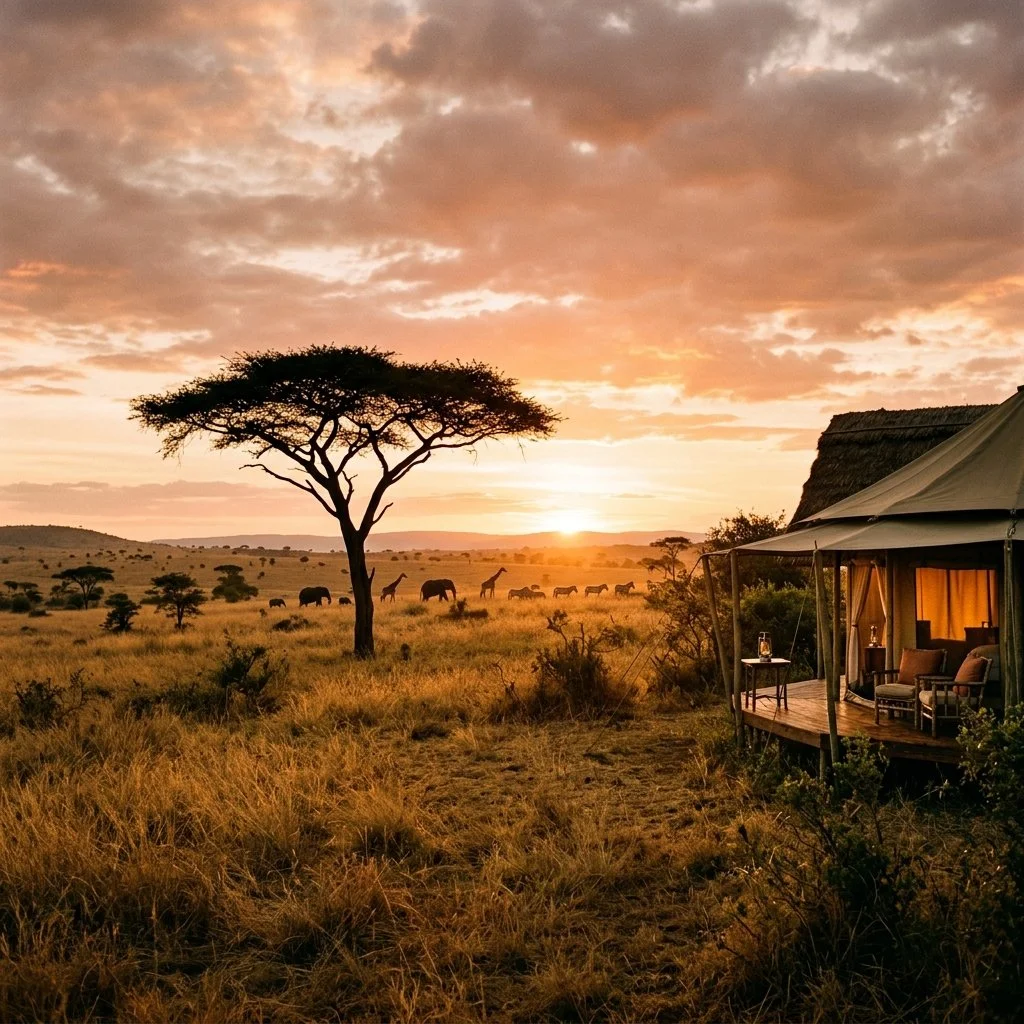
The first thing that surprises people about East Africa is not the animals. It is the silence — the specific, enormous quiet of a savanna at first light, before the vehicles start and while the plains are still holding their breath. Everyone arrives thinking about what they will see. Almost everyone leaves talking about how it felt. A Kenya and Tanzania safari is one of the few trips that reliably outperforms the photographs, and it is also one of the few where the difference between an adequate trip and an extraordinary one is decided months before you board the plane.
The Calendar Matters More Here Than Almost Anywhere Else
Most destinations have a high season and a low season. East Africa has something closer to a schedule. Wildlife concentration, road conditions, river crossings, and lodge availability all move with the rains, and choosing the wrong six weeks can mean the difference between a landscape thick with animals and a landscape you are hoping to find them in.
Broadly, the long dry season from roughly late June through October is when the plains are at their most productive. Vegetation thins, water sources shrink, and animals gather in a way that makes viewing dramatically easier. This is also when the Great Migration typically moves through the northern Serengeti and into Kenya’s Maasai Mara, which is why those months carry the highest demand and the highest rates.
January and February offer a second, quieter window. The southern Serengeti’s short grass plains fill with calving herds, and the predator activity that follows is exceptional. Fewer travelers, softer pricing, and a completely different visual character — green rather than gold.
The shoulder periods in between are not automatically a mistake, but they require an advisor who knows which specific camps stay strong when the rains arrive and which ones you should simply avoid. That is a judgment call, not a rule you can look up.
Kenya and Tanzania Are Not Interchangeable
It is tempting to treat the two as a single destination separated by a border formality. They are not. Kenya’s conservancy model — private land leased from Maasai communities adjacent to the national reserve — allows off-road driving, night drives, and walking safaris that are restricted inside the parks themselves. The vehicle density is lower, the guiding is often more intimate, and the community benefit is direct and visible.
Tanzania’s advantage is scale and variety. The Serengeti ecosystem is vast enough that you can spend a week moving through it and encounter genuinely different terrain. Add the Ngorongoro Crater, a collapsed caldera holding one of the densest concentrations of large mammals anywhere on earth, and Tanzania delivers a range that is difficult to match.
The strongest itineraries use both, and sequence them deliberately — typically building from the crater and southern plains toward the Mara, so the trip escalates rather than peaking on day three.
What “Luxury” Actually Means Out on the Savanna
This is where expectations most often need recalibrating, and where an honest advisor earns their keep.
Luxury on safari is not primarily about thread count. The properties that justify their rates do so through guiding, location, and ratio. A camp positioned inside a private concession means you are not driving ninety minutes each morning to reach wildlife. A guide with a decade in the same ecosystem reads behavior rather than reacting to it — they know where the lions were yesterday and what that implies about today. A camp with twelve tents rather than fifty means the sundowner spot is yours.
Tented does not mean rustic. Contemporary luxury camps offer proper beds, en-suite plumbing, hot water, and service standards that would hold up in any capital city — delivered in structures designed to be removed without a trace. The trade-off is intentional intimacy, not diminished comfort.
The insider tip most first-timers miss: build in at least three nights per camp. Two-night stays sound efficient and are the single most common structural error in a safari itinerary. You lose most of one day to transfers, you never get a second attempt at a sighting, and your guide never gets the chance to learn what you actually care about.
The Logistics That Catch People Off Guard
Movement between camps is usually by light aircraft on bush airstrips, and those flights carry strict luggage limits — commonly around fifteen kilograms in a soft-sided bag with no rigid frame. Hard suitcases are frequently refused. Most quality camps offer same-day laundry precisely because you are meant to travel light, and a well-planned trip includes a secure storage arrangement for the city clothes you will want again in Nairobi.
Entry requirements for both countries are handled electronically in advance and change periodically, as do the yellow fever certificate rules that apply when moving between the two. Malaria prophylaxis is a conversation to have with a travel health professional well before departure. None of this is difficult — but all of it is time-sensitive, and it is the category of detail where a missed step becomes a missed flight.
Budget realistically for park and conservancy fees, which are substantial, charged per person per day, and often quoted separately from the nightly rate. A quote that looks unusually competitive is frequently a quote with those fees still outside it.
Planning It With Wilton Vida
This is precisely the kind of trip that rewards advisory rather than booking. Through our membership in Travel Leaders Network, we access preferred partnerships with East Africa’s leading camp operators and ground handlers — which translates into room upgrades and value-adds where available, but more importantly into direct lines to the people who actually run these properties when weather closes an airstrip or a migration moves early.
We build safari itineraries around how you want to travel, not around a fixed package: the pace, the balance between Kenya and Tanzania, whether you want walking and night drives, whether this is a milestone trip that should end on a coastal extension in Zanzibar or on the Kenyan coast. We handle the entry documentation timeline, the internal flight sequencing, and the insurance conversation that genuinely matters on a trip of this value. And we are reachable while you are on the ground — which is the part you do not think about until you need it.
Kenya and Tanzania sit twelve to eighteen months out for most travelers who want the best camps in the best weeks. If you are thinking about 2027, the planning conversation is a now conversation.
Ready to start planning? Reach out to our team at wiltonvida.com or connect with us on WhatsApp at https://wa.me/message/YUIL7UEHTZDAM1
Un mundo. Un amor. Déjanos llevarte allí.