Japan 2027: Why Now Is the Moment to Plan the Trip You’ve Been Postponing
Japan has been “the trip we keep meaning to take” for a lot of travelers for a long time now. 2027 is shaping up to be the year that stops being true — not because of hype, but because of a handful of very real shifts in hotel supply, flight connectivity, and demand that are converging at once.
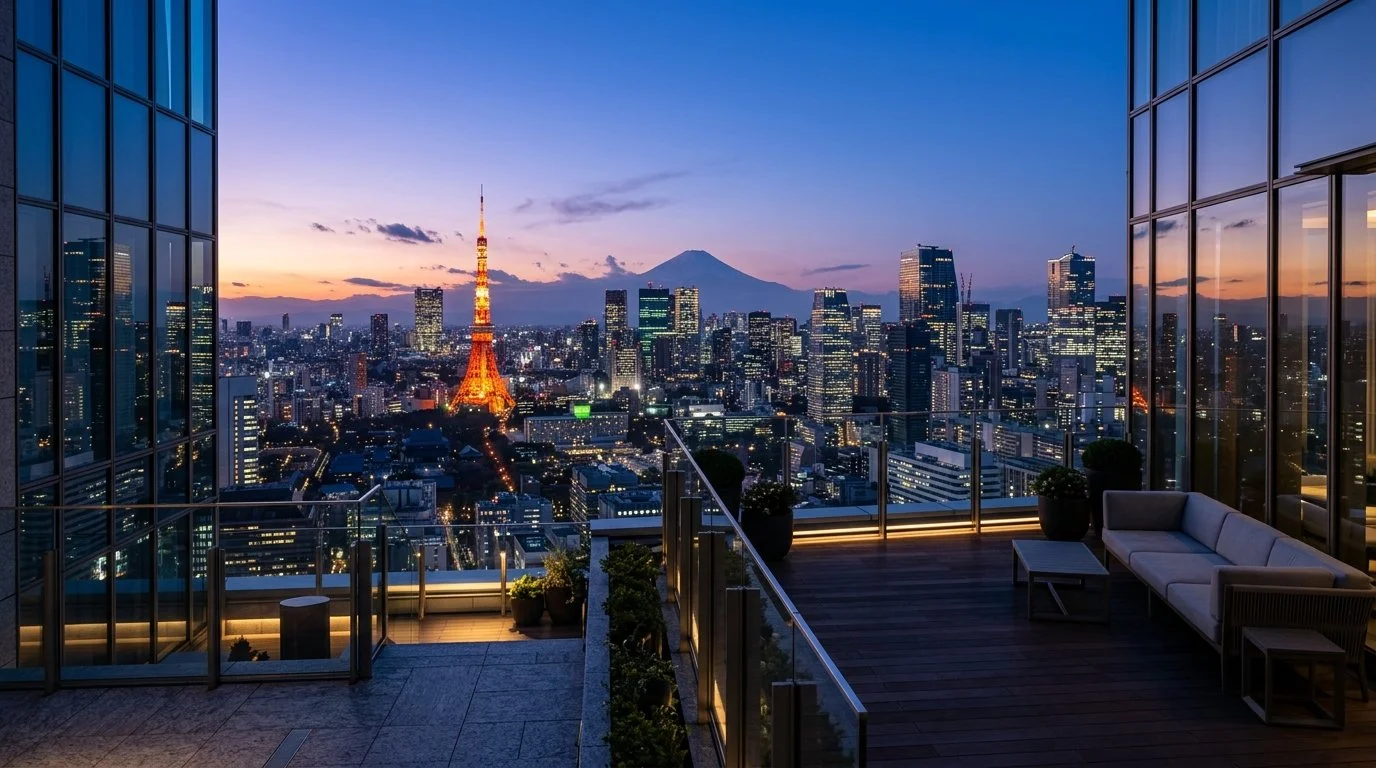
Overtourism Isn’t Slowing Down
Japan’s visitor numbers have climbed for years, and the country’s most iconic cities and neighborhoods have felt it — longer lines at temples, harder-to-book restaurant reservations, and hotel rates in Tokyo and Kyoto that increasingly reflect scarcity rather than seasonality. None of that trend points toward Japan becoming easier or cheaper to visit later. If anything, waiting has become the more expensive choice, not the more cautious one.
A Wave of New Luxury Hotel Openings
Several major hospitality brands have been expanding aggressively into Japan, and the new supply is meaningfully changing what a luxury Japan trip looks like. LXR Hotels & Resorts — Hilton’s ultra-luxury brand — has opened new properties in Tokyo and Hakone, adding genuinely new options to two of the country’s most in-demand bases rather than just more inventory in an already-saturated category. For travelers whose loyalty runs through other programs, it’s worth noting that itineraries combining a Tokyo stay with excursions elsewhere in the country can often be built to include Marriott Bonvoy properties as well — and Wilton Vida’s Marriott Platinum Elite status can add meaningful value, from room upgrades to better placement, on any leg of the trip that includes one.
Flight Connectivity Is Opening Up
Getting to Japan has quietly gotten easier too. European carriers have been expanding their route networks into Asia, adding more direct and connecting options from Europe that make multi-stop itineraries — Japan paired with a European leg, for instance — genuinely practical rather than a scheduling headache. Meanwhile, Philippine Airlines is completing its move into the oneworld alliance, with full integration expected in 2027 — the same year this piece is about. Once that’s finalized, travelers connecting through Manila gain reciprocal earning and redemption across the entire oneworld network, opening up new routing options into Japan from Southeast Asia and beyond that didn’t reliably exist before.
What “Planning Ahead” Actually Looks Like for Japan
Japan isn’t a destination where you can decide in March that you want cherry blossom season in April — the best ryokans, the best-located Tokyo hotels, and the most in-demand guided experiences book out six to twelve months ahead during peak seasons. Planning for 2027 now isn’t about being overly cautious; it’s about making sure the itinerary you actually want — the right neighborhood, the right season, the right hotel — is still an option by the time you’re ready to book it.
Building the Right Itinerary
Japan rewards travelers who plan with intention rather than just booking flights and figuring out the rest on arrival. The right itinerary balances Tokyo’s energy with somewhere quieter — Hakone’s hot springs and mountain views, Kyoto’s temples, or a coastal region depending on the season — and accounts for how differently the country feels depending on when you go. Getting that balance right, and getting it booked before availability tightens, is where working with an advisor who’s tracking Japan’s hotel and flight landscape in real time makes the difference.
Thinking about Japan for 2027? Reach out to our team at wiltonvida.com or connect with us on WhatsApp at https://wa.me/message/YUIL7UEHTZDAM1 — the earlier we start, the more of the country is still on the table.
Para nuestros clientes de habla hispana: podemos ayudarle a planificar su viaje a Japón en español, con la misma atención personalizada.