One Trip, Three Generations: Planning Travel That Works for Everyone
Three generations, one itinerary, and a genuinely wide range of opinions about what a good day looks like. A seventy-four-year-old wants a slow morning and a proper lunch. A forty-year-old wants to see the thing they flew across an ocean to see. A nine-year-old wants a pool. Multigenerational trips almost never fail on destination. They fail on pacing, on rooming, and on the unspoken question of who decides dinner.
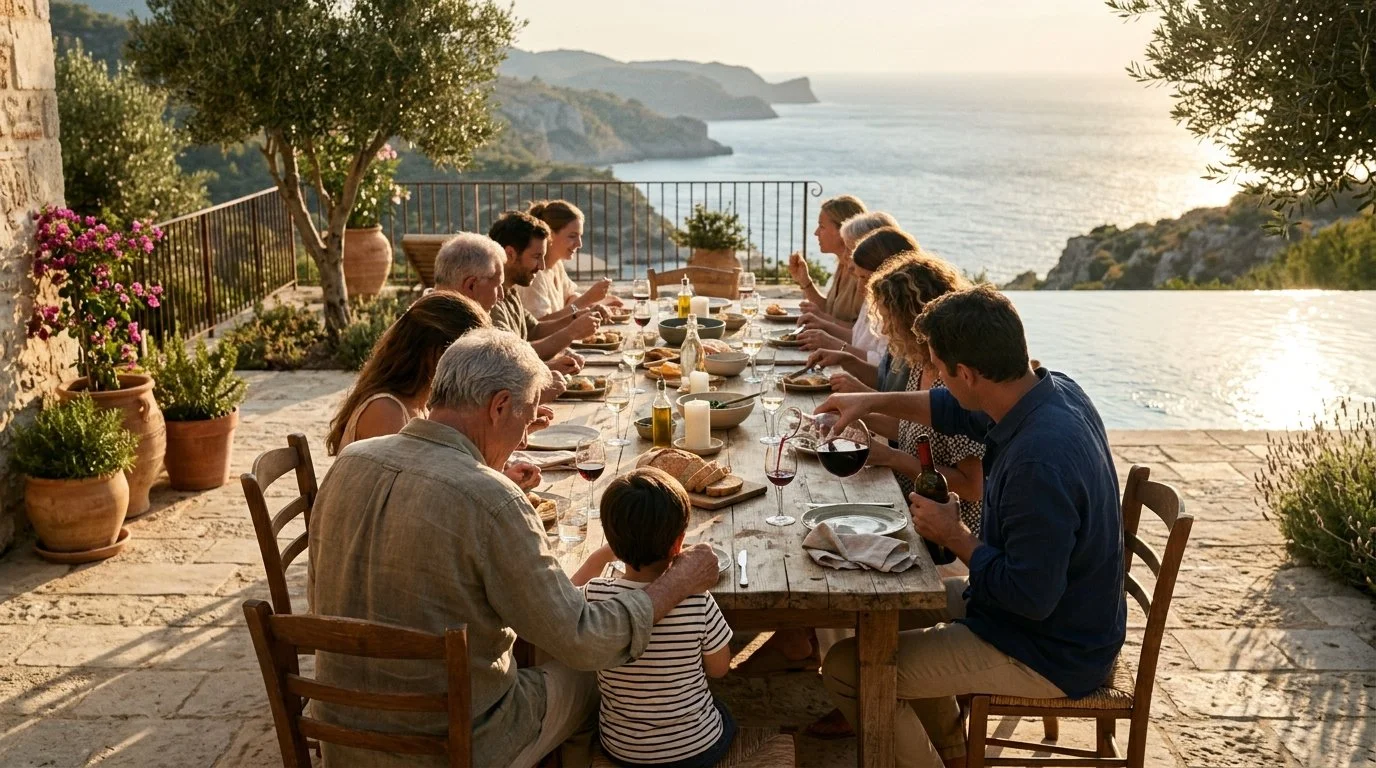
Design around the narrowest constraint
Every multigenerational group has one person whose limits define the trip. Sometimes it is mobility, sometimes it is nap schedules, sometimes it is a family member who genuinely cannot do a fourteen-hour travel day without paying for it for two more. Identify that constraint honestly at the start and build outward from it. Every Wilton Vida family file starts with that single question. The alternative is a group that splits into two factions by day three, one of them exhausted and the other one bored.
This is not the same as designing the trip for the least capable traveler. It means the spine of the itinerary sits comfortably within that person's range, and the more ambitious things happen as optional branches off it. A morning at the ruins for four people while two have breakfast on the terrace is a good day for everyone. The same morning, mandatory, is a bad day for two of them and an awkward one for the rest.
Rooming is a relationship decision
The single most consequential choice in a multigenerational booking is not the hotel. It is the configuration. A villa or a residence with a shared kitchen and living room produces a different trip than six hotel rooms down a corridor, and neither is automatically correct. Shared space creates the long unhurried evenings people remember. It also creates the friction of a shared bathroom schedule and a grandparent who wakes at five-thirty.
The arrangement that works most often is proximity with privacy: connecting or adjacent rooms, or a villa where each couple has a genuine door that closes, plus one communal room large enough to hold everyone comfortably at once. The test is simple. Is there a place where all nine people can sit down together without anyone perching on a bed? If not, the group will fragment whether you want it to or not.
Decide the money before you leave
Nothing sours a family trip faster than the check arriving and nobody knowing whose it is. Sort this in advance and in writing, however informal. Some families pool a trip fund. Some have one party cover lodging while another handles meals. Some split everything evenly and settle at the end. The specific arrangement matters much less than the fact that it was agreed on before anyone was tired and holding a menu.
The same applies to the extras. If one branch of the family wants the private guide and another does not, price that as an add-on rather than folding it into a shared total. Optional things should be optional in cost as well as in attendance, or they stop being optional in practice.
Build in the unstructured day
A seven-day multigenerational trip should have at most four structured days. The instinct is to maximize, because getting everyone in one place is difficult and expensive and the urge to justify it is strong. Resist it. The days people describe years later are almost never the scheduled ones. They are the afternoon everybody stayed at the pool and the grandfather taught the kids a card game.
Meals deserve the same restraint. One reserved group dinner per trip, ideally early in the week while everyone is still fresh, does more for the group than five of them. The rest can be loose, and a few of them should deliberately be split, because two hours apart makes the next shared meal better.
The logistics nobody volunteers for
Someone in the family is going to end up holding nine passports, three sets of dietary restrictions, a car seat requirement, a mobility request, and a grandmother's connecting flight. That person spends the trip working. Handing that role to an advisor is not an indulgence, it is how the person who would otherwise be managing the trip gets to be on it.
Wilton Vida handles these files as a single coordinated plan rather than nine separate bookings that happen to overlap. That means one arrival manifest, transfers sized for the actual group and the actual luggage, room assignments confirmed in writing rather than requested and hoped for, and dietary and accessibility needs communicated to properties ahead of arrival instead of explained at a front desk in a second language. Through Travel Leaders Network, we also reach group amenities and suite inventory that are not exposed to the public, which matters enormously when a family needs four specific room types in the same wing.
Milestone trips carry weight beyond the itinerary. An eightieth birthday, a fiftieth anniversary, a first trip back to a country a family left decades ago. Those deserve to be planned by someone who understands that the logistics are in service of the occasion, not the other way around.
Para familias bilingües, coordinamos cada detalle en español e inglés, sin que nadie quede fuera de la conversación.
If there is a family trip that keeps getting discussed and never gets booked, we will take it off your plate. Reach our team at wiltonvida.com or start the conversation on WhatsApp at https://wa.me/message/YUIL7UEHTZDAM1.