Remote Online Notarization in Florida: What Qualifies
Florida was among the first states to build a full statutory framework for notarizing documents over video, and the framework it built is one of the most comprehensive in the country. The practical effect is that most of what people bring to a notary can be handled remotely. The useful question is not really what qualifies — it is where the edges are, and who gets to decide where they sit.
What Florida Requires for a Remote Session
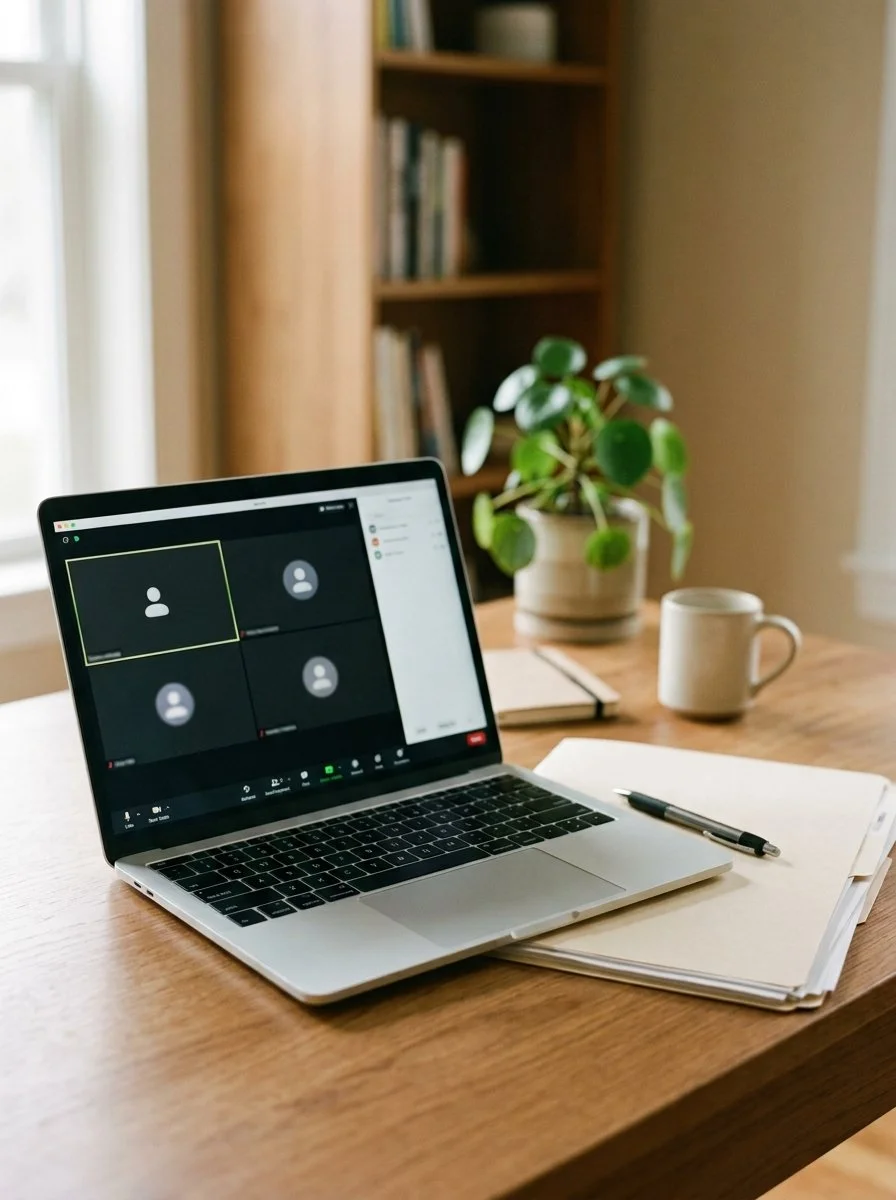
A remote online notarization is not a video call with a notary on the other end. It is a specific procedure defined by Part II of Chapter 117, and the requirements are worth understanding because they are also the reason the process is trustworthy.
The notary must hold a Florida commission and be separately registered with the Department of State as an online notary public. The notary must be physically located in Florida during the session. The signer does not have to be — you can be anywhere in the world, which is the entire point of the mechanism.
Identity is confirmed through more than one layer. Under Section 117.265, the notary confirms identity through remote presentation of a government-issued credential, credential analysis of that credential, and identity proofing — typically knowledge-based authentication, a short set of questions drawn from public and proprietary data sources, answered under time pressure. The statute is explicit that if those steps cannot be satisfied, the notarization may not proceed. There is no discretion to wave it through.
The session itself is conducted over two-way audio-video technology and recorded in full. At the start of the recording the notary describes the act being performed and identifies the records being signed. The recording and the electronic journal are retained for ten years. For a signer located outside Florida, the notary confirms — verbally or in writing — that the signer wants a Florida notary performing the act under Florida law.
Which Documents Qualify
In practice, the great majority of everyday documents move through this process without friction. Powers of attorney. Affidavits and sworn statements. Real estate and lender packages, including refinance closings. Corporate resolutions, operating agreements, vendor and purchase contracts. Parental consent and travel authorization letters. Certified copies where the act itself permits it. Immigration-adjacent affidavits. Business licensing filings.
If the act you need is an acknowledgment, a jurat, an oath or affirmation, or the supervision of witnesses on an electronic record, the statute contemplates it being done remotely.
Where Wilton Vida Draws Its Own Line
Wills and codicils are the one category we handle differently, and we want to be precise about why.
This is a Wilton Vida policy, not a statement about what Florida law does or does not permit. We are notaries, not attorneys, and the scope of will-execution law is not ours to characterize. What we can tell you is our own practice: when a will or a codicil is involved, we handle the signing in person. Estate documents carry consequences that surface years later, in front of people who were not in the room, and we prefer the version of that record that we can stand behind without qualification.
If you are executing estate documents, the person to ask about the legal requirements is your estate attorney. We will work with whatever they direct, and we will be in the room when it happens.
The Receiving Institution Sometimes Moves the Line
This is the part that catches people, and it has nothing to do with the statute.
A document being validly notarized and a document being accepted are two separate events. Lenders, title companies, foreign consulates, county recorders, and some corporate registrars maintain their own internal policies about remote notarization, and those policies can be narrower than Florida law. A recording office may require wet ink. A foreign jurisdiction may not recognize an electronic seal at all. A specific lender may accept remote signing on some products and not others.
None of that makes the notarization defective. It makes it unusable for that particular purpose, which from where you are standing is the same problem.
The fix is boring and it works: before you schedule anything, ask the entity that will receive the document whether it accepts remote online notarization for this specific filing. One phone call, asked in advance, prevents the entire sequence from having to be repeated. We ask this question on our clients’ behalf as a matter of routine, and we would rather tell you to book an in-person appointment than sell you a remote session you cannot use.
What a Session Actually Looks Like
You will need a valid, unexpired government-issued photo identification, a device with a working camera and microphone, and a stable connection. Foreign passports are acceptable credentials for signers located outside the United States.
The session runs in three movements. You complete identity proofing and credential analysis before the notary joins. The notary appears, confirms identity on camera at the moment the signature is taken, and states on the record what is being notarized. You sign electronically, the notary applies the electronic seal and notation, and the completed record is delivered to you.
Most single-document sessions take fifteen to twenty minutes. Same-day availability is normal, including outside business hours, which is frequently the actual reason people choose remote in the first place.
Let’s Get It Signed
Wilton Vida Group is a bilingual notary practice based in Wilton Manors, serving Broward, Miami-Dade, and Palm Beach in person and signers anywhere in the world remotely. If you are not sure whether your document should go remote or in person, ask us before you book — that conversation is free and it saves the wasted appointment.
Reach us at wiltonvida.com or message us directly on WhatsApp at https://wa.me/message/YUIL7UEHTZDAM1.
Notarización remota en inglés y español. Estamos a su servicio.