Small-Ship Luxury in French Polynesia: Six Islands by Yacht
French Polynesia rewards small ships in a way that almost nowhere else does. The anchorages worth reaching are shallow, narrow, and ringed by living coral, which means the choice between a yacht and a ship is not a choice about comfort. It is a choice about where you are allowed to drop anchor at all.
Seven nights out of Papeete, six islands, and a completely different version of the South Pacific than the one most travelers come home describing. Here is what the small-ship end of luxury actually buys you in these waters.
The Anchorages Decide Everything
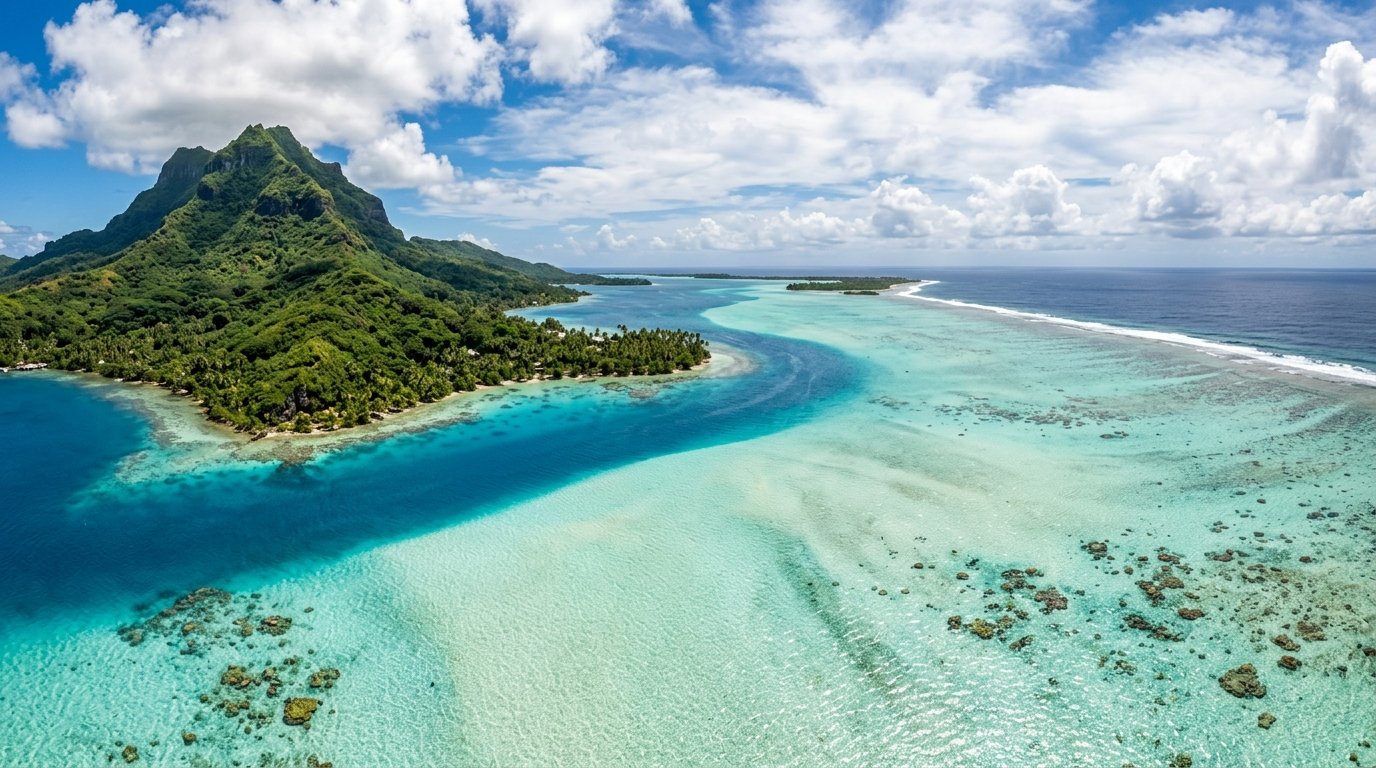
Start with the geography, because the geography writes the itinerary. Most of the islands in the Society and Tuamotu groups sit inside barrier reefs, and the passes through those reefs were cut by water, not engineers. Some are narrow enough that a vessel needs a slack-tide window to transit safely. Inside the lagoon, depths drop and rise without much warning, and the sand flats that produce that impossible pale turquoise are measured in feet, not fathoms.
A large ship cannot go in. It anchors outside the reef or skips the island entirely, and its guests tender across open water to a pier if a pier exists. A vessel carrying fewer than a couple hundred guests can often enter the lagoon itself and anchor in the flat water inside, which changes the entire texture of the day. You wake up already inside the postcard. The swim platform opens onto the lagoon rather than onto a chop.
This is why we steer clients who care about French Polynesia specifically, rather than about cruising generally, toward the smallest vessel their budget will carry. The premium is not buying a nicer suite. It is buying access to water that the bigger hull is physically barred from.
The Six-Island Rhythm
A well-built week out of Tahiti tends to follow a deliberate arc rather than a checklist. The first day or two lean toward the developed, greener islands where the mountains are dramatic and the interiors are worth exploring by four-wheel drive. Think steep volcanic ridgelines, pineapple terraces, and valleys that open suddenly onto the coast.
The middle of the week is where the character shifts. These are the lagoon islands, the ones that exist mostly as a ring of sand and coconut around impossibly clear water. Days here are structured loosely around the water rather than around excursions. Drift snorkeling in a pass on an incoming tide. A motu picnic on a sandbar reachable only by tender. An afternoon where the most ambitious thing anyone does is move from the shade to the water and back.
The final stretch usually returns toward the more social islands, where there is a village to walk, a black-pearl farm to tour, and a pearl or two to buy with actual provenance. Ending here rather than beginning here matters, because by then guests have earned the contrast and appreciate the small burst of activity instead of resenting it.
The insider note we give every client: the drift snorkel through a reef pass is the single experience people describe months later, and it is entirely tide-dependent. Ask before you book whether the itinerary is timed to the passes or merely passes near them. The good operators plan around water movement. The rest plan around port fees.
What a Yacht Buys That a Ship Cannot
Access is the headline, but the practical differences accumulate all week. A yacht-scale vessel carries watersports equipment off the stern, so paddleboards, kayaks, and snorkel gear are available the moment the anchor sets rather than bookable in a 90-minute window three days out. Tender operations take minutes because there are dozens of guests, not thousands. Dinner does not require a reservation strategy.
There is also the question of who else is aboard. Small vessels in these waters self-select for travelers who came for the water and the quiet. That sounds like a soft benefit until you have spent a week with the wrong crowd in the right place.
The honest tradeoff is motion and weather. A smaller hull moves more in open crossings between island groups, and some itineraries include an overnight run that a large ship would barely register. Anyone genuinely prone to seasickness should hear that plainly before booking rather than discover it at sea. The fix is usually itinerary selection rather than a different vessel class, and it is exactly the kind of thing worth a conversation before deposits move.
Planning the Trip Properly
French Polynesia is a long-lead destination. The small vessels that work these lagoons carry very few guests, the best cabin categories move first, and the shoulder windows with the most stable weather are the windows everyone wants. Clients who plan roughly a year out get the room and the itinerary they actually wanted. Clients who plan late get whatever is left, which in this part of the world can mean a materially different trip.
Air is the other piece nobody enjoys discovering late. Getting to Papeete is a commitment from South Florida, and the connection strategy shapes whether you arrive ready for the water or wrecked. We routinely build a night on either end of the sailing rather than threading a same-day connection, because the cost of that night is trivial against the cost of missing the ship.
Wilton Vida plans these weeks as a single piece rather than a cruise with flights attached. Through our Travel Leaders Network affiliation we reach amenities and cabin inventory that are not visible on a public booking page, and our Marriott Platinum Elite standing gives clients real leverage on the pre- and post-cruise hotel nights that make or break a long-haul trip. More to the point, we have opinions about which itineraries are timed to the tides and which are not, and we will tell you before you spend the money.
If this is the version of the South Pacific you have been picturing, the next step is a conversation about timing and vessel size, not a search bar.
Estamos aquí para acompañarte en cada paso del camino.
Ready to start planning? Reach out to our team at wiltonvida.com or connect with us on WhatsApp at https://wa.me/message/YUIL7UEHTZDAM1.